Bitcoin ETF Performance Q4 2024 & 2025 Outlook: US Market Analysis
Analyzing the Q4 2024 Bitcoin ETF Performance in US markets provides crucial insights into the evolving cryptocurrency investment landscape, shaping expectations for a dynamic 2025 driven by regulatory shifts and growing institutional interest.
As the financial world continues to embrace digital assets, understanding the nuances of Bitcoin ETF Performance becomes paramount for investors. This article aims to unpack the critical developments of Q4 2024 and provide a forward-looking perspective into what 2025 might hold for these innovative investment vehicles in US markets.
Q4 2024: A Pivotal Quarter for Bitcoin ETFs
The final quarter of 2024 proved to be a highly significant period for Bitcoin Exchange-Traded Funds (ETFs) in the US market. Following earlier regulatory approvals, these funds began to solidify their presence, attracting a diverse range of investors seeking exposure to Bitcoin without directly holding the underlying asset. This quarter was characterized by notable trading volumes and increasing institutional participation.
Several key factors contributed to the robust performance witnessed during Q4. Market sentiment, largely driven by macroeconomic indicators and the anticipation of future interest rate decisions, played a considerable role. Additionally, growing awareness and education around digital assets helped to demystify Bitcoin for a broader investor base, encouraging inflows into ETF products.
Regulatory Clarifications and Market Confidence
Regulatory clarity continued to be a driving force, providing a more stable environment for both issuers and investors. The US Securities and Exchange Commission (SEC) maintained a watchful eye, but the established framework for Bitcoin ETFs instilled greater confidence. This regulatory foundation helped to mitigate some of the inherent volatility often associated with the broader cryptocurrency market.
- SEC Oversight: Ongoing engagement and guidance from the SEC provided a clearer operational landscape for ETF providers.
- Investor Protection: Enhanced rules and disclosures offered a layer of protection, attracting more cautious investors.
- Market Integrity: Regulatory frameworks contributed to the perception of a more mature and legitimate asset class.
The performance in Q4 2024 set an important precedent, demonstrating the viability and demand for regulated Bitcoin investment products. It was a quarter that underscored the growing mainstream acceptance of cryptocurrency as a legitimate component of diversified portfolios, moving beyond its early adopter phase and into a more integrated financial ecosystem.
Drivers of Bitcoin ETF Performance in Q4 2024
Understanding the specific catalysts behind the Q4 2024 Bitcoin ETF Performance is crucial for projecting future trends. The interplay of market dynamics, institutional activity, and evolving investor sentiment created a unique environment that propelled these funds forward. This period saw a confluence of factors that collectively shaped the trajectory of Bitcoin ETFs.
One primary driver was the increasing institutional adoption. Major financial players, including hedge funds and wealth management firms, began allocating portions of their portfolios to Bitcoin ETFs, signaling a significant shift in investment strategy. This institutional validation not only brought substantial capital but also lent credibility to the asset class, influencing retail investors.
Macroeconomic Influences and Bitcoin’s Role
Global macroeconomic conditions also exerted a considerable influence. Concerns over inflation, fluctuating interest rates, and geopolitical uncertainties often led investors to seek alternative assets, and Bitcoin, with its perceived store-of-value properties, emerged as a strong contender. Its inverse correlation to traditional assets during certain periods made it an attractive diversification tool.
- Inflation Hedging: Bitcoin’s narrative as a hedge against inflation gained traction amid rising consumer prices.
- Interest Rate Impact: Anticipation of Federal Reserve interest rate adjustments influenced risk appetite and capital flows.
- Geopolitical Stability: Periods of global instability often saw spikes in demand for decentralized assets like Bitcoin.
Technological advancements within the Bitcoin ecosystem, such as improvements in network efficiency and scalability solutions, further bolstered confidence. These developments, although not directly impacting ETF structure, enhanced the underlying asset’s long-term appeal, indirectly supporting the performance of derivative products. The overall narrative of digital transformation continued to drive interest and investment into the sector.
Analyzing Key Metrics: Trading Volume and AUM
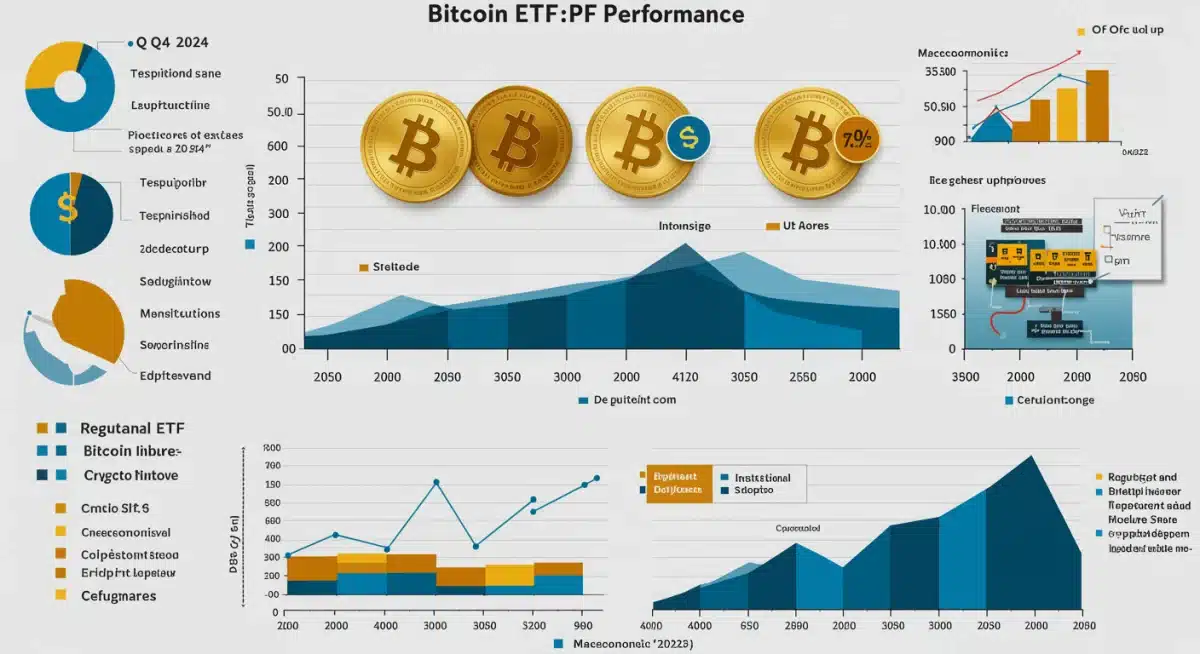
Delving deeper into the Q4 2024 Bitcoin ETF Performance requires a close examination of key metrics such as trading volume and Assets Under Management (AUM). These indicators provide tangible proof of market interest and the operational success of these investment vehicles. High trading volumes signify liquidity and active participation, while growing AUM reflects increasing investor trust and capital inflows.
During Q4, Bitcoin ETFs consistently recorded impressive daily trading volumes. This robust activity indicated a healthy and liquid market, allowing investors to enter and exit positions efficiently. The ability to trade these funds on traditional exchanges, with the familiarity of existing brokerage accounts, significantly lowered the barrier to entry for many who were previously hesitant to engage directly with cryptocurrency exchanges.
Growth in Assets Under Management (AUM)
The growth in AUM was particularly striking. As the quarter progressed, several Bitcoin ETFs saw their asset bases expand considerably, reaching new milestones. This expansion was not solely due to price appreciation of Bitcoin but also a direct consequence of net inflows from both retail and institutional investors. The increasing AUM solidified the position of Bitcoin ETFs as a significant component of the broader financial market.
- Retail Inflows: Individual investors, drawn by accessibility and ease of use, contributed significantly to AUM growth.
- Institutional Holdings: Large-scale investments from institutional entities provided a substantial boost to the total assets managed.
- Market Share: Competition among ETF providers intensified, leading to innovative marketing and product offerings to capture market share.
The consistent increase in both trading volume and AUM throughout Q4 2024 paints a clear picture of strong market acceptance and sustained investor demand. These metrics underscore the successful integration of Bitcoin ETFs into the traditional financial landscape, serving as a reliable barometer of evolving investment trends and the growing appeal of digital assets.
Regulatory Landscape Evolution and its Impact on 2025
The regulatory environment surrounding Bitcoin ETFs is a dynamic force, and its evolution will profoundly shape the 2025 outlook for Bitcoin ETF Performance in US markets. While Q4 2024 brought a degree of clarity, the coming year is likely to see further refinements and potential new legislative actions that could either accelerate or temper growth. Staying abreast of these changes is paramount for investors and market participants.
Discussions around broader cryptocurrency regulation are expected to intensify in 2025. This includes potential legislation concerning stablecoins, decentralized finance (DeFi), and the overarching classification of digital assets. Any comprehensive regulatory framework could have ripple effects on how Bitcoin ETFs are perceived and traded, potentially influencing investor confidence and market liquidity.
Anticipated Regulatory Developments
Several areas are ripe for further regulatory attention. The SEC, alongside other governmental bodies, will likely continue to scrutinize market practices to ensure investor protection and prevent illicit activities. This could lead to new guidelines for custody solutions, reporting standards, and advertising practices for crypto-related products.
- Stablecoin Legislation: The introduction of specific rules for stablecoins could set precedents for other digital assets.
- Tax Implications: Clarification on the tax treatment of crypto gains and losses for ETF investors remains a key area of interest.
- International Harmonization: Efforts to align US regulations with international standards could impact cross-border investment flows.
The potential for a spot Ethereum ETF or other altcoin ETFs could also emerge as a significant regulatory discussion point in 2025. Should these products gain approval, it would signal a broader acceptance of diverse digital asset classes within the regulated financial system, potentially bolstering the entire crypto ETF ecosystem. The evolving regulatory landscape will be a critical determinant of market sentiment and investment flows in the coming year.
2025 Outlook: Projections for Bitcoin ETF Growth
Looking ahead to 2025, the projections for Bitcoin ETF Performance in US markets appear largely optimistic, albeit with a healthy dose of caution. The foundation laid in Q4 2024, coupled with anticipated market developments, suggests continued growth and maturation for these investment vehicles. However, investors must remain mindful of potential headwinds and market volatility.
One of the primary drivers for growth in 2025 is the continued education and increasing familiarity of financial advisors and institutional allocators with Bitcoin ETFs. As more advisors become comfortable recommending these products, a larger pool of traditional investors will gain exposure. This organic growth through established financial channels is crucial for long-term sustainability.
Emerging Trends and Market Dynamics
Several emerging trends are expected to shape the market in 2025. The integration of Bitcoin ETFs into broader investment platforms and retirement accounts could significantly expand their reach. Furthermore, innovations in product offerings, such as actively managed Bitcoin ETFs or those incorporating derivatives, might emerge, catering to a wider range of investment strategies.
- Advisor Adoption: Increased training and acceptance among financial advisors will broaden the investor base.
- Retirement Accounts: Potential inclusion in 401(k)s and IRAs could unlock substantial new capital.
- Product Innovation: New ETF structures and strategies may be introduced to meet evolving investor demands.
Despite the positive outlook, potential challenges for 2025 include broader economic downturns, unexpected regulatory crackdowns, or significant price volatility in Bitcoin itself. Geopolitical events could also play a role in shifting investor sentiment. Nevertheless, the underlying trend points towards increased integration of Bitcoin ETFs into mainstream finance, solidifying their role as a bridge between traditional investment and the burgeoning digital asset economy.
Investment Strategies and Risk Management for Bitcoin ETFs
Navigating the landscape of Bitcoin ETF Performance in 2025 requires a well-defined investment strategy and robust risk management. While these funds offer a convenient way to gain Bitcoin exposure, they are not without their unique considerations. Investors should approach them with a clear understanding of their objectives and risk tolerance.
For many, Bitcoin ETFs serve as a diversification tool within a broader portfolio. Allocating a small percentage to these funds can provide exposure to a high-growth asset class that may behave differently from traditional stocks and bonds. However, it is crucial to avoid over-allocation, given the inherent volatility of the underlying asset.
Key Considerations for Investors
Effective risk management involves several layers. Firstly, understanding the specific structure of the chosen ETF, whether it holds spot Bitcoin or futures contracts, is vital. Each structure carries different implications regarding tracking error, fees, and regulatory exposure. Secondly, continuously monitoring market sentiment and macroeconomic indicators can help in making informed decisions about entry and exit points.
- Portfolio Diversification: Use Bitcoin ETFs to enhance portfolio resilience and potentially capture unique growth opportunities.
- Due Diligence: Thoroughly research the specific ETF product, including its issuer, fees, and underlying holdings.
- Volatility Management: Be prepared for significant price swings and consider dollar-cost averaging to mitigate risk.
Furthermore, staying informed about regulatory changes and technological advancements within the crypto space is essential. The digital asset market is rapidly evolving, and what holds true today might shift tomorrow. By combining strategic allocation with diligent risk management and continuous education, investors can better position themselves to capitalize on the potential of Bitcoin ETFs in 2025 while mitigating potential downsides.
| Key Aspect | Brief Description |
|---|---|
| Q4 2024 Performance | Strong growth driven by institutional adoption and regulatory clarity in US markets. |
| 2025 Outlook | Continued growth anticipated, supported by advisor adoption and potential new product innovations. |
| Regulatory Impact | Ongoing regulatory evolution expected to shape market confidence and product expansion. |
| Investment Strategy | Diversification and diligent risk management are crucial given inherent market volatility. |
Frequently Asked Questions About Bitcoin ETFs
Key drivers included increased institutional adoption, growing regulatory clarity in US markets, and positive macroeconomic sentiment. These elements combined to boost investor confidence and channel significant capital into Bitcoin ETF products, leading to robust trading volumes and AUM growth.
Further regulatory clarity, potentially including stablecoin legislation or guidelines for other crypto assets, could enhance market stability and investor protection. This would likely foster greater institutional and retail adoption, though stringent new rules could also introduce temporary hurdles or adjustments for issuers.
The outlook for 2025 is cautiously optimistic, with continued growth expected due to increasing financial advisor adoption and potential inclusion in retirement accounts. Product innovation and broader market integration are also anticipated, though macroeconomic factors and Bitcoin’s inherent volatility remain considerations.
Primary risks include the high volatility of Bitcoin, potential for adverse regulatory changes, tracking error between the ETF and spot Bitcoin price, and cybersecurity concerns. Investors should also consider management fees and the specific underlying assets (spot vs. futures) of the ETF.
Effective risk management involves portfolio diversification, thorough due diligence on the chosen ETF, and understanding the inherent volatility of Bitcoin. Employing strategies like dollar-cost averaging and staying informed about market and regulatory developments can help mitigate potential losses and optimize returns.
Conclusion
The Q4 2024 performance of Bitcoin ETFs in US markets has undeniably set a compelling stage for 2025. With a clearer regulatory path, increasing institutional confidence, and growing investor interest, these investment vehicles are poised for continued evolution and integration into mainstream finance. While the digital asset landscape remains dynamic and subject to various influences, the trajectory suggests that Bitcoin ETFs will play an increasingly significant role in diversified investment portfolios, serving as a critical bridge between traditional financial systems and the innovative world of cryptocurrency.