DeFi Stablecoin Staking: Aave V4 15% APY in 2026

Maximizing DeFi Yields in 2026: A Step-by-Step Guide to 15% APY with Stablecoin Staking on Aave V4 in the Current US Regulatory Landscape
The decentralized finance (DeFi) ecosystem continues its relentless march towards maturity, offering innovative financial instruments and unprecedented opportunities for yield generation. As we cast our gaze towards 2026, the prospect of achieving a robust 15% Annual Percentage Yield (APY) through stablecoin staking on a platform as established and evolving as Aave V4 is not merely a pipe dream but a tangible goal for savvy investors. This comprehensive guide will delve deep into the strategies, considerations, and potential pitfalls of maximizing your DeFi Stablecoin Staking returns, all while navigating the intricate and ever-changing US regulatory landscape.
The allure of stablecoin staking lies in its promise of capital preservation combined with attractive returns, a rare blend in the volatile world of cryptocurrencies. Stablecoins, by design, aim to maintain a pegged value to a fiat currency like the US dollar, mitigating the price fluctuations inherent in other digital assets. When these stable assets are deployed within DeFi protocols like Aave, they can generate significant passive income through lending and other mechanisms. For those seeking to capitalize on the growth of DeFi without exposing themselves to extreme market volatility, DeFi Stablecoin Staking presents a compelling proposition.
Aave, a leading non-custodial liquidity protocol, has consistently been at the forefront of DeFi innovation. With each iteration, Aave introduces enhancements that improve efficiency, security, and user experience. Aave V4, anticipated to be a significant upgrade by 2026, is expected to bring forth advanced features that could further optimize yield generation for stablecoin depositors. Understanding these advancements and how to leverage them will be crucial for achieving our target of 15% APY.
However, the journey to high yields in DeFi is not without its complexities. The US regulatory environment, in particular, is a dynamic and often uncertain factor that can significantly impact how individuals and institutions engage with decentralized protocols. From tax implications to potential legal classifications of digital assets, staying informed and compliant is paramount. This guide will provide insights into the prevailing regulatory climate and offer considerations for investors operating within the US jurisdiction, ensuring that your pursuit of yield is both profitable and compliant.
Understanding DeFi and Stablecoin Staking Fundamentals
Before we embark on the specifics of Aave V4 and our 15% APY target, a solid understanding of the foundational concepts of DeFi and stablecoin staking is essential. Decentralized Finance, or DeFi, refers to a financial system built on blockchain technology, operating without traditional intermediaries like banks or brokers. It leverages smart contracts – self-executing agreements with the terms directly written into code – to automate financial services.
Stablecoins are cryptocurrencies designed to minimize price volatility relative to a ‘stable’ asset or a basket of assets. The most common stablecoins are pegged to the US dollar, such as USDT, USDC, and DAI. Their stability makes them ideal for various financial activities within DeFi, including lending, borrowing, and providing liquidity, without the constant concern of price swings that affect other cryptocurrencies like Bitcoin or Ethereum.
What is Stablecoin Staking?
While often used interchangeably with ‘lending’ in the context of DeFi, ‘staking’ stablecoins generally refers to the act of locking up your stablecoins in a DeFi protocol to earn rewards. These rewards can come from various sources:
- Lending Protocols: Platforms like Aave allow users to deposit stablecoins, which are then lent out to borrowers. The interest paid by borrowers is distributed to the depositors, forming the primary component of the APY.
- Liquidity Providing (LP): In decentralized exchanges (DEXs) like Uniswap or SushiSwap, users can provide stablecoin pairs to liquidity pools. They earn a share of the trading fees generated by transactions within that pool.
- Yield Farming: This advanced strategy involves moving stablecoins between different protocols and strategies to maximize returns, often by leveraging and compounding rewards.
- Protocol-Specific Incentives: Many DeFi protocols offer additional tokens as incentives to liquidity providers or stakers, further boosting the overall APY.
The beauty of DeFi Stablecoin Staking is its accessibility. Anyone with an internet connection and a cryptocurrency wallet can participate, bypassing traditional financial gatekeepers. This democratizes access to financial opportunities, but also places a greater responsibility on the individual to understand the underlying mechanisms and associated risks.
The Role of Aave in DeFi Lending
Aave is one of the largest and most influential lending protocols in DeFi. It operates as a decentralized, non-custodial liquidity market protocol where users can participate as depositors or borrowers. Depositors provide liquidity to the market to earn a passive income, while borrowers are able to borrow in an overcollateralized (or undercollateralized in some specific cases) fashion.
Aave’s strength lies in its innovative features, such as flash loans (unsecured loans that must be repaid within the same transaction), stable and variable interest rates, and governance by its community through the AAVE token. The protocol’s robust architecture and continuous development make it a prime candidate for long-term DeFi Stablecoin Staking strategies.
Aave V4 in 2026: Anticipated Features and Their Impact on Yields
While the exact specifications of Aave V4 are yet to be fully revealed, we can anticipate certain evolutionary steps based on Aave’s historical development and the general trends within the DeFi space. By 2026, Aave V4 is likely to incorporate significant advancements that could directly influence the potential for 15% APY with DeFi Stablecoin Staking.
Expected Innovations in Aave V4
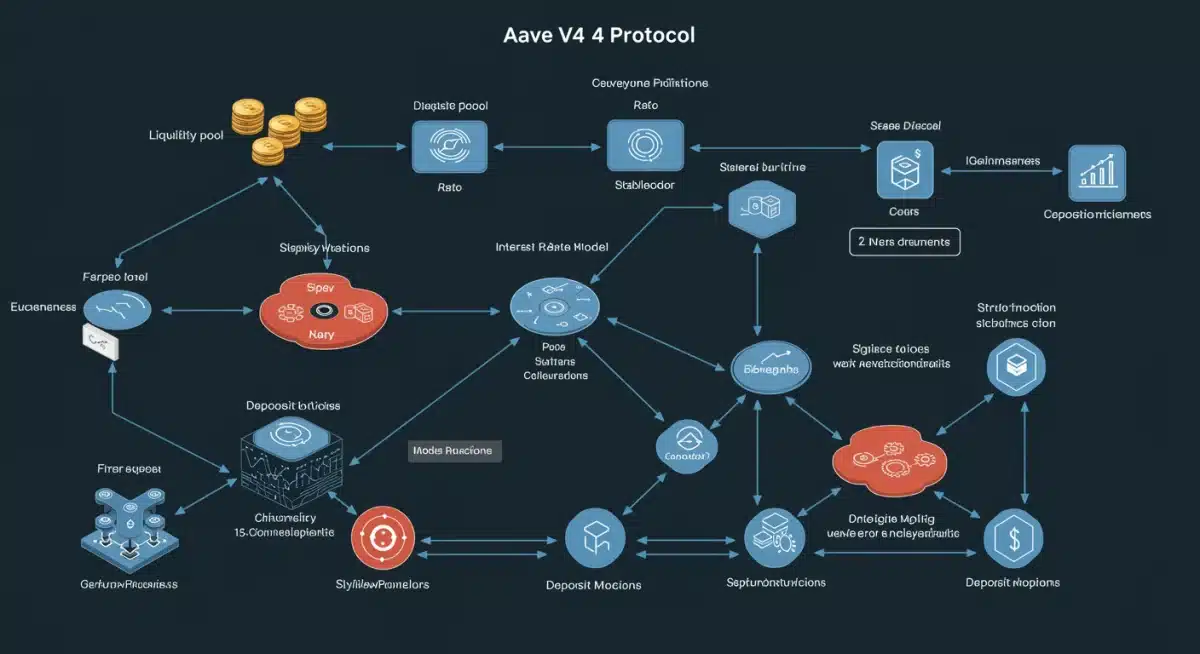
Given the rapid pace of blockchain development, Aave V4 could introduce a suite of features designed to enhance capital efficiency, reduce risk, and improve user experience. These might include:
- Dynamic Interest Rate Models: More sophisticated algorithms that adjust interest rates based on real-time market demand and supply, potentially leading to higher yields during periods of high borrowing demand for stablecoins.
- Cross-Chain Functionality: Enhanced capabilities to seamlessly move and utilize assets across multiple blockchain networks (e.g., Ethereum, Polygon, Avalanche, Arbitrum), expanding the liquidity pools and potential for yield aggregation. This would increase the overall market size for DeFi Stablecoin Staking.
- Advanced Risk Management Frameworks: Improved liquidation mechanisms, oracle integrations, and governance-driven risk parameters to protect depositors’ funds and maintain protocol solvency, fostering greater trust and attracting more capital.
- Tokenomics Enhancements: Potential adjustments to the AAVE token’s utility and reward structure, offering more compelling incentives for long-term stakers and liquidity providers. This could include boosted yields for those who also stake AAVE or participate actively in governance.
- Institutional DeFi Integrations: Features tailored for institutional adoption, which would bring a massive influx of capital, significantly increasing demand for stablecoin lending and thus potentially boosting APYs.
These innovations, individually and collectively, could create an environment where achieving 15% APY through DeFi Stablecoin Staking on Aave V4 becomes a realistic and sustainable goal. The key will be understanding how to strategically position your assets to take advantage of these new features.
Strategies for Achieving 15% APY with Stablecoin Staking on Aave V4
Reaching a 15% APY with DeFi Stablecoin Staking requires more than just depositing your stablecoins and hoping for the best. It involves a strategic approach, continuous monitoring, and a willingness to adapt to market conditions. Here are several strategies to consider for Aave V4 in 2026:
1. Optimized Stablecoin Selection
Not all stablecoins yield the same returns. While USDT, USDC, and DAI are common, others like FRAX or sUSD might offer different APYs based on their specific market demand and liquidity. Researching and selecting the stablecoins with the most attractive lending rates on Aave V4 will be crucial. Factors to consider include:
- Liquidity: Higher liquidity generally means more stable rates and easier entry/exit.
- Peg Stability: Ensure the stablecoin has a strong track record of maintaining its peg.
- Audit History: Choose stablecoins that have undergone rigorous security audits.
Diversifying across a few high-performing stablecoins can also help mitigate risks associated with any single asset.
2. Dynamic Rate Management (Stable vs. Variable)
Aave offers both stable and variable interest rates for borrowing and lending. While stable rates provide predictability, variable rates can offer higher returns during periods of high demand. A savvy investor will continuously monitor market conditions and switch between stable and variable rates on Aave V4 to optimize their DeFi Stablecoin Staking yields. This might involve:
- Starting with a variable rate when borrowing demand is high.
- Switching to a stable rate if variable rates begin to decline significantly or if market volatility increases.
- Utilizing Aave’s governance proposals to anticipate and react to changes in rate models.
3. Leveraging Aave’s Governance and Ecosystem Incentives
Active participation in Aave’s governance (by holding and staking AAVE tokens) could unlock additional benefits. Governance decisions often influence interest rate parameters, incentive programs, and the overall direction of the protocol. By staying engaged, you can potentially influence outcomes that favor DeFi Stablecoin Staking yields.
Furthermore, Aave V4 might introduce new incentive programs or partnerships that offer boosted APYs for specific stablecoin deposits. Keeping abreast of these announcements and participating in relevant programs will be key to maximizing your returns.
4. Yield Aggregators and Automation
For those seeking to automate and optimize their DeFi Stablecoin Staking, yield aggregators like Yearn Finance or Convex Finance could play a significant role. These platforms automatically deploy your stablecoins across various protocols and strategies to find the highest possible APY, often compounding rewards automatically. By 2026, these aggregators are expected to be even more sophisticated, integrating seamlessly with Aave V4 to maximize efficiency and returns. However, always exercise caution and research the security and audit history of any aggregator you consider.
5. Strategic Use of Borrowing (Advanced)
For experienced users, strategically borrowing against your stablecoin deposits on Aave V4 to deploy the borrowed assets into other yield-generating opportunities (while managing the liquidation risk) can significantly amplify returns. This is a more advanced strategy known as ‘looping’ or ‘recursive lending.’ It involves:
- Depositing stablecoin A.
- Borrowing stablecoin B (often the same stablecoin, or a different one with favorable rates) against A.
- Depositing stablecoin B back into Aave or another protocol for additional yield.
This strategy carries higher risk due to potential liquidation if the value of your collateral drops or borrowing rates spike. Careful risk management, including setting appropriate collateral ratios and monitoring market conditions, is paramount.
Navigating the US Regulatory Landscape for DeFi Stablecoin Staking in 2026
The US regulatory environment for cryptocurrencies and DeFi is a complex and evolving mosaic. By 2026, we can expect greater clarity, but also potentially stricter oversight. Understanding these regulations is crucial for anyone engaging in DeFi Stablecoin Staking, particularly for US citizens and residents.
Key Regulatory Areas to Monitor
Several governmental bodies in the US have jurisdiction over digital assets, leading to a fragmented and sometimes contradictory regulatory framework. Key areas to watch include:
- Securities and Exchange Commission (SEC): The SEC’s stance on whether certain cryptocurrencies or DeFi activities constitute ‘securities’ is critical. If stablecoin staking is deemed a securities offering, it would fall under stringent regulations, impacting how it can be offered and accessed.
- Commodity Futures Trading Commission (CFTC): The CFTC views some cryptocurrencies as commodities. Their regulations might impact derivatives or futures related to stablecoins.
- Financial Crimes Enforcement Network (FinCEN): FinCEN’s focus is on Anti-Money Laundering (AML) and KYC regulations. While Aave itself is decentralized, the on-ramps and off-ramps (fiat-to-crypto exchanges) often require KYC, and future regulations might extend to certain DeFi interfaces.
- Internal Revenue Service (IRS): The IRS considers cryptocurrencies as property for tax purposes. This means that gains from DeFi Stablecoin Staking (interest earned) are taxable income, and capital gains tax may apply when selling or exchanging stablecoins after appreciation (though less likely with stablecoins if they maintain their peg). Comprehensive record-keeping is essential.
- State-Level Regulations: Beyond federal regulations, individual US states may impose their own rules, adding another layer of complexity.
By 2026, we might see a more unified approach or clearer guidelines from these bodies, potentially leading to specific licenses or registrations required for certain DeFi protocols or service providers. The classification of stablecoins themselves (e.g., as payment instruments, securities, or commodities) will have a profound impact on their regulatory treatment.
Implications for DeFi Stablecoin Staking
- Increased Scrutiny: Expect greater attention from tax authorities. Tools and services for tracking DeFi transactions and calculating tax liabilities will become even more indispensable.
- Potential for Centralized Intermediaries: To comply with regulations, some DeFi protocols or interfaces might introduce optional KYC layers or partner with regulated entities, potentially impacting the ‘decentralized’ nature for US users.
- Geofencing: Certain protocols or features might become unavailable to US users if they cannot meet specific regulatory requirements, leading to geofencing.
- Legal Clarity (and Risks): While clearer regulations can provide certainty, they can also introduce new compliance burdens and potential legal risks for those who fail to adhere.
Staying informed through reliable legal and financial counsel, and utilizing compliant tools for tracking and reporting, will be critical for US investors in DeFi Stablecoin Staking.

Risks Associated with DeFi Stablecoin Staking
While the prospect of 15% APY with DeFi Stablecoin Staking is enticing, it’s crucial to acknowledge and understand the inherent risks. DeFi, by its very nature, involves new technologies and a less regulated environment than traditional finance.
1. Smart Contract Risk
DeFi protocols operate on smart contracts. While Aave is rigorously audited, no smart contract is 100% immune to bugs or exploits. A vulnerability could lead to the loss of deposited funds. Regular audits, bug bounty programs, and community oversight help mitigate this, but the risk remains.
2. Stablecoin De-pegging Risk
Although stablecoins aim for price stability, events can occur where they temporarily or permanently lose their peg to the underlying fiat currency. This could be due to issues with the stablecoin issuer’s reserves, market manipulation, or broader economic instability. A de-pegged stablecoin would negate the ‘stable’ aspect of your DeFi Stablecoin Staking.
3. Liquidation Risk (for Borrowers)
If you engage in advanced strategies involving borrowing against your stablecoin deposits, you face liquidation risk. Should the value of your collateral fall below a certain threshold (or borrowing rates become prohibitively high), your collateral could be automatically sold to repay the loan, often incurring penalties.
4. Regulatory Risk
As discussed, adverse regulatory changes in the US or other major jurisdictions could impact the legality, accessibility, or profitability of DeFi Stablecoin Staking. Sudden policy shifts could lead to market disruptions or force protocols to alter their operations.
5. Oracle Risk
DeFi protocols rely on external data feeds (oracles) for price information. If an oracle feed is compromised or provides incorrect data, it could lead to incorrect liquidations, unfair interest rates, or other protocol malfunctions.
6. Impermanent Loss (Less Relevant for Pure Stablecoin Staking but relevant for LP)
While less directly applicable to simple stablecoin lending on Aave, if you venture into providing stablecoin liquidity to a DEX pool (e.g., stablecoin-stablecoin pairs), you might still experience impermanent loss, though typically much smaller than with volatile pairs. It’s a concept to be aware of if diversifying your DeFi Stablecoin Staking strategy.
7. Platform Risk / Centralization Risk
Despite being ‘decentralized,’ many aspects of DeFi still rely on certain centralized components or key developers. A compromise of these components or a significant governance dispute could impact the protocol. Furthermore, the user interface you use to interact with Aave is often a centralized website, subject to potential hacks or downtime.
The Future of DeFi Stablecoin Staking and Aave V4
By 2026, the DeFi landscape will undoubtedly be more mature, sophisticated, and potentially more integrated with traditional finance. Aave V4 will likely be a cornerstone of this evolution, offering enhanced features and greater capital efficiency. The target of 15% APY for DeFi Stablecoin Staking, while ambitious, is achievable through a combination of strategic asset allocation, active management, and leveraging protocol innovations.
The continuous growth of institutional participation in DeFi, driven by clearer regulatory frameworks and improved infrastructure, will likely increase the demand for stablecoin lending, potentially driving up interest rates. Furthermore, innovations in layer-2 scaling solutions will reduce transaction costs, making smaller-scale DeFi Stablecoin Staking more economically viable and accessible to a broader audience.
However, investors must remain vigilant. The fast-paced nature of DeFi means that strategies that work today may not be optimal tomorrow. Continuous learning, adapting to new technologies, and monitoring both market dynamics and the regulatory environment will be essential for sustained success in DeFi Stablecoin Staking.
Conclusion: Your Path to 15% APY with DeFi Stablecoin Staking on Aave V4
Achieving 15% APY with DeFi Stablecoin Staking on Aave V4 in 2026 is a challenging yet attainable goal for the informed and proactive investor. This guide has laid out the fundamental concepts, anticipated advancements in Aave V4, strategic approaches, and the critical importance of understanding the US regulatory landscape.
Successful DeFi Stablecoin Staking hinges on a multi-faceted approach:
- Deep Dive into Aave V4: Familiarize yourself with its new features, governance mechanisms, and potential incentive programs.
- Strategic Asset Allocation: Choose stablecoins wisely, considering liquidity, peg stability, and audit history.
- Dynamic Management: Optimize between stable and variable interest rates and explore yield aggregators for automation.
- Risk Mitigation: Understand and actively manage risks associated with smart contracts, stablecoin de-pegging, and liquidation.
- Regulatory Compliance: Stay informed about US regulations, manage your tax obligations diligently, and seek professional advice when needed.
The future of finance is increasingly decentralized, and stablecoins are poised to play a pivotal role. By embracing the opportunities presented by Aave V4 and approaching DeFi Stablecoin Staking with a well-thought-out strategy and a keen awareness of risks and regulations, you can position yourself to maximize your yields and participate in this exciting financial revolution. Remember, while the potential rewards are significant, due diligence and continuous education are your most valuable assets in the DeFi space.