Optimize Gas Fees: US DeFi Users Save 15% on Transactions by 2025

US DeFi users can significantly optimize gas fees, achieving up to 15% savings on transactions by 2025 through strategic adoption of Layer 2 solutions, efficient protocols, and informed transaction timing.
Navigating the decentralized finance (DeFi) landscape in the United States often comes with the challenge of high transaction costs, commonly known as gas fees. For many users, these fees can erode potential gains and deter participation. This article aims to provide practical, actionable solutions for optimizing gas fees, enabling US DeFi users to potentially save up to 15% on their transactions by 2025. By understanding the underlying mechanisms and adopting smart strategies, both novice and experienced DeFi participants can enhance their profitability and efficiency.
Understanding the Gas Fee Dilemma in DeFi
Gas fees are the lifeblood of blockchain networks, particularly Ethereum, which hosts the majority of DeFi activity. These fees compensate validators for processing and securing transactions, preventing network spam, and allocating computational resources. However, during periods of high network congestion, gas prices can skyrocket, making even small transactions prohibitively expensive. This section delves into the core components of gas fees and their impact on US DeFi users.
The fluctuating nature of gas fees is primarily driven by supply and demand. When more users are trying to execute transactions simultaneously, the demand for block space increases, leading to higher gas prices as users bid against each other to get their transactions included in the next block. This auction-like mechanism, while efficient in allocating limited resources, often penalizes users with smaller capital or those performing frequent micro-transactions.
How Gas Fees are Calculated
Understanding the calculation of gas fees is crucial for optimization. Essentially, a gas fee is determined by two main factors: the amount of gas required for an operation and the gas price. The gas required is a fixed unit of computational effort for a specific transaction type, while the gas price is the amount of Ether (or other native token) a user is willing to pay per unit of gas.
- Gas Limit: The maximum amount of gas a user is willing to spend on a transaction.
- Gas Price: The cost per unit of gas, typically measured in Gwei (a small denomination of Ether).
- Total Gas Fee: Gas Limit multiplied by Gas Price.
The Base Fee, introduced with Ethereum’s EIP-1559, is burned rather than paid to miners, reducing overall supply and adding a predictable element to gas prices. Users also pay a Priority Fee (or ‘tip’) to incentivize miners to include their transactions faster. Grasping these components empowers users to make more informed decisions when setting their transaction parameters.
For US DeFi users, high gas fees translate directly into reduced profitability, especially for arbitrage strategies or frequent rebalancing of portfolios. It also creates a barrier to entry for new users who might be discouraged by the seemingly arbitrary costs. Hence, finding effective strategies to mitigate these costs is paramount for sustainable DeFi engagement.
Leveraging Layer 2 Solutions for Cost Efficiency
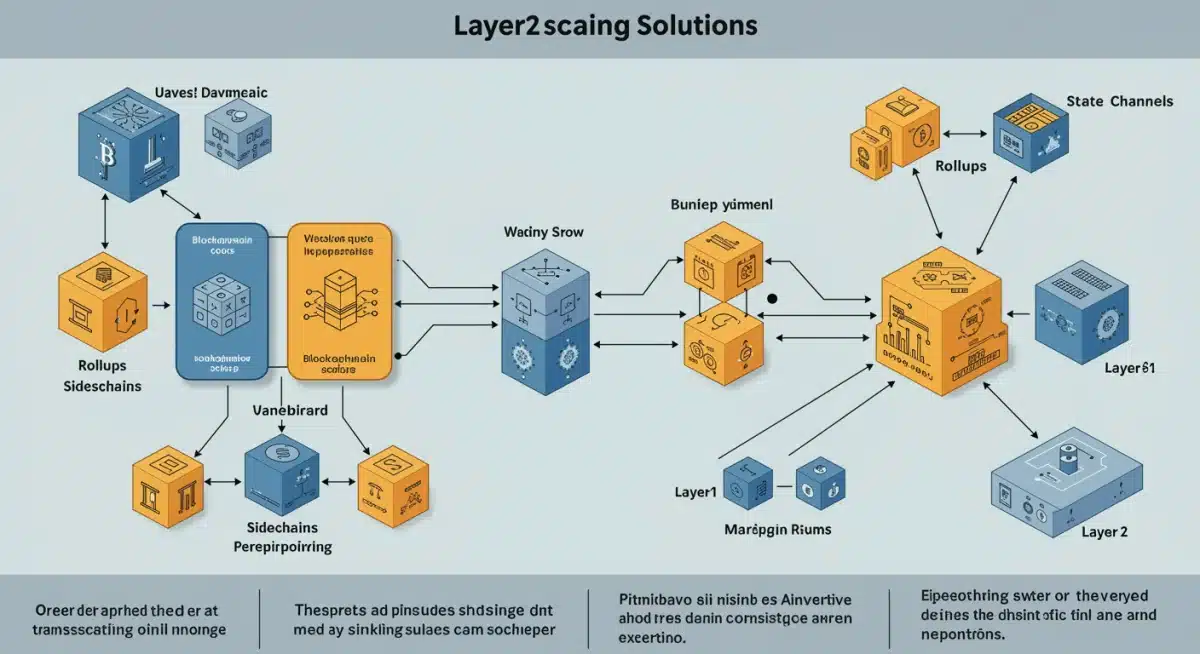
Layer 2 (L2) scaling solutions represent one of the most promising avenues for significantly reducing gas fees and improving transaction speeds. These technologies process transactions off the main Ethereum blockchain (Layer 1) and then batch them back to L1, drastically cutting down on individual transaction costs. US DeFi users can achieve substantial savings by migrating their activities to these L2 networks.
The adoption of Layer 2 solutions has been steadily growing, with major DeFi protocols increasingly deploying on these networks. This shift allows users to interact with decentralized applications (dApps) at a fraction of the cost, making DeFi more accessible and economically viable for a broader audience. Understanding the different types of L2s is key to choosing the most suitable option for specific needs.
Popular Layer 2 Technologies
Several types of Layer 2 solutions exist, each with its own advantages and trade-offs. The most prominent ones include rollups (Optimistic and ZK-Rollups), sidechains, and state channels. Each offers a different approach to scaling and security, catering to various use cases within the DeFi ecosystem.
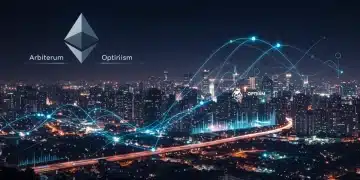
- Optimistic Rollups: Assume transactions are valid by default and only run computation if a challenge arises. Examples include Optimism and Arbitrum.
- ZK-Rollups: Prove the validity of transactions cryptographically off-chain before submitting them to Layer 1. Examples include zkSync and StarkNet.
- Sidechains: Independent blockchains with their own consensus mechanisms, connected to the main chain via a two-way bridge. Polygon is a notable example.
Migrating assets to an L2 involves bridging tokens from Layer 1 to the chosen Layer 2 network. While this initial bridging transaction incurs a Layer 1 gas fee, the subsequent transactions on the L2 are significantly cheaper. For users engaging in frequent transactions, the initial bridging cost is quickly offset by the accumulated savings on gas fees. The emergence of cross-L2 bridges is also simplifying asset transfers between different Layer 2 networks.
The continuous development and integration of Layer 2 solutions are transforming the DeFi landscape, offering a viable path for US users to significantly optimize their gas fee expenditure. As these networks mature and become more interconnected, the user experience will further improve, solidifying their role as a cornerstone of scalable DeFi.
Strategic Transaction Timing and Gas Price Prediction Tools
One of the simplest yet most effective strategies for optimizing gas fees is timing transactions strategically. Gas prices are highly volatile and fluctuate based on network demand. By understanding these patterns and utilizing available tools, US DeFi users can execute transactions during periods of lower network congestion, leading to substantial cost savings.
Gas prices typically follow predictable cycles throughout the day and week. Weekends and late-night hours (Eastern Time) often see lower network activity, resulting in reduced gas fees. Conversely, weekday mornings and afternoons, especially during peak US business hours, tend to experience higher congestion and, consequently, higher gas prices. Adapting one’s transaction schedule to these patterns can yield significant savings.
Utilizing Gas Price Prediction Tools
Several online tools and platforms provide real-time gas price data and even predictions for future gas costs. These tools are invaluable for making informed decisions about when to initiate transactions. They often display current average gas prices, historical trends, and estimates for different transaction speeds (fast, standard, slow).
- Etherscan Gas Tracker: Provides real-time gas prices and estimated transaction times.
- GasNow: Offers gas price predictions based on network load.
- DeFi Llama: Aggregates data across various DeFi protocols, including gas usage.
By regularly consulting these tools, users can identify optimal windows for executing transactions. For example, if a user needs to perform a non-urgent swap or stake tokens, waiting a few hours for gas prices to drop can save a considerable amount. Some wallets and dApps also integrate these tools directly, offering gas price suggestions before confirming a transaction.
Furthermore, understanding the concept of ‘max priority fee’ and ‘max fee’ in EIP-1559 is crucial. Setting a reasonable max fee ensures your transaction will eventually go through, while a carefully chosen priority fee can speed up confirmation without overpaying. Strategic timing, combined with the intelligent use of gas price prediction tools, empowers users to minimize their transaction costs effectively.
Batching Transactions and Efficient Protocol Usage
Another powerful strategy for optimizing gas fees involves batching multiple operations into a single transaction and choosing DeFi protocols known for their gas efficiency. Each transaction on the blockchain incurs a base gas cost, so consolidating actions whenever possible can lead to significant savings for US DeFi users.
For instance, instead of approving a token, then swapping it, and then staking it in three separate transactions, some protocols or interfaces allow for these actions to be bundled. While not always feasible for all operations, identifying opportunities to batch transactions can drastically reduce the cumulative gas expenditure. This requires a bit of foresight and planning but pays off in the long run.
Choosing Gas-Efficient DeFi Protocols
Not all DeFi protocols are created equal in terms of gas consumption. Developers constantly strive to optimize their smart contracts to reduce the computational resources required for operations. Researching and selecting protocols known for their gas efficiency can be a game-changer for users looking to minimize costs.
- Aggregators: Platforms like 1inch or Matcha often find the most gas-efficient routes for swaps across various decentralized exchanges (DEXs).
- Optimized Smart Contracts: Newer versions of popular protocols or those specifically designed for efficiency can offer lower gas costs for common actions like lending, borrowing, or staking.
- Off-Chain Solutions: Some protocols incorporate off-chain components where certain computations are performed before interacting with the main blockchain, reducing on-chain gas usage.
Before engaging with a new protocol, it’s wise to check community discussions or analytical platforms that compare gas usage for similar operations across different dApps. A protocol might offer slightly lower yields but significantly lower transaction costs, making it more profitable overall for users with frequent interactions. Prioritizing gas efficiency in protocol selection is a strategic move for any discerning DeFi participant.
Hardware Wallets and Transaction Management Best Practices
Beyond network-level solutions and strategic timing, the tools and practices users employ for managing their transactions also play a critical role in optimizing gas fees. Using hardware wallets and adhering to best practices in transaction management can enhance security and prevent costly errors, which indirectly contribute to gas fee savings.
Hardware wallets, while primarily known for their security benefits, also offer a more controlled environment for managing transactions. They provide a clear interface for reviewing transaction details, including gas limits and prices, before signing. This careful review process helps prevent accidental overpayments or failed transactions that still consume gas.
Avoiding Failed Transactions
A common and frustrating source of wasted gas is failed transactions. A transaction can fail for various reasons, such as insufficient gas limit, outdated nonces, or smart contract reverts due to unexpected conditions (e.g., slippage limits exceeded). Even a failed transaction consumes gas because the network still expended computational resources to process it.
- Set Adequate Gas Limits: Always ensure the gas limit is sufficient for the intended operation. Most wallets provide reasonable defaults, but complex interactions might require adjustments.
- Monitor Slippage: When swapping tokens, set appropriate slippage tolerances to avoid transactions reverting due to price changes.
- Check Network Status: Before initiating a transaction, quickly check the network for any known issues or extreme congestion that might lead to failures.
Moreover, understanding how to cancel or speed up pending transactions can save gas. If a transaction is stuck due to a low gas price, replacing it with a new transaction with a higher gas price (using the same nonce) can prevent it from being stuck indefinitely. Conversely, if a transaction is no longer needed, canceling it with a zero-value transaction to your own address with a higher gas price can clear the queue. These advanced management techniques, while requiring some technical understanding, empower users to maintain control over their gas expenditure.
The Future of Gas Fee Optimization: What to Expect by 2025
The DeFi ecosystem is in a constant state of evolution, and the landscape of gas fee optimization is no exception. As we look towards 2025, several key developments are expected to further reduce transaction costs and improve the overall user experience for US DeFi participants. These advancements will likely build upon existing solutions while introducing novel approaches to scalability and efficiency.
Ethereum’s ongoing upgrades, collectively known as Ethereum 2.0 or Serenity, are central to this future. While Layer 2 solutions currently offer significant relief, the long-term vision involves a more scalable Layer 1, which will further complement the efficiency gains from L2s. Sharding, for example, aims to partition the blockchain into multiple shards, allowing for parallel processing of transactions.
Emerging Technologies and Trends
Beyond core Ethereum upgrades, other innovations are also poised to contribute to gas fee optimization. The interoperability between different blockchains and Layer 2s will become more seamless, reducing the friction and cost associated with moving assets across networks. Cross-chain bridges and atomic swaps are continuously being refined to be more secure and cost-effective.
- Account Abstraction: This will allow for more flexible and programmable accounts, potentially enabling features like sponsored transactions where a third party pays for gas fees.
- Intent-Based Architectures: Moving away from explicit transaction instructions to expressing desired outcomes, which can then be fulfilled by off-chain solvers in a gas-efficient manner.
- Further L2 Specialization: Expect more specialized Layer 2s tailored for specific applications (e.g., gaming, NFTs, high-frequency trading), each optimizing for its particular use case.
By 2025, the user experience for interacting with DeFi is expected to be significantly smoother, with gas fees becoming less of a prominent concern for routine transactions. The integration of gas optimization features directly into wallets and dApps will likely become standard, abstracting away much of the complexity from the end-user. This future promises a more inclusive and economically efficient DeFi environment for US users, allowing them to focus more on strategy and less on transaction costs.
| Key Strategy | Brief Description |
|---|---|
| Layer 2 Adoption | Migrate DeFi activities to Layer 2 networks like Optimism or Arbitrum for significantly lower transaction costs. |
| Strategic Timing | Execute transactions during off-peak hours (weekends, late nights) and use gas price prediction tools. |
| Batching & Efficiency | Combine multiple operations into single transactions and choose gas-efficient DeFi protocols. |
| Proactive Management | Utilize hardware wallets, understand EIP-1559, and manage pending transactions to avoid failed costs. |
Frequently Asked Questions About Gas Fee Optimization
Gas fees are transaction costs on blockchain networks, primarily Ethereum, paid to validators for processing and securing operations. They become high due to network congestion, where increased demand for limited block space drives up prices through an auction mechanism among users.
Layer 2 solutions process transactions off the main blockchain, batching them together before settling on Layer 1. This significantly reduces the computational load on the main chain, leading to much lower individual transaction costs and faster processing times for users.
Gas fees are generally lower during off-peak hours, such as weekends and late-night hours (Eastern Time), when network congestion is reduced. Using real-time gas trackers can help identify optimal windows for cheaper transactions.
While hardware wallets don’t directly reduce gas prices, they offer a secure interface for reviewing transaction details, including gas limits and prices. This helps prevent accidental overpayments and failed transactions, indirectly saving gas by avoiding costly errors.
By 2025, Ethereum upgrades like sharding, enhanced Layer 2 interoperability, account abstraction, and intent-based architectures are expected to significantly reduce gas fees. These innovations aim to make DeFi transactions more efficient and cost-effective for all users.
Conclusion
The journey to optimizing gas fees in the US DeFi landscape is multifaceted, requiring a combination of technological adoption, strategic planning, and informed decision-making. By embracing Layer 2 solutions, timing transactions intelligently, prioritizing gas-efficient protocols, and practicing diligent transaction management, US DeFi users are well-positioned to achieve significant savings, potentially reaching 15% or more by 2025. The continuous evolution of blockchain technology promises an even more efficient and accessible DeFi future, where high gas fees become less of a barrier and more of a manageable cost of doing decentralized business. Staying updated with these advancements and proactively implementing these strategies will be key to maximizing profitability and participation in the burgeoning DeFi ecosystem.