US State Crypto Licensing: 2026 Frameworks Compared

This guide provides an in-depth comparison of the three leading US state-level crypto licensing frameworks for 2026, offering crucial insights for businesses navigating the evolving regulatory landscape of digital assets.
Navigating the complex and fragmented regulatory landscape of digital assets in the United States requires a deep understanding of state-level requirements. This article delves into US crypto licensing frameworks, specifically focusing on the three leading state models in 2026, offering an insider’s guide to their intricacies and implications for businesses in the crypto space.
The Evolving Landscape of US State Crypto Regulation
The United States, unlike many other nations, adopts a dual banking system where both federal and state authorities regulate financial services. This structure extends to the burgeoning cryptocurrency industry, creating a patchwork of regulations that can be challenging for businesses to navigate. In 2026, several states have emerged as pioneers, establishing comprehensive licensing frameworks that significantly impact how digital asset companies operate. Understanding these frameworks is not just about compliance; it’s about strategic positioning and market access.
As the crypto market matures, states are refining their approaches, seeking a balance between fostering innovation and protecting consumers and investors. This has led to the development of distinct regulatory philosophies, each with its own set of advantages and disadvantages. Businesses must meticulously analyze these differences to determine the optimal jurisdictions for their operations, considering factors like operational costs, market opportunities, and regulatory burdens.
Key Drivers of State-Level Regulation
Several factors have propelled states to develop their own crypto licensing regimes. These include:
- Consumer Protection: Safeguarding users from fraud, scams, and market manipulation.
- Financial Stability: Mitigating risks that digital assets might pose to the broader financial system.
- Innovation Promotion: Creating a clear regulatory environment that encourages technological advancement while maintaining oversight.
- Revenue Generation: Establishing licensing fees and potential tax revenues from compliant crypto businesses.
The interplay of these drivers often shapes the specific requirements and enforcement mechanisms within each state’s framework. Consequently, businesses must look beyond the surface-level rules and understand the underlying policy objectives to ensure long-term compliance.
The fragmented nature of US crypto regulation means that a company operating nationwide might need to obtain licenses in multiple states, each with unique application processes, capital requirements, and reporting obligations. This complexity underscores the importance of a comprehensive understanding of the leading state frameworks to effectively manage legal and operational risks.
New York’s BitLicense: A Pioneer’s Enduring Influence
New York’s BitLicense, introduced in 2015, remains one of the most recognized and impactful state-level crypto licensing frameworks. By 2026, it has undergone several refinements, yet its core principles of stringent oversight endure. The BitLicense applies to businesses engaging in ‘virtual currency business activity’ involving New York residents or operations within the state. This broad definition captures a wide array of activities, from exchange services to stablecoin issuance.
The application process for a BitLicense is notoriously rigorous, demanding extensive documentation, detailed business plans, robust cybersecurity protocols, and significant capital reserves. This high barrier to entry has often been cited as a reason for some crypto companies to avoid operating in New York, while others view compliance as a badge of credibility. The New York Department of Financial Services (NYDFS) maintains a proactive approach to enforcement, regularly issuing guidance and taking action against non-compliant entities.
Key Characteristics of BitLicense
- Comprehensive Scope: Covers a broad range of virtual currency activities.
- High Capital Requirements: Mandates significant financial reserves for licensees.
- Robust Cybersecurity Standards: Requires stringent measures to protect customer data and assets.
- Consumer Protection Focus: Emphasizes transparency, disclosure, and complaint resolution mechanisms.
While challenging, obtaining a BitLicense signifies a high level of regulatory adherence, often opening doors to institutional partnerships and broader market acceptance. Its influence extends beyond state borders, frequently serving as a benchmark for other jurisdictions developing their own crypto regulations. The NYDFS continues to adapt the framework, for instance, by providing clearer guidance on token listings and stablecoin reserves, reflecting the dynamic nature of the crypto industry.
For businesses targeting a significant presence in the US market, understanding and potentially pursuing a BitLicense remains a critical strategic consideration. Its established nature and strict requirements set a high bar for operational excellence and regulatory compliance in the digital asset space.
Wyoming’s Special Purpose Depository Institutions (SPDIs): Innovation Hub
Wyoming has carved out a unique niche in the US crypto regulatory landscape with its Special Purpose Depository Institutions (SPDIs) framework, enacted in 2019 and continuously refined through 2026. This innovative approach aims to provide a regulatory sandbox for blockchain and digital asset companies, offering a path to operate as state-chartered banks. SPDIs can hold digital assets in custody, provide payment services, and engage in other banking activities, specifically tailored for the crypto economy.
The SPDI framework is designed to address the banking needs of crypto businesses that often struggle to access traditional financial services due to regulatory uncertainties. By granting SPDI charters, Wyoming seeks to foster a compliant and secure environment for digital asset innovation. Unlike the BitLicense, which focuses on money transmission, SPDIs offer a full banking charter, albeit with a narrower scope focused on digital assets.
Advantages of the SPDI Framework
The SPDI model offers several distinct advantages for crypto businesses:
- Access to Banking Services: Provides a regulatory-compliant pathway for crypto companies to offer and access banking functions.
- Clear Regulatory Path: Offers a bespoke banking charter, reducing ambiguity compared to fitting crypto into traditional money transmission laws.
- Segregated Accounts: Mandates 100% reserve requirements for customer deposits, enhancing security and trust.
- Innovation-Friendly Environment: Attracts companies seeking a supportive and forward-thinking regulatory climate.
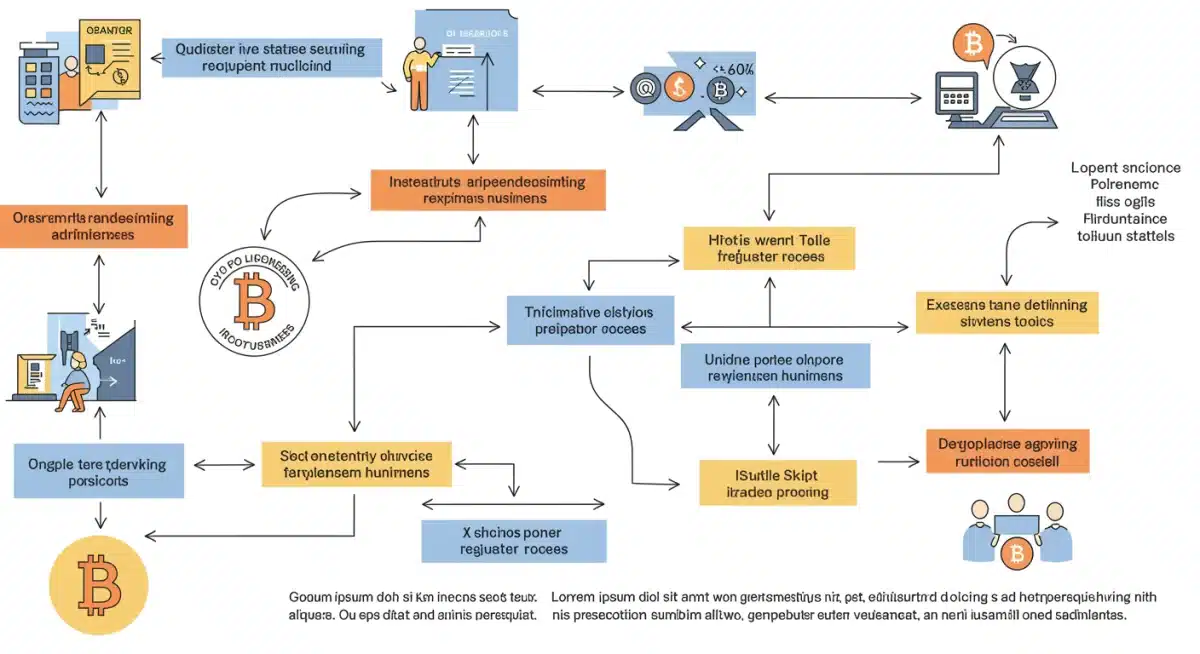
Wyoming’s commitment to blockchain technology extends beyond SPDIs, with laws recognizing digital assets as property and establishing clear legal definitions. This comprehensive legislative environment makes Wyoming a magnet for crypto startups and established firms looking for a stable and predictable regulatory home. The state’s approach demonstrates a willingness to adapt traditional financial regulations to the unique characteristics of digital assets, contrasting with New York’s more traditional regulatory application.
The SPDI framework represents a significant step towards integrating digital assets into the mainstream financial system, providing a model that other states and even federal regulators are closely observing. Its success in fostering innovation while maintaining robust oversight positions Wyoming as a critical player in the US crypto regulatory landscape.
Texas’s Money Services Business (MSB) Licensing for Crypto
Texas, a state known for its business-friendly environment, has adopted a more traditional approach to crypto regulation by largely applying its existing Money Services Business (MSB) licensing framework to digital asset activities. By 2026, the Texas Department of Banking (TxDOB) has provided significant clarity on how its MSB laws apply to virtual currency businesses, particularly those involved in exchanging, storing, or transmitting digital assets. This framework emphasizes consumer protection and anti-money laundering (AML) compliance, aligning with federal guidelines.
The Texas MSB license requires businesses to meet specific capital requirements, maintain surety bonds, and implement robust compliance programs. While not as specialized as Wyoming’s SPDIs or as prescriptive as New York’s BitLicense, the Texas framework offers a clear, albeit broad, regulatory path. Its application to crypto ensures that digital asset exchanges and custodial services operate under similar oversight as traditional money transmitters, fostering a sense of familiarity for both regulators and businesses.
Key Aspects of Texas’s Approach
The Texas MSB framework for crypto is characterized by:
- Adaptation of Existing Laws: Utilizes established money transmission statutes rather than creating entirely new ones.
- Focus on AML/KYC: Strong emphasis on anti-money laundering and know-your-customer protocols.
- Consumer Disclosure: Requires businesses to provide clear information to consumers regarding risks and terms of service.
- State-Specific Interpretations: While based on existing laws, the TxDOB issues specific guidance on virtual currency.
The flexibility of the Texas MSB framework allows for a wide range of crypto activities to operate, provided they adhere to the established financial regulations. This approach appeals to businesses that prefer to integrate into existing regulatory structures rather than navigate entirely new ones. Texas’s significant economic footprint and growing tech sector make its regulatory stance particularly influential for crypto companies seeking to expand their operations in key US markets.
The Texas model reflects a pragmatic strategy: leverage existing regulatory infrastructure to oversee new technologies. This contrasts with both New York’s pioneering, bespoke framework and Wyoming’s innovative, charter-based system. Each approach presents a unique set of challenges and opportunities for digital asset businesses operating in 2026.
Comparative Analysis of the Three Frameworks
When comparing US crypto licensing frameworks in 2026, New York’s BitLicense, Wyoming’s SPDIs, and Texas’s MSB framework present distinct philosophies and operational implications. The BitLicense is characterized by its comprehensive, prescriptive nature, demanding high standards for cybersecurity, capital, and consumer protection. It’s a gold standard for regulatory rigor, often perceived as a challenging but ultimately validating hurdle for businesses.
Wyoming’s SPDI framework, conversely, offers a specialized banking charter, providing a bespoke regulatory environment for crypto-native financial institutions. Its focus is on integrating digital assets into a compliant banking structure, emphasizing innovation within a secure, reserve-backed model. This approach is highly attractive to companies seeking to offer a broader range of financial services beyond mere money transmission.
Key Differences and Strategic Implications
- Regulatory Intent: NY (consumer protection, financial stability); WY (innovation, banking for crypto); TX (traditional money transmission oversight).
- Scope of Activity: BitLicense (broad virtual currency business); SPDI (banking services for digital assets); TX MSB (money transmission, exchange, custody).
- Barrier to Entry: BitLicense (high, comprehensive); SPDI (significant, banking-level); TX MSB (moderate, aligned with traditional MSBs).
Texas’s MSB framework represents a more conventional application of existing money transmission laws to digital assets. It’s less specialized than Wyoming’s SPDIs and less comprehensive than New York’s BitLicense, but it offers a clear and established path for compliance. This approach appeals to businesses that prioritize operational simplicity and integration into existing regulatory paradigms.
For a business, the choice of jurisdiction often depends on its specific services, target market, and risk appetite. A crypto exchange primarily focused on retail users might find the Texas MSB suitable, while a stablecoin issuer might consider the BitLicense. A company aiming to provide full-fledged banking services to other crypto firms would likely explore Wyoming’s SPDIs. Each framework shapes not only compliance costs but also strategic opportunities and market positioning.
Compliance Challenges and Best Practices for 2026
Regardless of the specific state framework, compliance in the US crypto space in 2026 presents a multifaceted challenge. The dynamic nature of digital assets, coupled with evolving regulatory interpretations, requires businesses to adopt agile and robust compliance strategies. Key challenges include keeping pace with technological advancements, managing cross-jurisdictional complexities, and navigating the gray areas of emerging asset classes.
For example, while New York’s BitLicense is well-defined, new forms of decentralized finance (DeFi) or non-fungible tokens (NFTs) can still pose interpretative challenges regarding their applicability. Similarly, Wyoming’s SPDIs, while innovative, must continually adapt to federal banking expectations and evolving digital asset risks. Texas’s MSB framework, while familiar, requires consistent engagement with the TxDOB to ensure current interpretations align with business practices.
Essential Compliance Best Practices
To thrive in this environment, businesses should implement:
- Proactive Regulatory Monitoring: Continuously track legislative and guidance changes across relevant states.
- Robust AML/KYC Programs: Implement and regularly audit comprehensive anti-money laundering and know-your-customer procedures.
- Strong Cybersecurity Frameworks: Protect customer assets and data with industry-leading security measures.
- Clear Internal Policies: Develop and enforce internal policies that align with all applicable state and federal regulations.
- Legal and Compliance Expertise: Engage specialized legal counsel and compliance officers with deep knowledge of digital asset regulations.
The cost of non-compliance can be severe, ranging from hefty fines and operational restrictions to reputational damage and loss of market trust. Therefore, investing in a strong compliance infrastructure is not merely a regulatory burden but a strategic imperative for long-term sustainability and growth in the digital asset industry. Businesses should also consider collaborating with industry associations and regulatory bodies to contribute to the development of more harmonized and effective regulations.
Ultimately, successful navigation of these frameworks requires a blend of legal acumen, technological understanding, and a commitment to operational excellence. The landscape is complex, but with the right approach, compliance can become a competitive advantage.
The Future Outlook for State-Level Crypto Regulation
Looking towards the future, the landscape of US crypto licensing frameworks is expected to continue its rapid evolution. While federal efforts to establish a unified regulatory approach are ongoing, state-level initiatives will likely remain a significant force in shaping the digital asset industry. We anticipate further refinements to existing frameworks and the emergence of new models as states compete to attract innovation and protect their constituents.
One potential trend is increased harmonization among state regulations, driven by industry pressure and the practical challenges of multi-state compliance. States might begin to adopt more reciprocal agreements or align their requirements more closely, reducing the administrative burden on businesses. However, fundamental differences in regulatory philosophy are likely to persist, maintaining a degree of fragmentation.
Anticipated Developments
- Increased Specialization: More states may introduce specialized charters or licenses tailored specifically for various crypto activities.
- Technological Integration: Regulators will increasingly leverage technology (e.g., blockchain analytics) for more efficient oversight and enforcement.
- Focus on DeFi and NFTs: Greater clarity and specific regulations for decentralized finance and non-fungible tokens are expected.
- Environmental, Social, and Governance (ESG) Considerations: Growing regulatory attention to the environmental impact and social governance aspects of crypto.
The interplay between state and potential federal regulations will also be a critical area to watch. While a comprehensive federal framework could streamline compliance, states will likely retain authority over certain aspects, similar to how traditional financial services are regulated. This dual approach will necessitate continuous monitoring and adaptation by market participants.
Ultimately, the future of state-level crypto regulation in the US will be characterized by a balance between fostering innovation and ensuring market integrity. Businesses that remain agile, proactive in their compliance efforts, and engaged with regulatory developments will be best positioned to succeed in this ever-changing environment. The frameworks of New York, Wyoming, and Texas will continue to serve as critical benchmarks and influential models for the entire nation.
| Framework | Key Characteristic |
|---|---|
| New York BitLicense | Stringent, comprehensive oversight for virtual currency businesses. |
| Wyoming SPDIs | Specialized banking charters for digital asset institutions. |
| Texas MSB | Applies existing money services business laws to crypto activities. |
| Regulatory Philosophy | Varies from strict consumer protection to innovation-centric banking. |
Frequently Asked Questions About Crypto Licensing
The BitLicense focuses on regulating virtual currency business activities generally, requiring stringent operational and financial standards. Wyoming SPDIs, however, provide a specialized banking charter specifically designed for digital asset institutions, allowing them to offer banking services tailored to the crypto industry.
The US regulatory system is fragmented, with states having individual authority over financial services. A crypto business operating across state lines often needs to obtain separate licenses in each state where it conducts regulated activities, leading to a complex compliance landscape.
Texas applies its existing Money Services Business (MSB) laws to virtual currency activities. This means businesses involved in exchanging, storing, or transmitting digital assets must comply with the same regulations as traditional money transmitters, focusing on AML/KYC and consumer protection.
Key challenges include keeping up with rapid technological changes, navigating the complexities of varying state regulations, managing cross-jurisdictional compliance, and addressing the regulatory ambiguities surrounding new crypto products like specific DeFi protocols or NFTs.
While a comprehensive federal framework could streamline certain aspects of crypto regulation, it’s unlikely to completely negate state-level requirements. States will probably retain authority over specific areas, requiring businesses to adapt to a hybrid federal-state regulatory model in the foreseeable future.
Conclusion
The comparative analysis of New York’s BitLicense, Wyoming’s SPDIs, and Texas’s MSB framework for 2026 reveals a diverse and evolving landscape of US state-level crypto regulation. Each framework reflects a unique approach to balancing innovation with consumer protection and financial stability. For digital asset businesses, understanding these distinct models is paramount for strategic planning, mitigating compliance risks, and successfully navigating the complex regulatory environment. As the industry matures, proactive engagement with these frameworks will be key to unlocking opportunities and ensuring sustainable growth in the dynamic world of cryptocurrencies.