Bitcoin’s Impact on U.S. Payment Systems by 2026

By 2026, Bitcoin is significantly reshaping U.S. payment systems, driven by major merchant integrations that enhance efficiency and accessibility in digital transactions across various sectors.
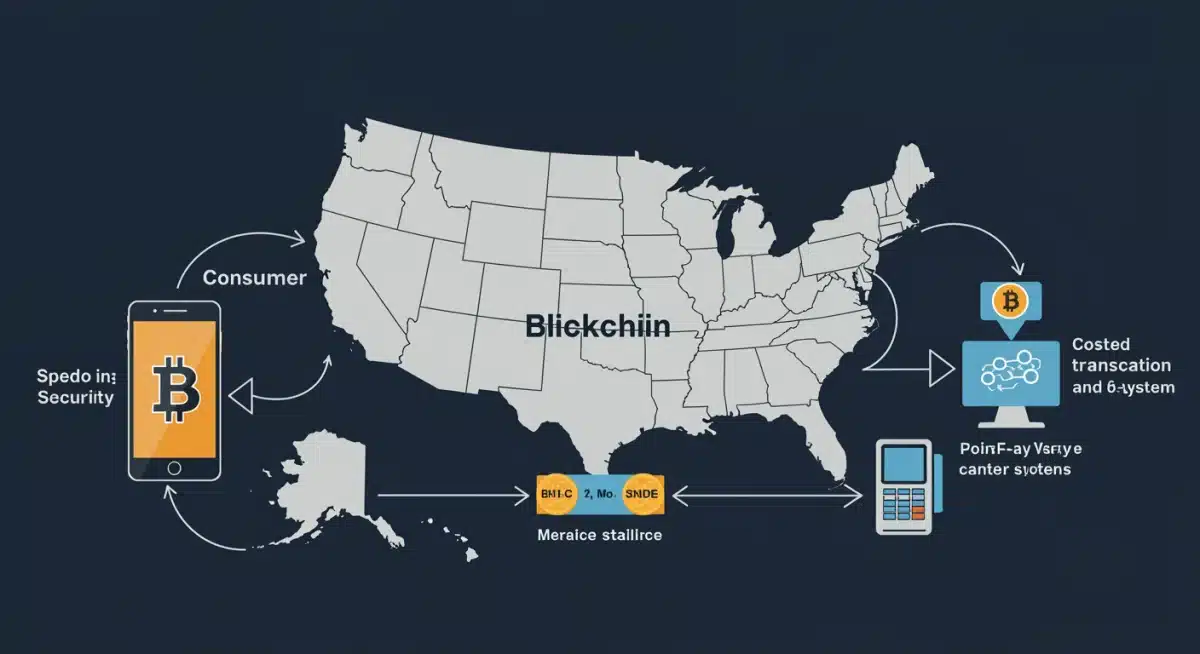
The landscape of U.S. payment systems is undergoing a profound transformation, with Bitcoin’s Impact on U.S. Payment Systems by 2026: An Analysis of 3 Major Merchant Integrations emerging as a pivotal force. This digital revolution is not just theoretical; it’s actively manifesting through significant adoptions by leading merchants, signaling a new era for financial transactions across the nation.
The Dawn of Bitcoin in Mainstream U.S. Commerce
The integration of Bitcoin into mainstream U.S. commerce marks a significant shift from its early days as a niche digital asset. What was once considered an experimental technology is now a viable, and increasingly preferred, method of payment for a growing number of consumers and businesses. This evolution is driven by several factors, including enhanced transaction speeds, lower fees compared to traditional banking systems, and the appeal of decentralized finance.
By 2026, the foundational infrastructure supporting Bitcoin payments has matured considerably. Regulatory frameworks have become clearer, and technological advancements have made the user experience smoother and more secure. This has paved the way for major corporations to confidently explore and implement Bitcoin payment solutions, attracting a new demographic of digitally-savvy consumers.
Technological Underpinnings for Widespread Adoption
The seamless integration of Bitcoin into existing payment terminals and online platforms hasn’t happened overnight. It required significant development in underlying technologies and protocols.
- Lightning Network: This layer-2 solution has drastically improved Bitcoin’s scalability, enabling near-instant, low-cost transactions that are essential for retail environments.
- Payment Processors: Companies specializing in crypto payment processing have bridged the gap between traditional fiat systems and digital assets, handling conversions and compliance for merchants.
- User-Friendly Wallets: The proliferation of intuitive and secure digital wallets has made it easier for consumers to manage their Bitcoin and make payments effortlessly.
These technological advancements have collectively reduced friction, making Bitcoin an attractive option for everyday purchases. The confluence of these innovations has been crucial in fostering an environment ripe for widespread merchant integration, moving Bitcoin from a speculative asset to a practical transactional tool.
Merchant Integration 1: Mega-Retailer’s Strategic Embrace
One of the most impactful developments in Bitcoin’s journey into U.S. payment systems by 2026 is the strategic embrace by a prominent mega-retailer. This particular integration represents a watershed moment, demonstrating the scalability and consumer appeal of cryptocurrency payments on an unprecedented scale. The retailer, known for its vast network of physical stores and robust online presence, began piloting Bitcoin payments in select locations in late 2024, gradually expanding its program nationwide by the end of 2025.
The decision was driven by a desire to attract a younger, tech-savvy demographic and to reduce transaction processing fees. Initially, there were concerns about volatility and regulatory uncertainty, but a dedicated team worked closely with crypto payment solutions providers to mitigate these risks. The implementation involved integrating a third-party payment gateway that handles Bitcoin-to-fiat conversion in real-time, protecting the retailer from price fluctuations.
Consumer Response and Operational Benefits
The consumer response to this initiative has been overwhelmingly positive. Early adopters praised the convenience and speed of transactions, especially for larger purchases where traditional credit card fees can be substantial. The retailer observed a notable increase in customer engagement and loyalty among those utilizing Bitcoin payments.
- Reduced Fraud: Bitcoin transactions, once confirmed, are irreversible, significantly lowering the risk of chargebacks and associated fraud costs.
- Faster Settlements: Merchants experienced quicker settlement times compared to traditional banking, improving cash flow management.
- Marketing Edge: The adoption positioned the retailer as an innovator, attracting positive media attention and a new segment of the market.
Operationally, the integration streamlined backend processes, reducing administrative overhead associated with managing multiple payment methods. The success of this mega-retailer’s venture has set a powerful precedent, encouraging other large-scale businesses to seriously consider their own Bitcoin payment strategies.
Merchant Integration 2: Online Marketplace’s Global Reach
Another significant integration by 2026 comes from a leading online marketplace, which leveraged Bitcoin to enhance its global reach and streamline cross-border transactions. This platform, facilitating millions of transactions annually between buyers and sellers worldwide, recognized Bitcoin’s potential to bypass traditional international banking hurdles, such as high fees, slow processing times, and complex currency conversions. Their integration began in early 2025, initially targeting international payments before expanding to domestic U.S. transactions.
The marketplace’s strategy focused on offering Bitcoin as an alternative payment option, particularly for sellers in regions with limited access to conventional banking services or those dealing with frequent international transfers. By accepting Bitcoin, the platform enabled these sellers to receive payments more quickly and at a lower cost, thereby expanding their market and improving overall operational efficiency. This move also resonated with a growing segment of their user base already familiar with cryptocurrencies.
Overcoming Cross-Border Payment Challenges
Traditional cross-border payments often involve multiple intermediaries, leading to delays and increased costs. Bitcoin, with its decentralized nature, offered a direct solution.
- Lower Transaction Costs: Significantly reduced fees compared to wire transfers or international credit card processing.
- Faster Processing: Transactions settled in minutes rather than days, improving liquidity for sellers.
- Enhanced Accessibility: Opened up the platform to a wider international audience, including unbanked or underbanked populations.
The online marketplace’s success story underscores Bitcoin’s utility beyond domestic payments, positioning it as a crucial tool for global commerce. This integration not only benefited the marketplace and its users but also demonstrated Bitcoin’s capability to solve complex financial logistics on a global scale, solidifying its role in the future of online trade.
Merchant Integration 3: Specialized Service Provider’s Niche Adoption
The third major integration by 2026 comes from a specialized service provider operating within a high-value niche sector, such as luxury goods or professional services. This provider, catering to clients who often prioritize privacy and efficiency, found Bitcoin to be an ideal payment solution. Their adoption of Bitcoin payments began in mid-2025, driven by client demand for alternative, discreet, and fast transaction methods, particularly for high-ticket items and services.
Unlike the mass-market approaches of the mega-retailer and online marketplace, this integration focused on providing a premium payment experience. The service provider emphasized the security features of Bitcoin, including its cryptographic integrity and the ability to conduct transactions without revealing sensitive personal financial information to third parties. This catered directly to their clientele’s preferences, adding an exclusive layer to their service offerings.
Benefits in High-Value Transactions and Privacy
For high-value transactions, the advantages of Bitcoin become even more pronounced. The ability to transfer significant sums with relatively lower fees and increased privacy is a compelling proposition.
- Enhanced Privacy: Transactions are pseudonymous, providing a layer of privacy that traditional banking cannot offer.
- Reduced Intermediary Fees: Eliminates the need for multiple banks and financial institutions, cutting down on costs for both parties.
- Irreversible Payments: Once confirmed, transactions cannot be reversed, offering security against fraudulent chargebacks for the service provider.
This specialized integration highlights Bitcoin’s versatility and its appeal in sectors where traditional payment methods might fall short in terms of privacy, speed, or cost-effectiveness for large sums. It demonstrates that Bitcoin’s impact is not limited to everyday retail but extends to sophisticated financial interactions, providing tailored solutions for specific market demands.
Challenges and Opportunities in Bitcoin Adoption by 2026
While the momentum for Bitcoin adoption in U.S. payment systems is undeniable, the journey to widespread integration by 2026 is not without its challenges. Volatility remains a primary concern for many merchants, despite the presence of instant conversion services that mitigate risk. Educating both consumers and businesses about the nuances of cryptocurrency payments is also a continuous effort, requiring clear communication and robust support systems.
Regulatory clarity, while improving, still presents a dynamic environment that requires constant monitoring and adaptation from businesses. Compliance with evolving anti-money laundering (AML) and know-your-customer (KYC) regulations is paramount, adding layers of complexity to integration efforts. However, these challenges are often outweighed by the significant opportunities Bitcoin presents.
Navigating the Future of Digital Payments
The opportunities associated with Bitcoin payments are vast and continue to attract forward-thinking businesses. These include:
- Innovation in Financial Services: Bitcoin fosters the development of new financial products and services, driving competition and efficiency.
- Access to New Markets: Taps into a demographic of crypto holders and those seeking alternative payment methods.
- Operational Efficiencies: Reduced transaction fees, faster settlements, and decreased fraud potential contribute to healthier bottom lines.
Addressing the challenges effectively will unlock even greater potential for Bitcoin within the U.S. payment landscape. The ongoing collaboration between technology providers, merchants, and regulators is crucial in refining the ecosystem, making Bitcoin an even more appealing and secure option for transactions across various sectors.
The Future Outlook: Beyond 2026 for Bitcoin Payments
Looking beyond 2026, the trajectory for Bitcoin’s role in U.S. payment systems appears robust and expansive. The integrations discussed are not isolated incidents but rather harbingers of a broader trend towards digital currency acceptance. As technology evolves and user familiarity grows, Bitcoin is poised to become an even more integral part of everyday commerce. We can anticipate further innovations in payment processing, potentially leading to even more seamless and integrated experiences for both merchants and consumers.
The competitive landscape among payment providers will likely intensify, driving down costs and improving service quality. Moreover, the increasing adoption of central bank digital currencies (CBDCs) in other nations may also influence the perception and regulatory treatment of decentralized cryptocurrencies like Bitcoin in the U.S., potentially leading to a more harmonized digital payment ecosystem. The foundational work being laid by these early adopters will serve as a blueprint for future integrations.
Anticipated Developments and Market Shifts
- Enhanced Scalability Solutions: Further advancements in layer-2 solutions will enable Bitcoin to handle even higher transaction volumes at greater speeds.
- Improved User Experience: Wallets and payment interfaces will become even more intuitive, reducing the barrier to entry for new users.
- Regulatory Refinements: Continued dialogue between industry stakeholders and policymakers will lead to clearer, more supportive regulatory frameworks.
The long-term outlook suggests a future where Bitcoin is not just an alternative but a standard payment option, contributing significantly to the modernization and efficiency of the U.S. financial infrastructure. The journey beyond 2026 will undoubtedly bring new challenges, but the groundwork established by major merchant integrations positions Bitcoin for enduring influence.
| Key Aspect | Description of Impact |
|---|---|
| Mega-Retailer Adoption | Increased consumer engagement, reduced fraud, and faster settlements for large-scale retail. |
| Online Marketplace Integration | Enhanced global reach, streamlined cross-border transactions, and lower fees for international trade. |
| Specialized Service Provider | Offers enhanced privacy, reduced intermediary fees, and secure, irreversible payments for high-value transactions. |
| Overall System Evolution | Driven by Lightning Network, clearer regulations, and user-friendly wallets, lowering friction in digital payments. |
Frequently Asked Questions About Bitcoin and U.S. Payments
Bitcoin transactions typically involve fewer intermediaries compared to traditional payment methods like credit cards. This direct peer-to-peer nature or streamlined crypto payment processors can significantly cut down on the percentage-based fees charged by banks and card networks, leading to substantial savings for merchants over time, especially for high-volume or international transactions.
The Lightning Network is a ‘layer-2’ payment protocol built on top of the Bitcoin blockchain. It enables faster, cheaper, and more scalable transactions by creating off-chain payment channels between users. For merchants, this means near-instant payment confirmations and extremely low fees, making Bitcoin viable for everyday retail purchases where speed is critical.
Many U.S. merchants mitigate Bitcoin’s price volatility by using specialized crypto payment processors. These services instantly convert incoming Bitcoin payments into fiat currency (like USD) at the point of sale. This protects the merchant from price fluctuations, ensuring they receive the exact fiat amount for their goods or services, regardless of Bitcoin’s market movements.
Yes, accepting Bitcoin payments can be highly secure for businesses. Bitcoin transactions are cryptographically secured and, once confirmed, are irreversible, which significantly reduces the risk of chargebacks and payment fraud. Merchants often use reputable payment gateways that also handle security protocols, compliance, and even fraud detection, further enhancing the safety of these transactions.
U.S. merchants face evolving regulatory challenges, including compliance with anti-money laundering (AML) and know-your-customer (KYC) laws. Tax implications, such as how Bitcoin transactions are treated for sales and income tax purposes, also require careful consideration. Navigating these regulations often involves working with legal experts and payment processors specializing in cryptocurrency compliance to ensure adherence.
Conclusion
The profound changes brought by Bitcoin to U.S. payment systems by 2026 are evident through the strategic integrations by mega-retailers, online marketplaces, and specialized service providers. These early adopters have demonstrated Bitcoin’s capacity to deliver efficiency, reduce costs, and expand market reach, fundamentally reshaping how transactions are conducted. While challenges such as volatility and regulatory complexities persist, the continuous innovation in technology and growing consumer acceptance point to a future where Bitcoin is an indispensable component of the digital financial landscape, driving forward a more inclusive and efficient economy.