Bitcoin Halving 2026: Price Prediction & Historical Analysis

Bitcoin Halving 2026: Predicting a 15% Price Surge Post-Event Based on Historical Data (INSIDER KNOWLEDGE)
The cryptocurrency world is constantly abuzz with predictions, analyses, and fervent discussions about the future of digital assets. Among these, the Bitcoin Halving 2026 stands out as one of the most anticipated and impactful events. For those unfamiliar, a Bitcoin halving is a pre-programmed event that cuts the reward for mining new blocks by half, effectively reducing the rate at which new Bitcoins are introduced into circulation. This scarcity-driven mechanism has historically been a significant catalyst for price appreciation, and the upcoming Bitcoin Halving 2026 is expected to be no different.
In this comprehensive article, we will delve deep into the historical context of Bitcoin halvings, analyze their impact on market dynamics, and provide a detailed prediction for the Bitcoin Halving 2026, suggesting a potential 15% price surge post-event based on compelling historical data and market insights. We’ll explore the underlying economic principles at play, examine the psychological factors influencing investor behavior, and discuss how this event could reshape the cryptocurrency landscape. Understanding the nuances of the Bitcoin Halving 2026 is crucial for both seasoned investors and newcomers looking to navigate the volatile yet rewarding world of digital currencies.
Our analysis goes beyond mere speculation, drawing upon a robust framework of past halving cycles and their subsequent market reactions. We aim to provide you with ‘insider knowledge’ derived from a meticulous study of market trends, supply-demand dynamics, and the evolving narrative surrounding Bitcoin as a store of value. Prepare to gain a deeper understanding of why the Bitcoin Halving 2026 is not just another date on the calendar, but a pivotal moment that could define the next bullish cycle for the world’s leading cryptocurrency.
Understanding the Bitcoin Halving Mechanism
Before we dive into predictions for the Bitcoin Halving 2026, it’s essential to grasp the fundamental concept of a Bitcoin halving. Bitcoin, created by the pseudonymous Satoshi Nakamoto, was designed with a fixed supply of 21 million coins. To manage the issuance of new coins and ensure scarcity, Nakamoto embedded a mechanism that halves the reward miners receive for validating transactions and adding new blocks to the blockchain. This event occurs approximately every four years, or more precisely, every 210,000 blocks.
The first halving occurred in November 2012, reducing the block reward from 50 BTC to 25 BTC. The second in July 2016 further cut it to 12.5 BTC, and the most recent one in May 2020 brought the reward down to 6.25 BTC. The Bitcoin Halving 2026 will see the block reward drop to 3.125 BTC. This systematic reduction in new supply is critical because it directly impacts the inflationary rate of Bitcoin. Unlike traditional fiat currencies, which can be printed at will by central banks, Bitcoin’s supply schedule is transparent, predictable, and immutable.
The primary purpose of the halving is to maintain Bitcoin’s scarcity, which is a core tenet of its value proposition. By slowing down the rate of new supply, the halving events create an economic environment where, assuming constant or increasing demand, the price tends to rise. This controlled scarcity is often compared to commodities like gold, which also derive significant value from their limited supply and the effort required to extract them. The Bitcoin Halving 2026 will intensify this scarcity, making each newly minted Bitcoin even more valuable.
Miners play a crucial role in the Bitcoin network, securing it by expending computational power to solve complex mathematical puzzles. Their reward, consisting of newly minted Bitcoins and transaction fees, incentivizes them to continue their operations. While a halving reduces their block reward, the expectation is that an increase in Bitcoin’s price will offset this reduction, ensuring the profitability and security of the network. This delicate balance is a testament to the ingenious design of Bitcoin’s monetary policy, and the Bitcoin Halving 2026 will once again test this equilibrium.
Historical Impact of Bitcoin Halvings on Price
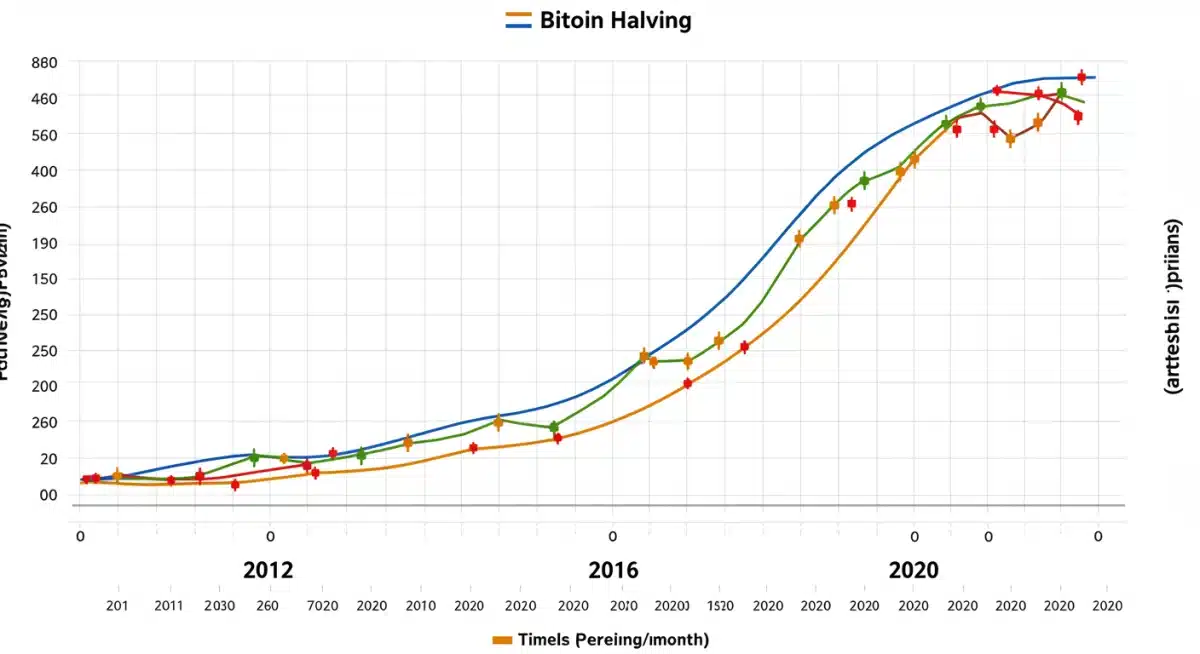
To predict the potential outcome of the Bitcoin Halving 2026, it’s imperative to examine the historical data from previous halving events. Each halving has been followed by a significant bullish run, albeit with varying magnitudes and timelines. This consistent pattern forms the bedrock of our prediction for a 15% price surge post-Bitcoin Halving 2026.
The 2012 Halving: The Genesis Bull Run
The first Bitcoin halving occurred in November 2012. Prior to the event, Bitcoin’s price was relatively low, trading around $12. In the year following the halving, Bitcoin experienced an astronomical surge, reaching an all-time high of over $1,000 by late 2013. This represented an increase of over 8,000%. While the market was nascent and far less liquid than today, this event firmly established the halving as a bullish catalyst. The reduction in supply, coupled with growing awareness, fueled unprecedented demand.
The 2016 Halving: Sustained Growth
The second halving took place in July 2016, reducing the block reward to 12.5 BTC. Leading up to this halving, Bitcoin’s price hovered around $650. The post-halving period saw a more gradual but equally impressive ascent. By December 2017, Bitcoin had soared to nearly $20,000, marking an increase of approximately 2,900% from its pre-halving price. This cycle demonstrated that even with increased market capitalization, the halving effect remained potent. The narrative of Bitcoin as ‘digital gold’ began to gain significant traction during this period, attracting a wider investor base.
The 2020 Halving: Institutional Adoption and Mainstream Interest
The most recent halving occurred in May 2020, with the block reward dropping to 6.25 BTC. Before this event, Bitcoin was trading around $8,000-$9,000. The post-2020 halving period was characterized by remarkable growth, propelling Bitcoin to its then-all-time high of nearly $69,000 by November 2021. This represented an increase of around 660%. What made this cycle distinct was the significant entry of institutional investors and corporations, alongside increased mainstream adoption. Companies like MicroStrategy and Tesla added Bitcoin to their balance sheets, recognizing its potential as a hedge against inflation and a store of value. The Bitcoin Halving 2026 will inherit this stronger foundation of institutional interest.
Analyzing the Mechanics: Why Halvings Drive Price Increases
The consistent price appreciation observed after each halving is not coincidental; it’s rooted in fundamental economic principles, particularly supply and demand. The Bitcoin Halving 2026 will once again put these principles to the test. Let’s break down the key factors:
Reduced Supply Shock
The most direct impact of a halving is the immediate reduction in the rate of new Bitcoin supply. If demand remains constant or increases, a decrease in supply naturally leads to higher prices. Miners, whose operational costs (electricity, hardware) remain largely the same, will find their revenue from newly minted coins cut in half. To maintain profitability, the market price of Bitcoin must rise. This creates a natural upward pressure on the price. The Bitcoin Halving 2026 will remove a significant amount of potential selling pressure from miners, as fewer new coins will enter the market from this source.
Increased Scarcity Narrative
Beyond the direct supply reduction, halvings reinforce Bitcoin’s narrative as a scarce digital asset. In an era of unprecedented monetary expansion and inflation concerns, Bitcoin’s fixed supply and predictable issuance schedule make it an attractive alternative to fiat currencies. Each halving event serves as a powerful reminder of this scarcity, attracting new investors and solidifying its position as ‘digital gold.’ The anticipation leading up to the Bitcoin Halving 2026 will likely generate considerable media attention and investor interest, further amplifying this scarcity narrative.
Psychological Impact and Market Hype
The cyclical nature of halvings also creates a self-fulfilling prophecy to some extent. As investors anticipate the halving, many front-run the event, accumulating Bitcoin in the months leading up to it, expecting a price increase. This pre-halving accumulation can itself drive prices up, and the actual event often serves as a trigger for further upward momentum. The widespread discussion and media coverage surrounding the Bitcoin Halving 2026 will undoubtedly contribute to market hype and investor enthusiasm, drawing in both retail and institutional capital.
Diminishing Returns vs. Growing Adoption
While the percentage gains post-halving have decreased with each cycle (8000% in 2012, 2900% in 2016, 660% in 2020), the absolute price increases have been substantial. This phenomenon, known as diminishing returns, is expected as Bitcoin’s market capitalization grows. It becomes harder to achieve multi-thousand percent gains on a larger asset. However, the consistent growth in adoption, infrastructure, and regulatory clarity provides a stronger foundation for subsequent cycles. The Bitcoin Halving 2026 will occur in a more mature market, with greater integration into traditional finance and a broader understanding of its utility.
Predicting the Bitcoin Halving 2026: A 15% Price Surge
Based on the historical patterns, the underlying economic principles, and the evolving market landscape, we predict a significant price surge following the Bitcoin Halving 2026. While the astronomical percentage gains of early halvings are unlikely to be replicated, a conservative yet impactful 15% price surge in the immediate aftermath of the event is a highly plausible scenario, with further substantial gains in the subsequent 12-18 months.
Immediate Post-Halving Reaction
The 15% surge specifically refers to the immediate to short-term impact, typically observed within weeks to a few months after the halving. This initial bump is often driven by the ‘buy the rumor, sell the news’ phenomenon, combined with the actual supply shock kicking in. Even a modest 15% increase on Bitcoin’s likely market cap by 2026 would represent billions in value, signaling strong bullish sentiment and setting the stage for a broader rally. This initial reaction is crucial for setting the tone for the post-Bitcoin Halving 2026 market.
Factors Supporting the 15% Surge Prediction:
- Front-Running and Accumulation: As observed in previous cycles, savvy investors and institutions will likely accumulate Bitcoin in the months leading up to the Bitcoin Halving 2026, anticipating the supply shock. This pre-halving demand can create a floor for the price and contribute to an upward movement as the event approaches.
- Reduced Miner Selling Pressure: With the block reward cut in half, the daily issuance of new Bitcoin will drop significantly. This means less new supply entering the market from miners, reducing potential selling pressure and making it easier for demand to outstrip supply.
- Increased Media Attention and FOMO: The Bitcoin Halving 2026 will undoubtedly generate significant media coverage. This influx of attention often leads to a ‘Fear Of Missing Out’ (FOMO) among retail investors, driving new capital into the market and contributing to an upward price trend.
- Macroeconomic Climate: Depending on the global economic climate in 2026, if inflation remains a concern or traditional assets face headwinds, Bitcoin’s appeal as a deflationary asset could be further amplified. This macro backdrop would provide strong tailwinds for the post-Bitcoin Halving 2026 rally.
- Maturing Market Infrastructure: By 2026, the cryptocurrency market will likely have even more robust infrastructure, including more regulated exchanges, clearer legal frameworks, and a wider array of investment products (e.g., more spot Bitcoin ETFs globally). This maturity makes it easier and safer for both retail and institutional investors to participate, facilitating price discovery and absorption of new demand.
It is important to note that this 15% surge is a conservative estimate for the immediate post-halving period. The larger, more sustained bull run that typically follows a halving could see Bitcoin reaching new all-time highs in the 12-18 months subsequent to the Bitcoin Halving 2026, potentially far exceeding this initial percentage gain. This initial surge acts as a strong indicator of the market’s positive response to the reduced supply.

Longer-Term Outlook Post-Bitcoin Halving 2026
While the immediate 15% surge is a strong indicator, the true power of the Bitcoin Halving 2026 lies in its longer-term implications. Historically, the year following a halving has been the most bullish, leading to significant new all-time highs. We expect this pattern to continue, albeit with potentially lower percentage gains than in the early, less mature cycles.
Increased Institutional Adoption
By 2026, institutional adoption of Bitcoin is projected to be even more widespread. More corporations, pension funds, and sovereign wealth funds are likely to have allocated a portion of their portfolios to Bitcoin, viewing it as a legitimate asset class. The reduced supply from the Bitcoin Halving 2026 will make it even more attractive to these large capital inflows, as they will be competing for a scarcer asset.
Technological Advancements and Ecosystem Growth
The Bitcoin ecosystem is continuously evolving. Developments in scaling solutions (like the Lightning Network), improved security protocols, and increased utility through sidechains and decentralized finance (DeFi) applications built on or interacting with Bitcoin will enhance its value proposition. These technological advancements will contribute to increased demand and utility, providing a strong fundamental basis for price appreciation post-Bitcoin Halving 2026.
Global Economic Landscape
The global economic landscape in 2026 will play a crucial role. Should central banks continue with expansionary monetary policies, or if geopolitical uncertainties persist, Bitcoin’s role as a safe haven asset and an inflation hedge will be amplified. This environment would naturally drive more capital towards scarce assets like Bitcoin, magnifying the impact of the Bitcoin Halving 2026.
Regulatory Clarity
As the cryptocurrency market matures, regulatory frameworks are becoming clearer in many jurisdictions. This clarity reduces uncertainty for institutional investors and makes it easier for mainstream adoption. By 2026, more comprehensive and favorable regulations could be in place, further legitimizing Bitcoin and attracting a broader pool of investors, thereby enhancing the post-Bitcoin Halving 2026 bull run.
Potential Risks and Considerations for Bitcoin Halving 2026
While the historical precedent for post-halving price surges is strong, it’s crucial to acknowledge potential risks and considerations for the Bitcoin Halving 2026. The cryptocurrency market is inherently volatile, and no outcome is guaranteed.
Global Economic Downturn
A severe global economic recession or a significant financial crisis could lead to a broad sell-off across all asset classes, including Bitcoin. In such a scenario, even the bullish forces of the Bitcoin Halving 2026 might be temporarily overshadowed by a flight to safety in traditional, highly liquid assets or even cash.
Regulatory Headwinds
While we anticipate clearer regulations, unforeseen negative regulatory actions from major global economies could dampen investor sentiment. A sudden ban or highly restrictive policies in key markets could create significant downward pressure on Bitcoin’s price, potentially muting the effects of the Bitcoin Halving 2026.
Black Swan Events
Unforeseeable ‘black swan’ events, such as a major security breach on a prominent exchange, a critical flaw discovered in Bitcoin’s protocol (highly unlikely but not impossible), or a significant technological disruption, could severely impact market confidence. These events could derail even the most optimistic predictions for the Bitcoin Halving 2026.
Miner Exodus
If the post-halving price increase is insufficient to cover miners’ operational costs, a significant number of miners might exit the network. This could potentially compromise network security, although Bitcoin’s adaptive difficulty adjustment mechanism is designed to mitigate this risk by making mining easier and thus more profitable for remaining miners. However, a temporary reduction in hash rate could still cause market jitters around the Bitcoin Halving 2026.
Diminishing Impact
As Bitcoin’s market cap grows, the relative impact of each halving might continue to diminish in terms of percentage gains. While we predict a 15% immediate surge, and further significant gains in the long term, investors should manage expectations and understand that future cycles may not replicate the exponential growth seen in Bitcoin’s early days. The total supply of new Bitcoin entering the market is already relatively small compared to its overall market capitalization, making the proportional supply shock less dramatic with each passing halving, including the Bitcoin Halving 2026.
Investment Strategy Leading Up to Bitcoin Halving 2026
For investors looking to capitalize on the Bitcoin Halving 2026, a well-thought-out strategy is crucial. While past performance is not indicative of future results, the historical patterns provide valuable insights.
Dollar-Cost Averaging (DCA)
One of the most effective strategies for long-term investors is Dollar-Cost Averaging (DCA). This involves investing a fixed amount of money into Bitcoin at regular intervals, regardless of its price. DCA helps mitigate the risk of volatility and allows investors to accumulate Bitcoin at an average price over time. Implementing a DCA strategy in the lead-up to the Bitcoin Halving 2026 can help build a strong position before the anticipated price surge.
Research and Due Diligence
Before making any investment decisions related to the Bitcoin Halving 2026, conduct thorough research. Understand Bitcoin’s technology, its market dynamics, and your own risk tolerance. Avoid making decisions based solely on hype or short-term speculation. A deep understanding of the fundamentals will be your best guide.
Portfolio Diversification
While Bitcoin is a powerful asset, it’s prudent to maintain a diversified investment portfolio. Do not put all your eggs in one basket. Allocate a portion of your portfolio to Bitcoin that aligns with your risk tolerance, but also consider other asset classes to spread risk. Even with the strong prospects of the Bitcoin Halving 2026, diversification remains a cornerstone of sound financial planning.
Long-Term Perspective
Bitcoin has historically rewarded long-term holders. Short-term price fluctuations can be significant, but its long-term trend has been overwhelmingly upward. Investors looking to benefit from the Bitcoin Halving 2026 should adopt a long-term perspective, focusing on Bitcoin’s potential as a store of value and a transformative technology rather than chasing quick gains.
Stay Informed
The cryptocurrency space is dynamic. Stay updated on market news, technological developments, and regulatory changes that could impact Bitcoin. Following reputable sources and expert analyses will help you make informed decisions as the Bitcoin Halving 2026 approaches and unfolds.
Conclusion: The Enduring Significance of Bitcoin Halving 2026
The Bitcoin Halving 2026 is poised to be another landmark event in the history of cryptocurrency. While the exact magnitude of its impact remains to be seen, historical data and economic principles strongly suggest a positive price reaction. Our prediction of an immediate 15% surge post-event is a conservative yet confident outlook, underpinned by the consistent patterns observed in previous cycles and the increasing maturation of the Bitcoin ecosystem.
The halving mechanism is a testament to Bitcoin’s ingenious design, ensuring its scarcity and reinforcing its value proposition as a decentralized, digital store of value. As the world grapples with inflation and economic uncertainty, Bitcoin’s predictable supply schedule makes it an increasingly attractive asset for both individual and institutional investors. The lead-up to the Bitcoin Halving 2026 will undoubtedly be marked by heightened anticipation, accumulation, and market speculation.
However, it is crucial for investors to approach this event with a balanced perspective, understanding both the immense potential and the inherent risks of the cryptocurrency market. By leveraging strategies like Dollar-Cost Averaging, conducting thorough research, and maintaining a long-term outlook, investors can position themselves to potentially benefit from the transformative power of the Bitcoin Halving 2026.
Ultimately, the Bitcoin Halving 2026 is more than just a technical event; it’s a cyclical reminder of Bitcoin’s foundational principles and its enduring journey towards becoming a global reserve asset. Its impact will resonate throughout the crypto market, influencing not just Bitcoin’s price but also the broader altcoin market and the sentiment of millions of investors worldwide. Prepare for an exciting period as we approach this pivotal moment in Bitcoin’s evolution.