2026 Altcoin Landscape: Technical Indicators for 10x Potential
Identifying key technical indicators is paramount for investors navigating the 2026 altcoin landscape to pinpoint projects with significant 10x growth potential.
The cryptocurrency market, ever-evolving, continues to captivate investors with its promise of substantial returns. For those looking to capitalize on future growth, navigating the 2026 altcoin landscape: identifying key technical indicators for a 10x potential is a critical endeavor. This pursuit demands a keen understanding of market dynamics and the tools to uncover hidden gems before they reach mainstream attention.
Understanding the Altcoin Market in 2026
The altcoin market in 2026 is a complex ecosystem, far removed from its nascent days. We’re witnessing a maturation driven by technological advancements, increased institutional adoption, and a clearer regulatory framework. This environment fosters both immense opportunity and heightened risk, making informed decision-making more crucial than ever.
New narratives constantly emerge, from advanced layer-2 solutions to decentralized AI and Web3 infrastructure. These innovations are not just theoretical; they are actively shaping industries and creating real-world utility, which is a fundamental driver for altcoin value. Understanding these underlying trends is the first step in identifying projects with the potential for exponential growth.
Key Drivers of Altcoin Growth
- Technological Innovation: Projects introducing novel solutions to existing problems or pioneering new paradigms.
- Ecosystem Development: Strong developer communities, robust partnerships, and growing user bases.
- Real-World Utility: Tokens with tangible use cases beyond speculation, integrated into daily applications or services.
- Regulatory Clarity: Projects operating within clear legal frameworks often gain greater investor confidence and adoption.
The landscape of 2026 is also characterized by a more discerning investor base. The days of blind speculation are largely over, replaced by a demand for transparency, verifiable roadmaps, and sustainable tokenomics. Projects that can demonstrate these qualities are more likely to attract long-term investment, setting the stage for significant appreciation. Ultimately, recognizing the macro trends and the specific catalysts within individual projects will be key to successful altcoin investments in the coming years.
The Role of Technical Analysis in Altcoin Selection
Technical analysis, often seen as a dark art by novices, is an indispensable tool for traders and investors aiming to forecast future price movements. In the volatile altcoin market, mastering technical indicators can provide a significant edge, helping to filter out noise and pinpoint assets with genuine 10x potential. It’s about reading the market’s story through charts and patterns.
While fundamental analysis assesses a project’s intrinsic value, technical analysis focuses on price action and volume data. This dual approach offers a comprehensive view, allowing investors to identify undervalued assets with strong underlying technology and favorable market sentiment. Ignoring one for the other is akin to navigating with only half a map.
Essential Technical Indicators for Altcoins
- Relative Strength Index (RSI): Measures the speed and change of price movements, indicating overbought or oversold conditions.
- Moving Average Convergence Divergence (MACD): A trend-following momentum indicator showing the relationship between two moving averages of a security’s price.
- Bollinger Bands: Volatility bands placed above and below a simple moving average, helping to identify potential breakouts or reversals.
- Volume Profile: Reveals where the most trading activity occurred, indicating strong support and resistance levels.
Effective technical analysis isn’t about predicting the exact future; it’s about probability. By combining multiple indicators and observing their confluence, investors can build a stronger case for potential price action. This methodical approach reduces reliance on gut feelings and enhances the likelihood of identifying altcoins poised for significant growth. The interplay of these indicators paints a clearer picture of market sentiment and potential turning points.
Identifying Breakout Patterns and Volume Confirmation
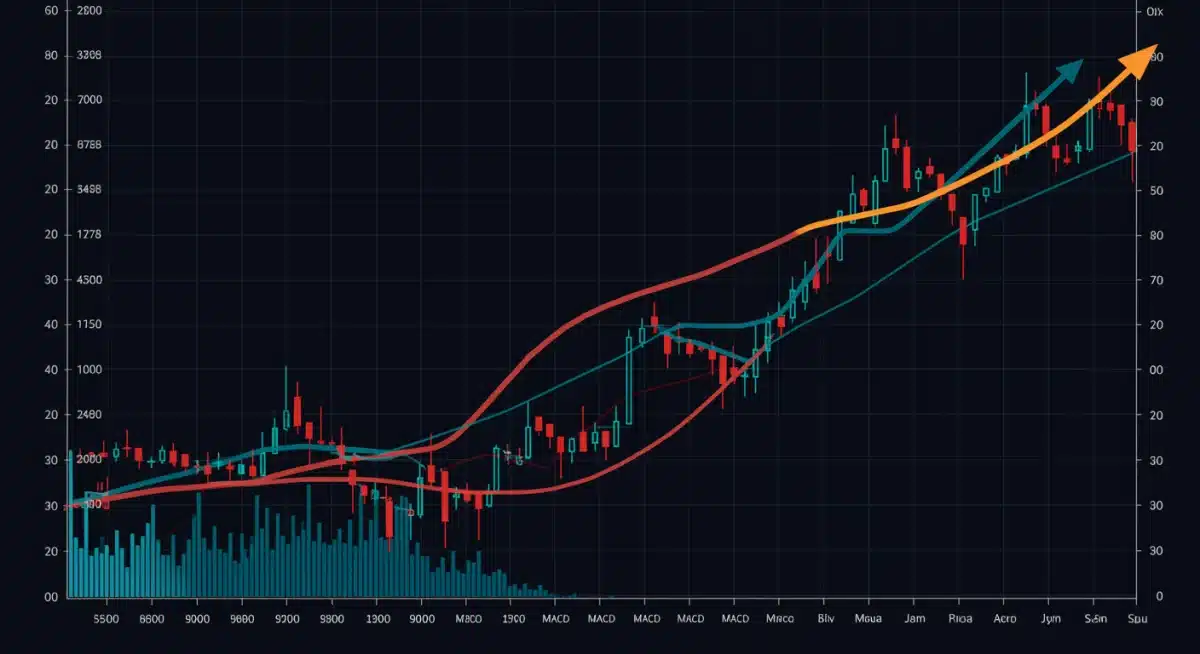
Breakout patterns are a cornerstone of identifying altcoins with 10x potential. These patterns signal a significant shift in market sentiment, often preceding explosive price movements. Recognizing them early, coupled with strong volume confirmation, can be the difference between modest gains and life-changing returns. It’s about catching the wave as it forms, not after it crashes on the shore.
A breakout occurs when an asset’s price moves above a resistance level or below a support level with increased volume. This surge in trading activity validates the price movement, indicating strong conviction from market participants. Without significant volume, a breakout can often be a false signal, leading to whipsaws and losses. Volume is the fuel that powers a true breakout.
Common Breakout Patterns
- Ascending Triangles: Often signal bullish continuation, with higher lows meeting a flat resistance.
- Cup and Handle: A bullish continuation pattern resembling a cup with a handle, indicating consolidation before an upward move.
- Inverse Head and Shoulders: A bullish reversal pattern, signaling a potential shift from a downtrend to an uptrend.
- Flag and Pennant: Short-term continuation patterns that often appear after a sharp price move, indicating a brief consolidation before resuming the trend.
Beyond identifying the patterns, understanding the context is vital. A breakout in a fundamentally strong project, supported by positive news or significant development updates, carries more weight than one in a speculative or unproven asset. Always look for confluence – multiple factors aligning to support the bullish thesis. This holistic view helps to filter out less reliable signals and focus on high-probability setups. The combination of clear patterns and robust volume confirmation provides a compelling argument for potential upward trajectory.
Analyzing On-Chain Data for Deeper Insights
While technical indicators provide a snapshot of price action, on-chain data offers a deeper, more transparent view into the underlying health and activity of an altcoin network. By examining transactions, addresses, and network utilization, investors can gain unique insights often missed by traditional chart analysis. This is like looking under the hood of a car, rather than just judging it by its paint job.
On-chain metrics provide verifiable information directly from the blockchain, eliminating the guesswork associated with centralized exchanges or opaque market reports. This data can reveal true adoption, network security, and the behavior of long-term holders versus short-term speculators. For altcoins, especially newer projects, this transparency is invaluable for assessing their long-term viability.
Key On-Chain Metrics to Monitor
- Active Addresses: Indicates network usage and adoption; a rising number suggests growing interest.
- Transaction Volume: Measures the total value of transactions processed, reflecting economic activity on the network.
- Whale Accumulation/Distribution: Tracking large wallet movements can signal institutional interest or potential price manipulation.
- Developer Activity: Consistent code updates and contributions indicate a healthy, evolving project.
- Staked vs. Circulating Supply: A high staking ratio can imply strong holder conviction and reduced selling pressure.
The power of on-chain analysis lies in its ability to confirm or contradict narratives presented by a project. If a project claims high adoption but on-chain data shows stagnant active addresses, it’s a red flag. Conversely, a project with strong on-chain growth, even without immediate price action, could be a strong contender for future appreciation. Integrating on-chain data into your analysis provides a robust layer of due diligence, helping to uncover genuinely promising altcoins before they become widely recognized.
Risk Management and Portfolio Diversification
Investing in altcoins, especially those with 10x potential, inherently carries significant risk. While the allure of exponential returns is strong, a disciplined approach to risk management and portfolio diversification is paramount to long-term success. It’s not about avoiding risk entirely, but managing it intelligently to protect your capital and maximize potential gains.
No matter how promising an altcoin appears, unforeseen events or market shifts can dramatically impact its value. Therefore, never allocate more capital than you can afford to lose. This fundamental principle ensures that even if a high-risk bet doesn’t pay off, your overall financial health remains intact. Emotional decisions driven by greed or fear are the enemy of sound investment strategy.
Strategies for Risk Mitigation
- Position Sizing: Allocate smaller percentages of your portfolio to higher-risk altcoins.
- Stop-Loss Orders: Implement automatic sell orders to limit potential losses if a trade goes against you.
- Profit Taking: Secure profits periodically to de-risk your position and reinvest in other opportunities.
- Diversification Across Categories: Spread investments across different altcoin sectors (DeFi, NFTs, Layer 1s, Gaming) to reduce exposure to single-sector risks.
Diversification is not just about holding multiple altcoins; it’s about spreading your bets across different types of assets, market caps, and risk profiles. A well-diversified portfolio might include a mix of established large-cap cryptocurrencies, mid-cap altcoins with proven utility, and a small allocation to speculative micro-cap projects with high growth potential. This balanced approach smooths out volatility and increases the probability of capturing significant gains from various sources. Effective risk management is the bedrock of sustainable success in the dynamic altcoin market.
Regulatory Landscape and Future Outlook for Altcoins
The regulatory landscape for cryptocurrencies, and altcoins in particular, is rapidly evolving and will significantly shape their future outlook in 2026 and beyond. Clarity from global regulators can either accelerate adoption or introduce headwinds, making it a critical factor for investors to monitor. Navigating this environment requires understanding potential policy shifts and their implications for different project types.
In 2026, we anticipate a more defined regulatory framework in major economic blocs, moving beyond the initial uncertainty. This could include clearer guidelines on token classification, consumer protection, and anti-money laundering (AML) measures. Projects that proactively comply with emerging regulations are likely to gain a competitive advantage, fostering greater trust from institutional investors and the wider public.
Potential Regulatory Impacts
- Increased Institutional Adoption: Clear regulations can attract more traditional finance players, legitimizing the asset class.
- Innovation vs. Compliance: Some regulations might stifle innovation, while others could create a safer environment for development.
- Geographic Shifts: Jurisdictions with favorable regulatory environments may become hubs for blockchain innovation.
- Consumer Protection: Enhanced rules could reduce scams and fraudulent activities, boosting overall market confidence.
The future outlook for altcoins in 2026 is largely optimistic, provided projects can adapt to and thrive within these evolving regulatory perimeters. Decentralized finance (DeFi), non-fungible tokens (NFTs), and Web3 infrastructure are expected to continue their growth trajectories, fueled by ongoing innovation and increasing real-world integration. However, projects that fail to address compliance or demonstrate sustainable utility may struggle to gain traction. Staying informed about regulatory developments will be as important as technical analysis in identifying the altcoins poised for long-term success and potentially 10x returns.
Building a Robust Altcoin Investment Strategy for 2026
Crafting a robust altcoin investment strategy for 2026 involves more than just picking a few promising projects; it requires a systematic approach that integrates fundamental analysis, technical indicators, on-chain data, and sound risk management. The goal is to build a resilient portfolio capable of navigating market volatility while capitalizing on significant growth opportunities. This is not a sprint, but a marathon requiring patience and continuous learning.
Your strategy should begin with a clear understanding of your investment goals, risk tolerance, and time horizon. Are you looking for short-term gains, or are you a long-term holder seeking transformative returns? This foundational self-assessment will guide your allocation decisions and help you maintain discipline during market fluctuations. A well-defined strategy acts as your compass in the often-turbulent crypto seas.
Components of a Strong Strategy
- Thorough Research: Dive deep into whitepapers, team backgrounds, partnerships, and tokenomics.
- Technical Validation: Use indicators and patterns to identify optimal entry and exit points.
- On-Chain Confirmation: Verify adoption and network health through transparent blockchain data.
- Diversified Allocation: Spread investments across different sectors and market caps to mitigate idiosyncratic risks.
- Continuous Monitoring: Regularly review your portfolio and adjust based on market conditions and project developments.
Moreover, embracing a long-term perspective is often more rewarding in the altcoin space. While short-term trading can yield profits, holding onto fundamentally strong projects through market cycles has historically generated the most significant returns. The key is to identify projects with enduring utility and a clear vision for the future, then patiently allow their value to compound. A strong altcoin investment strategy for 2026 is built on conviction, informed analysis, and unwavering discipline, positioning you for potential 10x gains in this exciting market.
| Key Aspect | Brief Description |
|---|---|
| Technical Indicators | RSI, MACD, Bollinger Bands for identifying market sentiment and trends. |
| Breakout Patterns | Recognizing patterns like triangles and flags with volume confirmation for explosive moves. |
| On-Chain Data | Analyzing active addresses, transaction volume, and whale movements for true adoption. |
| Risk Management | Implementing position sizing, stop-losses, and portfolio diversification is crucial. |
Frequently Asked Questions About 2026 Altcoin Potential
The most important technical indicators for altcoins in 2026 include the Relative Strength Index (RSI), Moving Average Convergence Divergence (MACD), and Bollinger Bands. These help identify momentum, trend strength, and potential volatility, guiding investment decisions effectively.
On-chain data complements technical analysis by providing insights into real-world adoption and network health. Metrics like active addresses and transaction volume offer a transparent view of a project’s fundamentals, validating or contradicting price action seen on charts.
Regulation will play a significant role in 2026 altcoin potential. Clear regulatory frameworks can foster institutional adoption and market stability, while uncertainty or restrictive policies could hinder growth. Projects with proactive compliance strategies are likely to thrive.
Yes, diversification is essential even when targeting 10x altcoin potential. Spreading investments across various altcoin sectors and market caps mitigates risk and increases the chances of capturing gains from multiple successful projects, protecting against single-point failures.
Breakout patterns like ascending triangles, cup and handle, or inverse head and shoulders are identified by price movements above resistance or below support, critically confirmed by significant increases in trading volume. This combination signals strong market conviction.
Conclusion
The 2026 altcoin landscape offers unparalleled opportunities for those equipped with the right analytical tools and a disciplined strategy. By meticulously applying technical indicators, scrutinizing on-chain data, recognizing breakout patterns, and adhering to robust risk management principles, investors can significantly enhance their chances of identifying projects with genuine 10x potential. The future of digital assets is bright, but success hinges on informed decisions and a comprehensive understanding of this dynamic market.