DeFi Altcoin Revolution 2026: 50% APY Opportunities
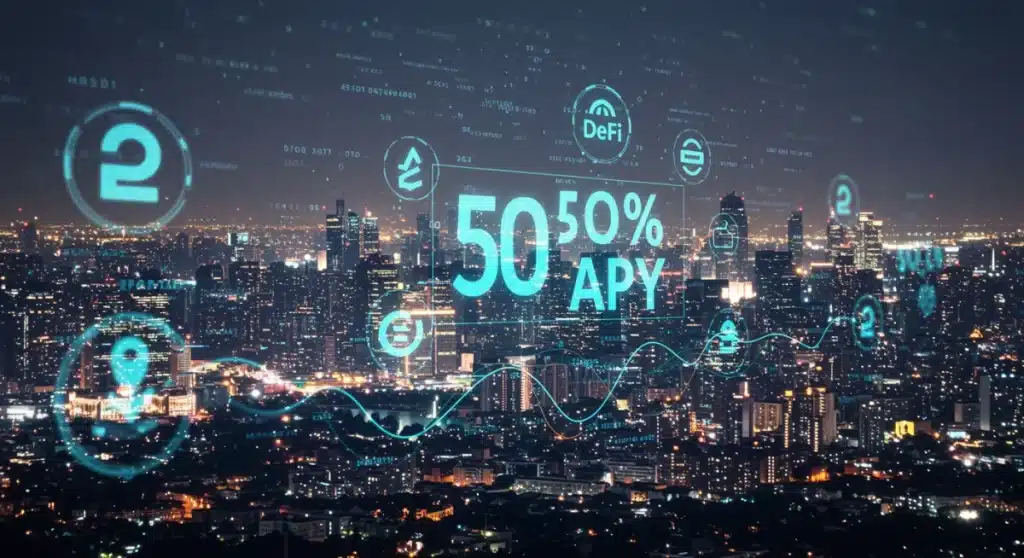
The DeFi Altcoin Revolution of 2026 is fundamentally reshaping traditional finance, offering unprecedented opportunities through innovative projects that promise substantial 50% APY returns and redefine financial interaction.
Are you ready to explore a financial paradigm shift? The DeFi Altcoin Revolution 2026 is not just a buzzword; it’s a tangible movement reshaping how we perceive and interact with money, offering innovative projects and potentially lucrative 50% APY opportunities.
Understanding the DeFi Landscape in 2026
The decentralized finance (DeFi) landscape in 2026 has matured significantly since its nascent stages, evolving into a robust ecosystem that challenges the very foundations of traditional banking and financial institutions. This evolution is driven by continuous innovation in blockchain technology, smart contracts, and a growing global demand for financial autonomy.
In 2026, DeFi is no longer a niche for early adopters but a mainstream alternative for a broad spectrum of investors and users seeking transparency, efficiency, and higher returns. The regulatory environment, while still evolving, has begun to provide clearer guidelines, fostering greater institutional interest and participation.
Key Drivers of DeFi Growth
Several factors are propelling the expansion of DeFi, making it a pivotal force in the financial world. These drivers include technological advancements, increasing user adoption, and a compelling narrative of financial empowerment.
- Technological Advancements: Layer-2 solutions, sharding, and cross-chain interoperability have dramatically improved scalability and reduced transaction costs, making DeFi more accessible and efficient.
- Increased User Adoption: User-friendly interfaces, mobile accessibility, and educational resources have lowered the barrier to entry, attracting millions of new participants worldwide.
- Institutional Interest: Traditional financial entities are increasingly exploring and integrating DeFi protocols, recognizing their potential for innovation and market expansion.
The overarching trend in 2026 is a move towards hybrid models that blend the best of centralized and decentralized finance, creating a more resilient and inclusive financial system. This blend often involves regulated DeFi platforms that offer enhanced security and compliance without compromising decentralization.
The Rise of Altcoins in DeFi
Altcoins, or alternative cryptocurrencies, are at the heart of the DeFi revolution. Beyond Bitcoin and Ethereum, a vast array of altcoins provides the underlying infrastructure, utility, and governance mechanisms for countless decentralized applications (dApps) and protocols. In 2026, certain altcoins have distinguished themselves through their innovative approaches and significant contributions to the DeFi ecosystem.
These altcoins often specialize in specific functions such as lending, borrowing, decentralized exchanges (DEXs), stablecoins, and synthetic assets. Their diversity allows for a rich and complex financial environment where users can engage in a multitude of financial activities without intermediaries.
Identifying Promising Altcoins
Identifying promising altcoins requires a deep understanding of their technology, tokenomics, community support, and real-world utility. Investors in 2026 are looking beyond speculative gains, focusing on projects with sustainable models and strong development teams.
- Utility and Innovation: Altcoins that solve real-world problems or introduce novel financial mechanisms tend to have greater longevity and growth potential.
- Strong Tokenomics: A well-designed tokenomics model ensures that the token’s value is aligned with the network’s growth and utility, incentivizing participation and discouraging excessive speculation.
- Active Community and Development: A vibrant and engaged community, coupled with continuous development and updates, indicates a healthy and evolving project.
The competitive landscape means that only the most resilient and adaptable altcoins will thrive, constantly innovating to meet the demands of a rapidly changing market. Investors must conduct thorough due diligence to navigate this dynamic space effectively.
Disrupting Traditional Finance with DeFi Protocols
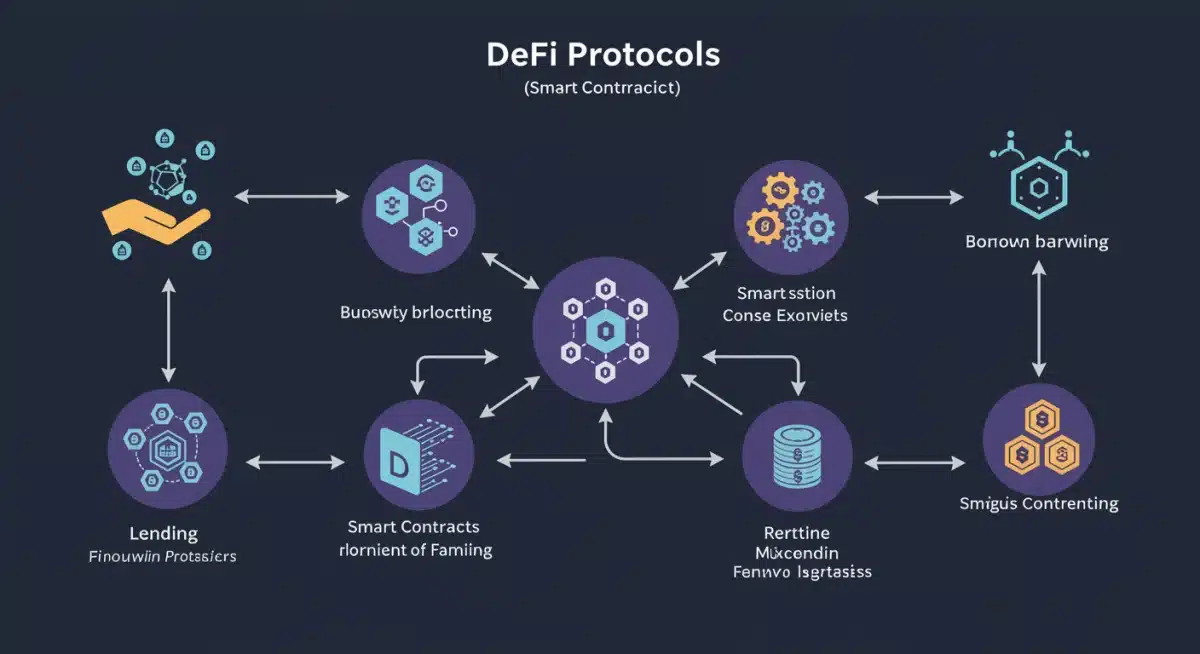
DeFi protocols are fundamentally disrupting traditional finance by offering decentralized alternatives to conventional financial services. These protocols leverage blockchain technology to create systems that are permissionless, transparent, and accessible to anyone with an internet connection. This direct access bypasses the need for banks, brokers, and other financial intermediaries, leading to lower fees and faster transactions.
In 2026, the impact of DeFi protocols is evident across various sectors, from lending and borrowing to asset management and insurance. The ability to execute financial agreements automatically via smart contracts eliminates human error and reduces the potential for fraud, fostering a new level of trust in financial interactions.
Core Disruptive Elements
Several key elements define DeFi’s disruptive power, illustrating how it is reshaping the financial industry. These elements highlight the advantages of decentralized systems over their traditional counterparts.
- Decentralized Lending and Borrowing: Platforms allow users to lend their crypto assets to earn interest or borrow against their holdings without credit checks or intermediaries.
- Automated Market Makers (AMMs): DEXs utilizing AMMs enable peer-to-peer trading of cryptocurrencies with high liquidity, eliminating the need for centralized order books.
- Synthetic Assets: Protocols that create tokenized versions of real-world assets, such as stocks or commodities, allowing for broader access to diverse investment opportunities.
The disruption extends beyond mere efficiency; it introduces a paradigm where financial services are designed to be inclusive and equitable, serving the unbanked and underbanked populations globally. This inclusive approach is a core tenet of the DeFi movement.
Unlocking 50% APY Opportunities: A New Era of Returns
One of the most compelling aspects of the DeFi Altcoin Revolution 2026 is the potential for significantly higher annual percentage yields (APYs) compared to traditional financial instruments. While 50% APY might seem exceptionally high, it is achievable in certain DeFi strategies, particularly through yield farming, staking, and liquidity provision.
These opportunities arise from the decentralized nature of the protocols, where incentives are often distributed to users who contribute to the network’s liquidity and security. Unlike traditional banks that offer minimal interest rates, DeFi protocols are designed to reward active participation and capital contribution generously.

Strategies for High APY
Achieving high APY in DeFi requires a strategic approach and an understanding of the inherent risks involved. Several popular strategies can help users maximize their returns.
- Yield Farming: Involves providing liquidity to decentralized exchanges and lending protocols, earning rewards in the form of transaction fees and governance tokens.
- Staking: Locking up cryptocurrencies to support the operations of a proof-of-stake blockchain network, thereby earning staking rewards.
- Liquidity Mining: A specific form of yield farming where users are rewarded with additional tokens for providing liquidity to a protocol, often leading to very high APYs, especially in new projects.
It is crucial to note that high APYs often come with higher risks, including impermanent loss, smart contract vulnerabilities, and market volatility. Due diligence and risk management are paramount for anyone pursuing these opportunities.
Navigating Risks and Ensuring Security in DeFi
While the DeFi Altcoin Revolution 2026 offers unparalleled opportunities, it also comes with a unique set of risks that investors must understand and mitigate. The decentralized and often experimental nature of many protocols means that vulnerabilities can exist, and market fluctuations can be extreme. Security is a paramount concern for all participants.
Smart contract exploits, rug pulls, and oracle manipulation are among the common threats in the DeFi space. Furthermore, the lack of traditional regulatory oversight in some areas places a greater responsibility on individual users to protect their assets.
Mitigating DeFi Risks
Several practices and tools can help users navigate the risks associated with DeFi and enhance the security of their investments. Adopting a cautious and informed approach is essential.
- Audited Smart Contracts: Prioritize protocols whose smart contracts have been thoroughly audited by reputable third-party security firms.
- Diversification: Spread investments across multiple protocols and asset types to reduce exposure to any single point of failure.
- Understanding Impermanent Loss: For liquidity providers, comprehending impermanent loss is crucial to managing potential losses due to price divergence between pooled assets.
- Staying Informed: Continuously research and stay updated on the latest security practices, market trends, and protocol developments.
Ultimately, a proactive and educated approach to risk management is the best defense against the inherent volatilities and potential pitfalls of the DeFi landscape.
The Future Outlook: DeFi Beyond 2026
The trajectory of the DeFi Altcoin Revolution 2026 suggests a future where decentralized finance becomes an even more integral part of the global financial system. Innovation is relentless, and new protocols, use cases, and integration points with traditional finance are constantly emerging. The focus is shifting towards greater sustainability, user experience, and regulatory clarity.
Beyond 2026, we can anticipate a landscape where DeFi seamlessly integrates into everyday financial activities, offering more sophisticated financial products and services that are both secure and user-friendly. The initial Wild West phase is giving way to a more structured and mature ecosystem.
Expected Developments
Several key developments are anticipated to shape the future of DeFi, driving its continued growth and mainstream adoption. These advancements will address current limitations and unlock new possibilities.
- Enhanced Regulatory Frameworks: Clearer and more harmonized global regulations will attract more institutional capital and foster greater public trust.
- Improved Scalability and Interoperability: Further advancements in blockchain technology will enable faster transactions, lower costs, and seamless interaction between different blockchain networks.
- User Experience (UX) Simplification: More intuitive interfaces and simplified processes will make DeFi accessible to a broader, less technically savvy audience.
- Real-World Asset Tokenization: The tokenization of a wider range of real-world assets will bridge the gap between traditional and decentralized finance, creating new investment avenues.
The long-term vision for DeFi is a decentralized financial system that is robust, resilient, and capable of serving the diverse needs of a global population, fundamentally reshaping the future of finance.
| Key Point | Brief Description |
|---|---|
| DeFi Evolution | Matured ecosystem challenging traditional finance with transparency and efficiency. |
| Altcoin Impact | Altcoins provide infrastructure and utility for diverse decentralized applications. |
| 50% APY Potential | Achievable through yield farming, staking, and liquidity provision in specific protocols. |
| Risk Management | Crucial for navigating smart contract vulnerabilities, market volatility, and impermanent loss. |
Frequently Asked Questions About DeFi in 2026
The DeFi Altcoin Revolution in 2026 refers to the ongoing transformation of traditional finance by decentralized altcoin-powered projects. These projects offer innovative financial services like lending, borrowing, and trading without intermediaries, often providing high APY opportunities.
Altcoins disrupt traditional finance by enabling peer-to-peer transactions, decentralized lending, and automated market making through smart contracts. This removes the need for banks and brokers, leading to lower fees, faster processing, and greater financial inclusion globally.
While 50% APY opportunities exist in DeFi, typically through yield farming or liquidity provision, they come with significant risks. These include smart contract vulnerabilities, impermanent loss, and high market volatility. Thorough research and risk management are absolutely essential.
Primary risks include smart contract bugs and exploits, impermanent loss for liquidity providers, market volatility causing significant price swings, and potential regulatory uncertainties. Users must understand these risks before committing capital to DeFi protocols.
To participate, you’ll need a cryptocurrency wallet, some initial capital (usually stablecoins or major cryptocurrencies), and a clear understanding of the protocols you wish to interact with. Start with well-established platforms and always prioritize security and education.
Conclusion
The DeFi Altcoin Revolution 2026 signifies a profound shift in the financial landscape, presenting both immense opportunities and considerable challenges. The continued innovation, coupled with growing mainstream and institutional adoption, suggests that decentralized finance is here to stay, evolving into a more mature, secure, and integrated component of the global economy. By understanding the underlying technologies, carefully assessing risks, and staying informed, individuals can effectively navigate this exciting new era of financial empowerment and potentially unlock significant returns.