FATF Travel Rule 2026: Financial Impact on US Crypto Exchanges
The 2026 FATF Travel Rule for US Exchanges: Understanding Its Financial Impact on Transactions
The cryptocurrency landscape is constantly evolving, driven by innovation, market dynamics, and, increasingly, regulatory frameworks. Among the most significant regulatory developments on the horizon is the full implementation of the Financial Action Task Force’s (FATF) Travel Rule, particularly its impending enforcement deadline in 2026 for US exchanges. This rule, designed to combat money laundering and terrorist financing, mandates that Virtual Asset Service Providers (VASPs), including cryptocurrency exchanges, collect and transmit specific originator and beneficiary information for transactions exceeding a certain threshold. While the intent is clear – to enhance transparency and mitigate illicit financial activities – its practical application and, more specifically, its financial reverberations across the US cryptocurrency ecosystem are complex and far-reaching. Understanding the financial impact of the FATF Travel Rule is crucial for exchanges, investors, and policymakers alike.
The FATF Travel Rule is not a new concept; it has been applied to traditional financial institutions for decades. Its extension to virtual assets reflects a global effort to bring the nascent crypto industry into alignment with established anti-money laundering (AML) and counter-terrorist financing (CTF) standards. For US exchanges, this means a significant overhaul of their operational infrastructure, compliance protocols, and, inevitably, their financial models. The costs associated with achieving and maintaining compliance are substantial, ranging from technological investments to increased personnel and legal expenditures. Moreover, these changes are not merely internal; they will influence transaction flows, user experience, and potentially the competitive landscape of the US crypto market. This article delves deep into these multifaceted financial impacts, providing a comprehensive analysis of what US exchanges can expect as the 2026 deadline approaches.
The journey towards full compliance with the FATF Travel Rule is both challenging and transformative. It necessitates a delicate balance between fostering innovation and ensuring financial integrity. As we explore the various facets of its financial impact, we aim to shed light on the complexities and opportunities that lie ahead for US cryptocurrency exchanges in this new regulatory era.
Understanding the FATF Travel Rule and Its Core Requirements for Exchanges
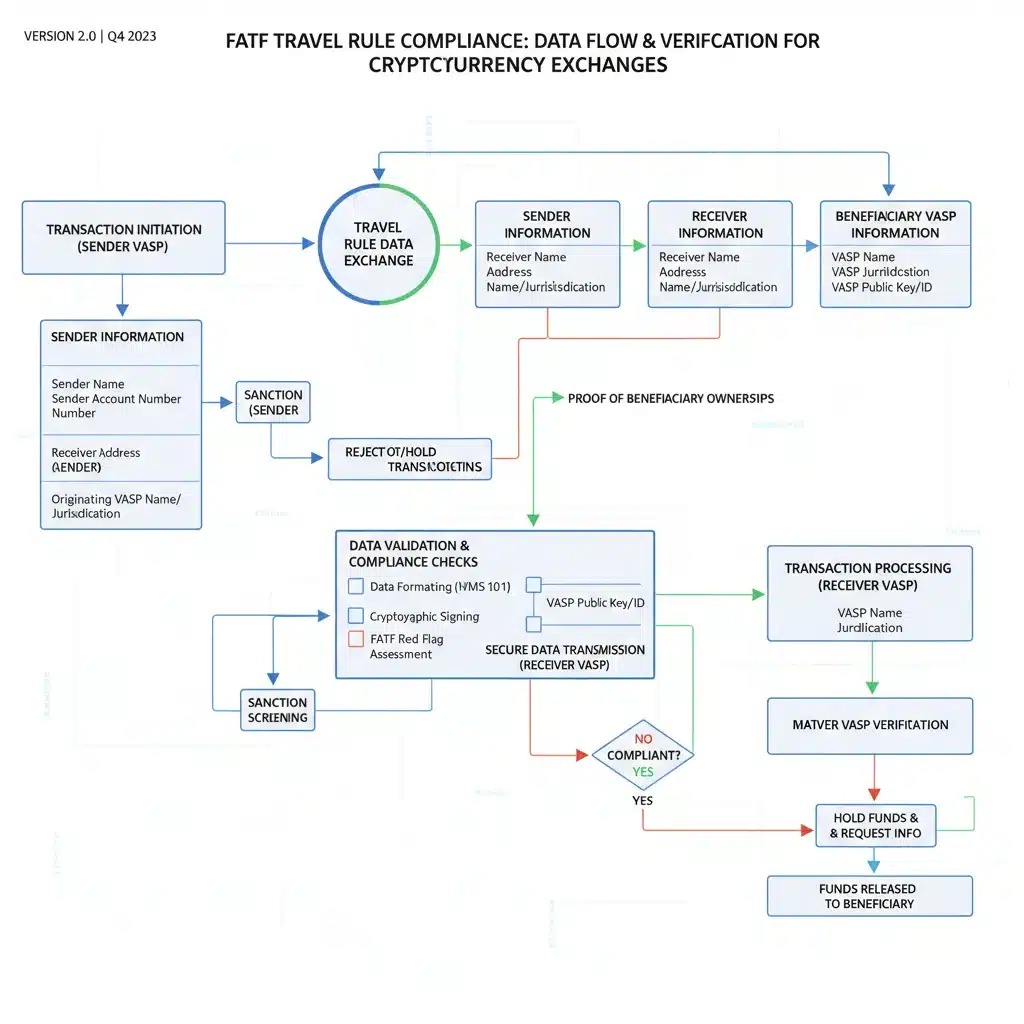
Before dissecting the financial implications, it’s essential to grasp the core tenets of the FATF Travel Rule. At its heart, the rule requires VASPs to obtain, hold, and transmit certain originator and beneficiary information in relation to virtual asset transfers. This information typically includes names, account numbers (or wallet addresses), and physical addresses of both the sender and receiver. The specific threshold for these data collection requirements can vary by jurisdiction, but the general principle remains: transactions above a certain value must carry identifiable information about the parties involved.
For US exchanges, this translates into a series of mandates:
- Data Collection: Exchanges must implement robust systems to collect the required originator and beneficiary information for qualifying transactions. This might involve enhanced Know Your Customer (KYC) procedures for both new and existing users.
- Data Storage: The collected data must be securely stored, adhering to stringent data privacy and security standards. This presents significant technical and legal challenges, especially concerning data localization and access.
- Data Transmission: Perhaps the most complex aspect is the secure and compliant transmission of this information to other VASPs involved in the transaction. This necessitates interoperable solutions, as there is currently no single, universally adopted protocol for Travel Rule data exchange.
- Risk-Based Approach: While the rule sets a baseline, exchanges are also expected to adopt a risk-based approach, meaning they should assess and mitigate risks associated with specific transactions, users, or jurisdictions. This requires sophisticated analytical capabilities.
- Sanctions Screening: Exchanges must also integrate sanctions screening processes to ensure that transactions do not involve individuals or entities on prohibited lists.
The genesis of the FATF Travel Rule stems from the recognition that virtual assets, due to their pseudonymous nature and global reach, could be exploited for illicit purposes. By extending the ‘travel rule’ to crypto, FATF aims to create an audit trail for virtual asset transactions, making it harder for criminals to move funds undetected. The 2026 deadline signifies a critical juncture for US exchanges, as it marks the point where regulators are expected to enforce full compliance rigorously. Failure to comply could result in significant penalties, including fines, operational restrictions, and reputational damage.
Compliance Costs: The Immediate Financial Burden for US Exchanges
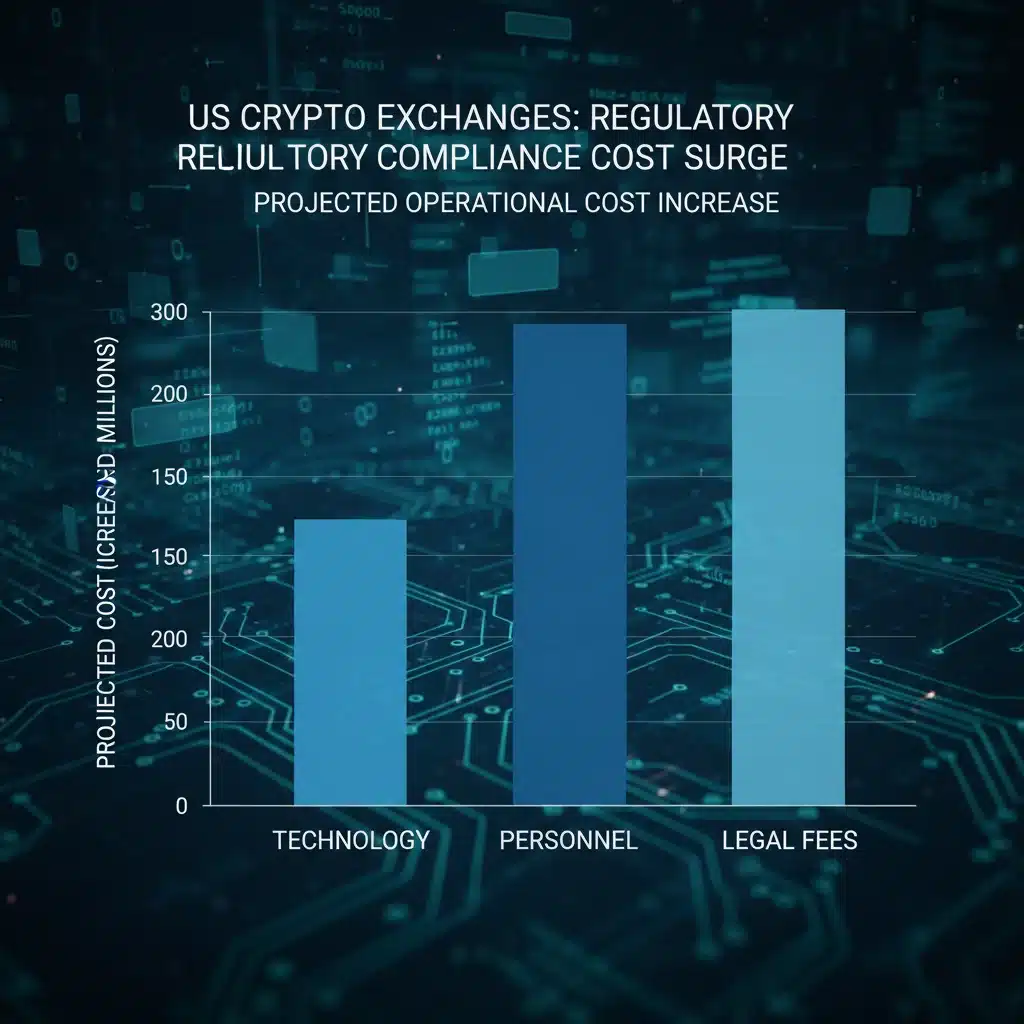
The most direct and immediate financial impact of the FATF Travel Rule for US exchanges will be the substantial costs associated with achieving and maintaining compliance. These costs can be categorized into several key areas:
Technology and Infrastructure Investments
Compliance with the FATF Travel Rule is fundamentally a technological challenge. US exchanges will need to invest heavily in:
- Travel Rule Solution Providers: Dedicated software solutions are emerging to facilitate Travel Rule compliance, offering secure data exchange protocols and integration with existing systems. Subscribing to or developing such solutions represents a significant ongoing cost.
- Enhanced KYC/AML Systems: Existing KYC/AML platforms may need upgrades to capture and verify the additional information required by the Travel Rule. This includes identity verification services, sanctions screening tools, and transaction monitoring systems capable of flagging suspicious activity.
- Data Storage and Security: Storing sensitive personal and transactional data securely is paramount. This requires investments in robust databases, encryption technologies, and cybersecurity measures to protect against breaches. The ongoing maintenance and auditing of these systems will also incur costs.
- Interoperability Solutions: The lack of a single, universal Travel Rule protocol means exchanges may need to integrate with multiple solution providers or develop their own interoperable frameworks to communicate with a diverse range of VASPs globally.
Personnel and Training
Technology alone is insufficient. The FATF Travel Rule demands a significant human element:
- Compliance Teams: Exchanges will need to expand their compliance departments, hiring specialists with expertise in AML, CTF, data privacy, and virtual asset regulations. These professionals are in high demand, driving up salary costs.
- Legal Counsel: Navigating the complex legal landscape of cross-border data sharing and regulatory interpretations will require ongoing legal advice, adding to operational expenses.
- Training Programs: All relevant staff, from customer support to engineering, will need comprehensive training on the new compliance procedures, data handling protocols, and risk assessment methodologies.
Operational Adjustments and Process Re-engineering
Beyond technology and personnel, the FATF Travel Rule will necessitate fundamental changes to how exchanges operate:
- Transaction Processing Delays: The additional data collection and transmission steps could introduce delays in transaction processing, potentially impacting user experience and liquidity. Exchanges will need to optimize these processes to minimize friction.
- Increased Due Diligence: The risk-based approach requires enhanced due diligence for certain transactions, which can be resource-intensive and slow down operations.
- Audit and Reporting Requirements: Exchanges must be prepared for regular audits by regulators and will need to implement robust reporting mechanisms to demonstrate compliance.
These compliance costs are not one-time expenditures but rather ongoing operational expenses. For smaller exchanges, these financial burdens could be particularly challenging, potentially leading to market consolidation or barriers to entry for new players. The cumulative effect of these expenditures will undoubtedly impact the profitability and pricing strategies of US cryptocurrency exchanges.
Impact on Transaction Fees and User Experience
The increased operational costs incurred by US exchanges due to FATF Travel Rule compliance will almost certainly translate into higher transaction fees for users. Exchanges need to recoup their investments in technology, personnel, and infrastructure, and passing some of these costs onto consumers is a common business practice. This could manifest in several ways:
- Direct Fee Increases: Exchanges might explicitly raise their trading or withdrawal fees to cover compliance overheads.
- Indirect Cost Absorption: While not directly visible as a fee, the cost of compliance could reduce profit margins, potentially leading to less competitive pricing in other areas or slower innovation if resources are diverted.
- Tiered Fee Structures: Some exchanges might introduce tiered fee structures, where users who provide more comprehensive information or engage in higher-risk transactions face different fee schedules.
Beyond fees, the FATF Travel Rule will also profoundly impact the user experience. The additional steps required for data collection and verification could introduce friction into the onboarding process and during transactions:
- More Extensive KYC: New users may face more rigorous and time-consuming KYC procedures to comply with the enhanced data collection requirements.
- Transaction Delays: As mentioned, the need to collect and transmit information before completing a transaction could lead to delays, particularly for cross-VASP transfers. This might be a significant concern for users accustomed to the near-instantaneous nature of crypto transactions.
- Privacy Concerns: While the rule aims to prevent illicit activities, the increased collection and sharing of personal data raise legitimate privacy concerns for users. Exchanges will need to be transparent about their data handling practices and ensure robust data protection.
- Complexity for International Transfers: The interoperability challenges between different Travel Rule solutions globally could make international transfers more complex and potentially more expensive, impacting US users who frequently transact with overseas VASPs.
These changes could lead to a shift in user behavior. Some users might opt for exchanges that offer a smoother, albeit potentially less compliant, experience (though this carries its own risks), or might reduce their frequency of transactions. Others might seek out decentralized finance (DeFi) protocols, which currently fall outside the direct scope of the Travel Rule, further complicating regulatory efforts.
Market Consolidation and Competitive Landscape Shifts
The financial burden of FATF Travel Rule compliance is not uniformly distributed across all US exchanges. Larger, well-capitalized exchanges are better positioned to absorb the significant costs of technology upgrades, expanded compliance teams, and legal counsel. They often have existing robust AML/KYC infrastructures that can be adapted and the financial reserves to invest in new solutions. This disparity could lead to significant shifts in the competitive landscape:
- Market Consolidation: Smaller exchanges, particularly those with limited resources, may struggle to meet the stringent compliance requirements. The high cost of entry and ongoing operation could force them to exit the market, merge with larger entities, or specialize in niche services that are less impacted by the Travel Rule. This would lead to a more concentrated market dominated by a few large players.
- Barrier to Entry: For new entrants looking to launch cryptocurrency exchanges in the US, the FATF Travel Rule will serve as a substantial barrier. The initial capital investment required for compliance infrastructure will be significant, potentially stifling innovation and competition.
- Specialization: Some smaller exchanges might pivot to focus on services that fall below the Travel Rule thresholds or operate in a manner that avoids VASP classification, though this limits their potential market.
- Increased Demand for Compliance Solutions: The need for Travel Rule compliance will spur growth in the regulatory technology (RegTech) sector. Companies offering solutions for data collection, secure transmission, and sanctions screening will see increased demand, potentially creating new partnerships and business models within the crypto ecosystem.
The overall effect could be a more regulated and institutionalized US crypto market. While this might bring greater stability and investor protection, it could also reduce the diversity of services and potentially limit the accessibility of crypto for certain user segments. The competitive dynamics will shift from primarily innovation and user experience to also heavily weighing regulatory compliance capabilities.
Potential for Innovation and New Business Models
While the FATF Travel Rule presents significant challenges, it also acts as a catalyst for innovation and the emergence of new business models within the US crypto space. Necessity is often the mother of invention, and the need for robust compliance solutions is no exception:
- RegTech Solutions: As mentioned, the demand for specialized Travel Rule compliance software will drive innovation in the RegTech sector. Companies will develop more efficient, secure, and interoperable solutions for VASPs. This could lead to a standardized approach to compliance, reducing the burden on individual exchanges over time.
- Decentralized Identity (DID) Solutions: The emphasis on verifiable identity and data sharing could accelerate the adoption and development of decentralized identity solutions. These technologies could allow users to control their personal data while still enabling exchanges to meet regulatory requirements, potentially offering a more privacy-preserving path to compliance.
- Privacy-Enhancing Technologies (PETs): While the Travel Rule mandates data collection, there’s an ongoing push for privacy-enhancing technologies that can allow for compliance without oversharing sensitive information. Research and development in areas like zero-knowledge proofs could find practical applications in this context.
- Compliance as a Service (CaaS): Smaller exchanges might outsource their compliance functions to specialized third-party providers, leading to the growth of ‘Compliance as a Service’ models. This could help mitigate the financial burden for smaller players.
- Enhanced Security Standards: The need to securely store and transmit sensitive data will push exchanges to adopt higher cybersecurity standards, benefiting the entire ecosystem by reducing the risk of data breaches.
Moreover, the increased regulatory clarity, even with its associated costs, could attract more institutional investors and traditional financial players into the US crypto market. These entities often require a higher degree of regulatory assurance before committing significant capital. A more compliant and transparent market could therefore unlock new sources of investment and growth, albeit within a more structured environment.
The Long-Term Financial Outlook: Challenges and Opportunities
The long-term financial outlook for US exchanges under the FATF Travel Rule is a mix of ongoing challenges and potential opportunities. While the initial years leading up to and immediately following the 2026 deadline will be characterized by significant investment and operational adjustments, the industry may eventually find a new equilibrium.
Ongoing Challenges:
- Evolving Regulatory Landscape: The FATF Travel Rule is not a static regulation. It will likely evolve, with potential updates to thresholds, data requirements, and enforcement mechanisms. Exchanges will need to maintain agile compliance strategies to adapt to these changes, incurring ongoing costs.
- Global Inconsistencies: While FATF provides global standards, individual jurisdictions may implement the Travel Rule with variations. This creates complexities for US exchanges dealing with international counterparties, requiring them to navigate a patchwork of different compliance requirements.
- Enforcement Risks: Regulators are expected to increase their enforcement efforts post-2026. Non-compliance, even unintentional, can lead to substantial fines, operational restrictions, and reputational damage, posing significant financial risks.
- Maintaining Competitiveness: Balancing compliance costs with competitive pricing and user experience will be a continuous challenge. Exchanges must innovate to offer value while adhering to regulatory mandates.
Long-Term Opportunities:
- Increased Trust and Adoption: A more regulated and compliant crypto market in the US could foster greater trust among mainstream investors and institutions. This could lead to broader adoption of virtual assets, expanding the total addressable market for exchanges.
- Reduced Illicit Activity: By making it harder for criminals to use crypto for illicit purposes, the Travel Rule could enhance the reputation of the industry, further attracting legitimate participants and reducing the risk of regulatory crackdowns.
- Standardization and Efficiency: Over time, as Travel Rule solutions mature and become more standardized, the cost of compliance may decrease. Interoperability between VASPs could improve, leading to more efficient and seamless cross-VASP transactions.
- New Product Development: The underlying compliance infrastructure built for the Travel Rule could potentially be leveraged for other regulated financial products or services, opening up new avenues for revenue generation for exchanges.
The successful navigation of the FATF Travel Rule will depend on US exchanges’ ability to strategically invest in compliance, innovate in their service offerings, and proactively engage with regulators. Those that view compliance not merely as a burden but as an opportunity to build a more robust and trustworthy financial system are likely to thrive in the long run.
Strategic Responses for US Exchanges
Given the significant financial and operational implications of the FATF Travel Rule, US exchanges must adopt proactive and strategic responses to ensure their long-term viability and success. This involves a multi-pronged approach:
- Early Adoption and Investment: Procrastination is not an option. Exchanges should prioritize investment in Travel Rule compliance solutions and infrastructure well before the 2026 deadline. Early adoption allows for testing, refinement, and integration without the pressure of imminent enforcement.
- Collaboration with Regulators: Engaging in open dialogue with US regulators (e.g., FinCEN, SEC, CFTC) and providing feedback on implementation challenges can help shape more practical and effective regulatory frameworks. Proactive collaboration demonstrates a commitment to compliance.
- Partnerships with RegTech Providers: Rather than attempting to build all compliance solutions in-house, exchanges should explore partnerships with specialized RegTech companies. These partnerships can provide access to cutting-edge technology, expertise, and potentially reduce overall compliance costs.
- Industry Collaboration: The crypto industry as a whole benefits from standardized and interoperable Travel Rule solutions. US exchanges should actively participate in industry working groups and initiatives aimed at developing common protocols and best practices for data exchange.
- User Education and Communication: Transparency with users about new compliance requirements, potential transaction delays, and data handling practices is crucial. Educating users about the benefits of a regulated environment (e.g., increased security, reduced fraud) can help manage expectations and maintain trust.
- Risk Management Frameworks: Developing robust, risk-based AML/CTF frameworks that go beyond mere checklist compliance is essential. This involves continuous monitoring, threat intelligence gathering, and adapting to evolving illicit finance typologies.
- Exploring DeFi Integration: As regulatory scrutiny intensifies on centralized exchanges, understanding and potentially integrating with decentralized finance (DeFi) protocols could offer new avenues for innovation, though this also comes with its own set of regulatory complexities.
Ultimately, the ability of US exchanges to adapt to the FATF Travel Rule will be a testament to their resilience and foresight. Those that embrace compliance as a strategic imperative, rather than just a cost, will be better positioned to navigate the evolving regulatory landscape and emerge stronger in the future.
Conclusion: Navigating the New Regulatory Frontier
The 2026 FATF Travel Rule represents a pivotal moment for US cryptocurrency exchanges, ushering in an era of heightened regulatory scrutiny and compliance demands. The financial impact is undeniable, encompassing substantial investments in technology, an expansion of compliance personnel, and fundamental shifts in operational processes. These costs will likely influence transaction fees and user experience, potentially leading to market consolidation as smaller players struggle to keep pace.
However, amidst these challenges lie significant opportunities. The push for compliance is driving innovation in RegTech, fostering the development of interoperable solutions, and potentially paving the way for greater institutional adoption of virtual assets. A more regulated environment, while more complex, can also instill greater trust and legitimacy in the crypto market, ultimately benefiting all participants in the long run.
For US exchanges, success in this new regulatory frontier hinges on proactive engagement, strategic investment, and a commitment to building robust, secure, and compliant platforms. The journey to 2026 and beyond will demand adaptability, collaboration, and a clear vision for how to integrate regulatory mandates with the foundational principles of innovation and accessibility that define the cryptocurrency space. By understanding and strategically addressing the financial impact of the FATF Travel Rule, US exchanges can not only survive but thrive in the evolving digital asset economy, contributing to a more secure and trustworthy global financial system.