Bitcoin Lightning Network Adoption in the U.S.: 5 Practical Use Cases by 2026
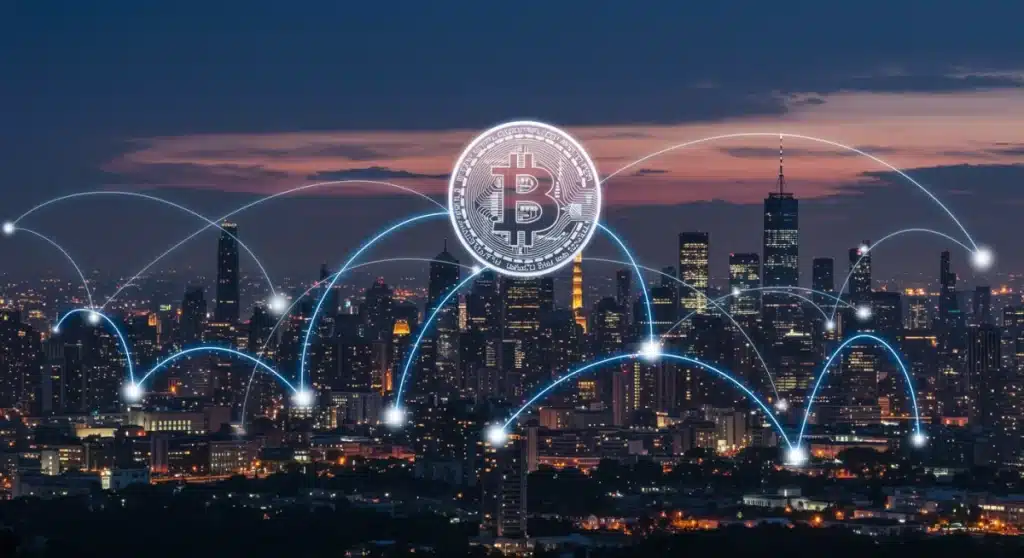
By 2026, the Bitcoin Lightning Network is poised for significant adoption in the U.S., offering rapid, low-cost transactions across various sectors, from retail payments to cross-border remittances, fundamentally transforming digital finance.
The digital financial landscape is evolving at an unprecedented pace, and at its forefront is the promising trajectory of the Bitcoin Lightning Network Adoption in the U.S. by 2026. This layer-2 solution promises to revolutionize how we interact with Bitcoin, making microtransactions and instant payments a seamless reality.
Understanding the Bitcoin Lightning Network’s Ascent in the U.S.
The Bitcoin Lightning Network, often lauded as Bitcoin’s scalability solution, has been steadily gaining traction since its inception. By 2026, its role in the U.S. financial ecosystem is expected to be significantly amplified, addressing many of the limitations associated with traditional Bitcoin transactions.
Initially conceptualized to solve Bitcoin’s inherent scalability issues, the Lightning Network enables off-chain transactions that are nearly instant and incredibly cheap. This technology creates payment channels between users, allowing for an unlimited number of transactions within that channel without settling each one on the main Bitcoin blockchain. Only the opening and closing of these channels require on-chain transactions, drastically reducing fees and confirmation times.
The Need for Speed and Efficiency
The burgeoning digital economy demands speed and efficiency. Traditional Bitcoin transactions, while secure, can be slow and expensive, especially during periods of high network congestion. This often made Bitcoin unsuitable for everyday purchases or micro-payments.
- Instant Settlements: Transactions confirm in milliseconds, rivaling traditional payment processors.
- Minimal Fees: Transaction costs are often fractions of a cent, making micro-payments economically viable.
- Enhanced Scalability: Billions of transactions per second are theoretically possible, far exceeding Bitcoin’s base layer.
The U.S., with its advanced technological infrastructure and high consumer demand for digital convenience, presents a fertile ground for Lightning Network adoption. Businesses are increasingly seeking cost-effective and efficient payment solutions, and consumers are looking for more control over their financial transactions.
As the understanding and infrastructure around the Lightning Network mature, its integration into various sectors will become more seamless. This foundational shift is not just about faster payments; it’s about unlocking new economic models and financial inclusivity that were previously unattainable with the base layer Bitcoin protocol.
Practical Use Case 1: Retail Payments and E-commerce Integration
One of the most immediate and impactful applications of the Bitcoin Lightning Network in the U.S. by 2026 is its integration into retail payments and e-commerce. The current limitations of traditional Bitcoin for everyday purchases – slow confirmation times and variable fees – have largely confined it to investment or larger, less frequent transactions. The Lightning Network shatters these barriers.
Imagine walking into your favorite coffee shop or browsing an online store and paying with Bitcoin instantly, without worrying about network congestion or high transaction costs. This is the promise of Lightning Network integration. Merchants can receive payments almost instantly, improving cash flow and reducing chargeback risks, while consumers enjoy the benefits of using a decentralized currency for their daily needs.
Seamless Point-of-Sale Experiences
Point-of-sale (POS) systems are rapidly evolving to accommodate Lightning payments. This involves simple QR code scans or NFC taps, making the process as straightforward as using a credit card or mobile payment app. The backend infrastructure handles the conversion and settlement, often in fiat for merchants who prefer stability, or directly in Bitcoin for those embracing the digital asset.
- Reduced Processing Fees: Merchants can save significantly compared to traditional credit card fees.
- Global Reach: Attract international customers who prefer paying with Bitcoin.
- Enhanced Privacy: Lightning transactions offer a degree of privacy often desired by consumers.
E-commerce platforms are also at the forefront of this adoption wave. Online retailers can integrate Lightning payment gateways, providing customers with a faster and cheaper alternative to conventional payment methods. This not only broadens their customer base but also positions them as innovators in the digital economy.
The shift towards Lightning-powered retail and e-commerce is driven by both technological advancements and a growing consumer preference for alternative payment methods. As more businesses recognize the operational efficiencies and customer satisfaction benefits, the adoption rate will continue its upward trajectory, making Bitcoin a truly viable currency for everyday spending.
Practical Use Case 2: Micropayments for Content and Services
The concept of micropayments has long been a holy grail for digital content creators and service providers. Traditional payment systems are ill-suited for transactions involving mere cents, as their fixed fees often outweigh the value of the payment itself. This is where the Bitcoin Lightning Network shines, offering a robust solution for enabling these tiny, yet cumulatively significant, exchanges.
By 2026, we anticipate a surge in platforms and services in the U.S. leveraging Lightning for micropayments. This could transform how we consume online content, access digital services, and even compensate creators. Instead of subscriptions or advertising-driven models, users could pay per article read, per minute of video watched, or for individual features in software applications.
Unlocking New Business Models
The ability to send and receive fractions of a cent instantly and cheaply opens up entirely new business models. Content creators, for instance, can monetize their work directly from consumers without relying on intermediaries that take a large cut. This fosters a more equitable distribution of value within the digital economy.
- Pay-per-content: Users pay only for what they consume, eliminating subscription fatigue.
- Gaming and Tipping: Instant, low-cost tips to streamers or in-game purchases.
- API Access: Developers can pay for granular access to APIs based on usage.
Service providers, such as VPNs or cloud storage, could offer highly granular usage-based payment models. Imagine paying for exactly the amount of data you use, or for VPN access down to the minute. This level of flexibility and cost-efficiency is a game-changer for both providers and consumers, leading to more competitive pricing and tailored service offerings.
The U.S. market, with its vast array of digital content and services, is ripe for this innovation. As consumers become more accustomed to the efficiency of Lightning, the demand for micropayment-enabled platforms will grow, pushing more businesses to integrate this transformative technology.
Practical Use Case 3: Cross-Border Remittances and International Trade
Cross-border remittances and international trade are areas traditionally plagued by high fees, slow transfer times, and complex regulatory hurdles. The Bitcoin Lightning Network offers a compelling alternative, poised to significantly streamline these processes for individuals and businesses in the U.S. by 2026.
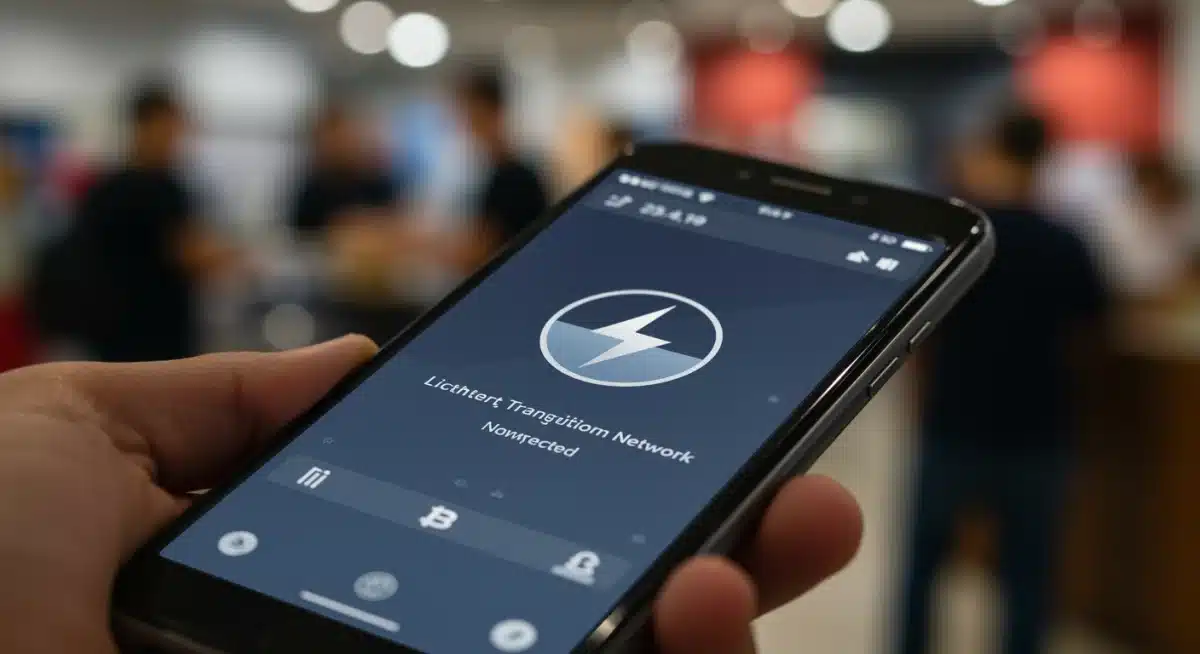
Sending money across borders often involves multiple intermediaries, each adding their own fees and processing delays. With Lightning, funds can be sent directly from sender to recipient, regardless of geographical boundaries, in a matter of seconds and for negligible costs. This has profound implications for migrant workers sending money home, or businesses engaged in international commerce.
Reducing Costs and Accelerating Transfers
The speed and cost-effectiveness of Lightning transactions make it an ideal solution for international payments. This is particularly beneficial for economies where traditional remittance services are expensive, allowing more money to reach the intended recipients rather than being consumed by fees.
- Lower Fees: Significantly cheaper than traditional wire transfers or money order services.
- Instant Delivery: Funds arrive almost immediately, eliminating waiting periods.
- Accessibility: Empowers unbanked or underbanked populations with global financial access.
For businesses, Lightning can facilitate faster settlement of international invoices, improving supply chain efficiency and reducing foreign exchange risks associated with fluctuating currency values during lengthy settlement periods. Small and medium-sized enterprises (SMEs) can particularly benefit from reduced costs and increased speed, allowing them to compete more effectively on a global scale.
While regulatory frameworks for cryptocurrency are still evolving, the inherent transparency and efficiency of the Lightning Network could pave the way for its broader acceptance in international finance. The U.S., as a major hub for global trade and remittances, stands to gain substantially from the widespread adoption of this technology.
Practical Use Case 4: Decentralized Finance (DeFi) Enhancements
While Bitcoin itself is the bedrock of the cryptocurrency world, its integration with the rapidly expanding ecosystem of Decentralized Finance (DeFi) has historically been limited by its transactional throughput. The Bitcoin Lightning Network is set to change this by 2026, acting as a crucial bridge to bring Bitcoin’s unparalleled liquidity and security into DeFi applications, particularly within the U.S. market.
DeFi protocols often rely on fast, cheap transactions for activities like lending, borrowing, and swapping assets. The base Bitcoin layer, designed for security and decentralization rather than speed, couldn’t adequately support these demands. Lightning, however, provides the necessary speed and efficiency, enabling Bitcoin holders to participate more actively in DeFi without moving their assets to other blockchains or wrapped versions.
Bridging Bitcoin to DeFi Ecosystems
The ability to move Bitcoin quickly and cheaply via Lightning opens up new possibilities for Bitcoin-backed DeFi products. This could include Lightning-enabled decentralized exchanges, lending platforms that accept native Bitcoin, or even novel financial instruments built on top of the Lightning Network.
- Bitcoin as Collateral: Use native Bitcoin more efficiently as collateral in DeFi lending.
- Atomic Swaps: Facilitate instant, trustless exchanges between Bitcoin and other cryptocurrencies.
- Enhanced Liquidity: Bring a massive amount of Bitcoin liquidity to the DeFi space.
The development of protocols like Taro, which allows for the issuance of stablecoins and other assets on the Bitcoin blockchain and transacted via the Lightning Network, further underscores this potential. This innovation could lead to a proliferation of Bitcoin-native stablecoins that leverage Lightning for fast transactions, making DeFi more accessible and secure.
As the U.S. financial sector continues to explore and adopt decentralized technologies, the Lightning Network’s role in connecting Bitcoin to the broader DeFi landscape will become increasingly vital. This integration promises to unlock significant value, offering new opportunities for yield generation and financial innovation for Bitcoin holders.
Practical Use Case 5: Enhanced Gaming and Metaverse Economies
The burgeoning sectors of online gaming and the metaverse are natural fits for the rapid, low-cost transactions offered by the Bitcoin Lightning Network. By 2026, the U.S. is expected to see significant adoption of Lightning within these digital economies, enabling entirely new forms of in-game commerce, rewards, and play-to-earn models.
Current gaming economies often rely on centralized payment systems or proprietary in-game currencies that lack real-world value or interoperability. Lightning changes this by allowing players to earn, spend, and transfer real Bitcoin instantly and cheaply within games or across different metaverse platforms. This fosters true ownership of digital assets and creates more vibrant, player-driven economies.
Revolutionizing In-Game Transactions and Rewards
From purchasing virtual items and skins to tipping content creators or participating in competitive esports, Lightning makes every transaction seamless. It allows for micro-rewards, where players can earn small amounts of Bitcoin for completing quests, winning matches, or contributing to the game’s ecosystem, creating a powerful incentive for engagement.
- Instant In-Game Purchases: Buy virtual goods without delays or high fees.
- Play-to-Earn Rewards: Earn real Bitcoin for achievements and participation.
- Creator Monetization: Streamers and artists can receive instant micro-donations.
The metaverse, as a persistent virtual world, stands to benefit immensely from Lightning’s capabilities. Users could conduct real estate transactions, trade digital art, or pay for virtual services using Bitcoin, with transactions settling instantly. This creates a fully functional digital economy that mirrors, and in some ways surpasses, the efficiency of traditional financial systems.
As gaming and metaverse platforms continue to attract millions of users in the U.S., the demand for integrated, efficient, and real-value payment solutions will only grow. The Bitcoin Lightning Network is perfectly positioned to meet this demand, driving innovation and adoption within these exciting new digital frontiers.
Challenges and the Path Forward for U.S. Adoption
While the future of Bitcoin Lightning Network adoption in the U.S. appears bright, several challenges remain. Overcoming these hurdles is crucial for achieving widespread integration by 2026 and beyond. These challenges range from technological complexities and user experience to regulatory clarity and network liquidity.
One primary challenge is user education. Many potential users, both individuals and businesses, are still unfamiliar with the Lightning Network’s benefits and how it operates. Simplifying the user experience and providing intuitive interfaces for wallets and applications will be key to broader acceptance. The technical intricacies of channel management and node operation often deter newcomers.
Key Challenges to Overcome
Addressing these points will accelerate the adoption curve dramatically.
- User Experience: Simplifying wallet interfaces and channel management for non-technical users.
- Regulatory Clarity: Establishing clear guidelines for Lightning transactions in the U.S.
- Network Liquidity: Ensuring sufficient routing capacity and channel liquidity for large-scale operations.
- Security Best Practices: Educating users on managing their funds securely on the network.
Regulatory uncertainty is another significant hurdle. As a relatively new technology, there isn’t yet a comprehensive regulatory framework specifically addressing Lightning Network transactions in the U.S. Clear guidelines from financial authorities would provide much-needed confidence for businesses looking to integrate the technology, as well as for consumers using it.
Furthermore, ensuring sufficient network liquidity and routing efficiency as the network scales will be critical. While the Lightning Network is designed for scalability, maintaining optimal performance for billions of transactions requires robust infrastructure and ongoing development. Continuous innovation in routing algorithms and liquidity solutions will be essential.
Despite these challenges, the trajectory for the Lightning Network in the U.S. is overwhelmingly positive. Continued development, strategic partnerships, and a focus on user-centric design will pave the way for its mainstream adoption, cementing its role as a cornerstone of the future digital economy.
| Key Use Case | Brief Description |
|---|---|
| Retail Payments | Instant, low-cost Bitcoin payments for everyday purchases in physical and online stores. |
| Micropayments | Enabling tiny, efficient payments for digital content, streaming, and services. |
| Cross-Border Remittances | Faster and significantly cheaper international money transfers for individuals and businesses. |
| DeFi & Gaming Integration | Connecting Bitcoin to DeFi protocols and powering in-game economies with instant transactions. |
Frequently Asked Questions About Lightning Network in the U.S.
The primary benefit is enabling instant and nearly free Bitcoin transactions. This makes Bitcoin suitable for everyday purchases, micropayments, and high-frequency transfers, overcoming the speed and cost limitations of the main Bitcoin blockchain for practical daily use.
It offers significantly lower transaction fees and faster settlement times than many traditional systems like credit cards or bank transfers. While traditional systems are widespread, Lightning provides a decentralized, censorship-resistant alternative with global reach and enhanced privacy for users.
No, the Lightning Network is a layer-2 solution, meaning it builds on top of the main Bitcoin blockchain. It enhances Bitcoin’s utility by handling smaller, more frequent transactions off-chain, while the main blockchain continues to provide the ultimate security and settlement layer for larger or less frequent transfers.
Key barriers include user education about its benefits and usage, ongoing regulatory uncertainty for cryptocurrencies, ensuring sufficient network liquidity for seamless transactions, and further simplifying the technical user experience for mainstream consumers and businesses.
By 2026, it’s expected to enable instant, low-fee Bitcoin payments at point-of-sale and online, reducing merchant costs and expanding customer payment options. This will make Bitcoin a more practical and attractive currency for everyday shopping, fostering greater adoption in both physical and digital retail spaces.
Conclusion
The trajectory for Bitcoin Lightning Network adoption in the U.S. by 2026 points towards a transformative shift in how digital payments are conducted. From revolutionizing retail transactions and enabling granular micropayments to streamlining cross-border remittances and enhancing DeFi applications, the Lightning Network is poised to unlock Bitcoin’s full potential as a medium of exchange. While challenges in user education and regulatory clarity persist, the inherent advantages of speed, cost-effectiveness, and scalability are driving an undeniable momentum. As infrastructure matures and user interfaces become more intuitive, the Lightning Network will undoubtedly cement its role as a pivotal technology, fostering greater financial inclusivity and innovation across the American digital economy.