Navigating Crypto Compliance Costs: A 2026 U.S. Business Outlook

Navigating Crypto Compliance Costs: A 2026 U.S. Business Outlook
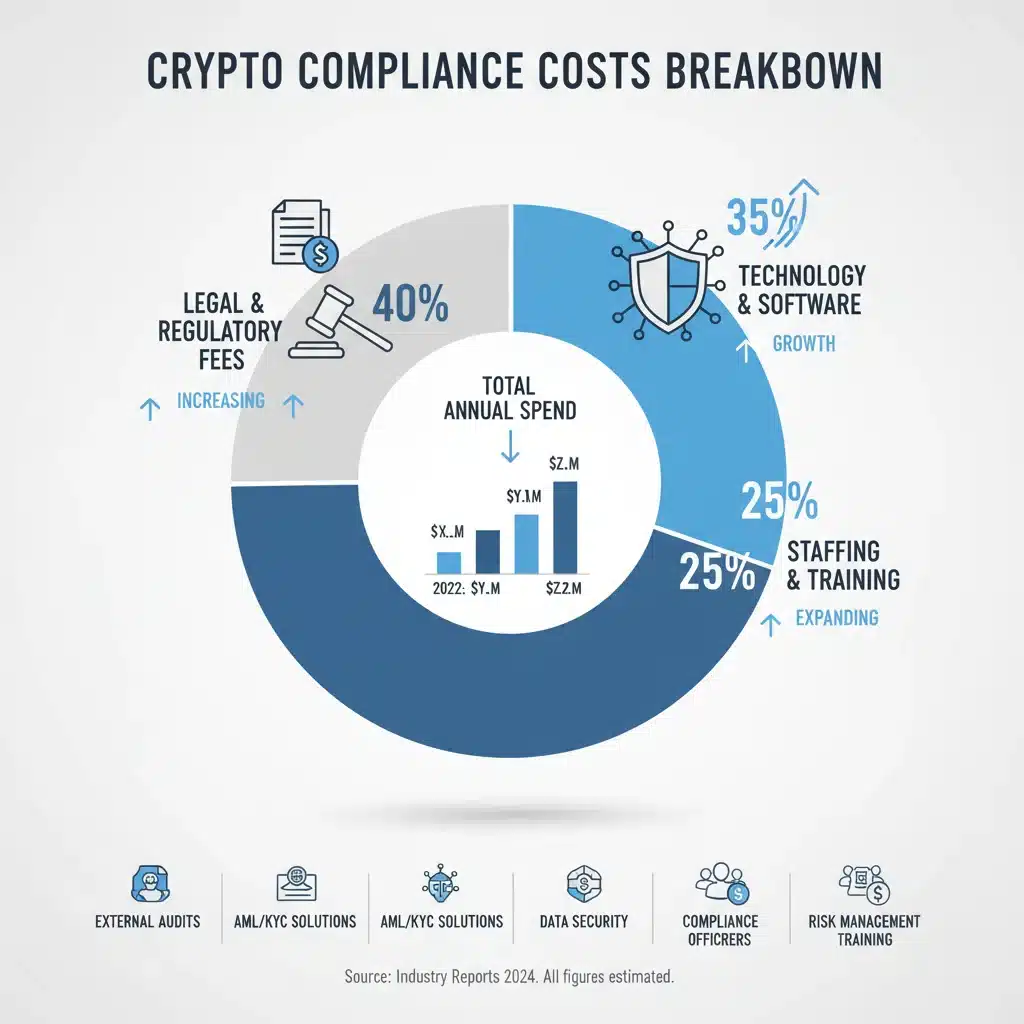
The cryptocurrency landscape is continuously evolving, marked by innovation, rapid growth, and increasingly, stringent regulatory oversight. For U.S. crypto businesses, the horizon of 2026 presents a significant challenge: a projected 15% increase in operational expenses directly attributable to compliance. This anticipated surge in crypto compliance costs is not merely an incremental adjustment; it represents a fundamental shift in how these businesses must operate, demanding proactive strategies and robust infrastructure to remain viable and competitive. Understanding the multifaceted drivers behind this increase, from evolving regulatory frameworks to technological demands and staffing needs, is paramount for any entity operating within this dynamic sector.
The digital asset industry, once characterized by its decentralized and often unregulated nature, is steadily maturing under the watchful eye of global and national authorities. In the United States, various governmental bodies, including the SEC, CFTC, FinCEN, and state-level regulators, are actively shaping the legal and operational parameters for crypto businesses. This concerted effort aims to mitigate risks associated with money laundering, terrorist financing, consumer protection, and market stability. While these regulatory initiatives are crucial for fostering legitimate growth and mainstream adoption, they invariably introduce substantial financial and operational burdens on businesses. The 15% projected increase in crypto compliance costs by 2026 serves as a stark reminder that the cost of doing business in this regulated environment is on an upward trajectory.
This article will delve into the intricate details of what constitutes these rising crypto compliance costs. We will explore the key regulatory pressures, the technological investments required, the human capital implications, and the strategic approaches businesses can adopt to not only absorb these costs but also leverage compliance as a competitive advantage. The goal is to provide a comprehensive outlook for U.S. crypto businesses, enabling them to anticipate, prepare for, and effectively manage the financial and operational impact of an increasingly regulated future.
Understanding the Regulatory Landscape Driving Crypto Compliance Costs
The primary catalyst for the escalating crypto compliance costs is the rapidly evolving and increasingly complex regulatory landscape. Unlike traditional financial services, which have decades of established regulatory precedent, the crypto sector is navigating uncharted waters, with new rules and interpretations emerging constantly. By 2026, it is expected that several key regulatory areas will have solidified, leading to more rigorous enforcement and higher compliance demands.
AML/KYC: The Foundation of Financial Security
Anti-Money Laundering (AML) and Know Your Customer (KYC) regulations form the bedrock of financial compliance, and their application to crypto is becoming more stringent. FinCEN (Financial Crimes Enforcement Network) has consistently emphasized that virtual asset service providers (VASPs) are subject to the Bank Secrecy Act (BSA), requiring them to implement robust AML programs. This includes identifying and verifying customer identities, monitoring transactions for suspicious activity, and reporting suspicious transactions (SARs). The Financial Action Task Force (FATF) has also issued guidance, pushing for a global standard known as the ‘Travel Rule,’ which mandates the sharing of originator and beneficiary information for crypto transactions above a certain threshold. Implementing and maintaining compliance with these evolving AML/KYC requirements is a significant driver of crypto compliance costs. Businesses must invest in advanced identity verification technologies, transaction monitoring software, and specialized staff to manage these processes effectively. The cost of failing to comply can be exorbitant, ranging from hefty fines to reputational damage and even loss of operating licenses.
Securities and Commodities Classifications
One of the most contentious and financially impactful aspects of crypto regulation in the U.S. revolves around the classification of digital assets as securities or commodities. The Securities and Exchange Commission (SEC) and the Commodity Futures Trading Commission (CFTC) have different jurisdictions and regulatory frameworks. The SEC generally views many cryptocurrencies, particularly those offered through initial coin offerings (ICOs), as unregistered securities, subjecting them to stringent disclosure and registration requirements. Conversely, the CFTC primarily regulates derivatives markets and has classified Bitcoin and Ethereum as commodities. This ambiguity creates immense regulatory uncertainty and forces crypto businesses to engage in extensive legal analysis and consultation, incurring significant legal fees. The cost of ensuring that a digital asset is correctly classified and that its offering or trading complies with the relevant regulatory body’s rules is a substantial component of crypto compliance costs.
State-Level Licensing and Money Transmitter Laws
Beyond federal regulations, U.S. crypto businesses must also contend with a patchwork of state-specific licensing requirements. Many states consider crypto activities, such as exchanging virtual currency for fiat or other virtual currencies, as money transmission. This necessitates obtaining money transmitter licenses (MTLs) in each state where a business operates or serves customers. The application process for MTLs is notoriously complex, time-consuming, and expensive, often requiring significant capital reserves, surety bonds, and detailed operational plans. Maintaining these licenses involves ongoing reporting, audits, and compliance with state-specific consumer protection laws. The administrative burden and associated fees for securing and maintaining multi-state MTLs contribute substantially to the rising crypto compliance costs.
Taxation and Reporting Requirements
The Internal Revenue Service (IRS) has made it clear that cryptocurrency is treated as property for tax purposes, subject to capital gains tax. This classification, while providing some clarity, places a considerable burden on crypto businesses to track and report transactions accurately. Businesses involved in facilitating crypto transactions, such as exchanges and custodians, are increasingly expected to provide detailed tax reporting information to their users and potentially directly to the IRS. The development and implementation of robust accounting and tax reporting systems, capable of handling the complexities of crypto transactions, are significant operational expenses. Furthermore, compliance with potential future tax legislation specifically targeting digital assets could further elevate these costs.
Technological Investments: A Cornerstone of Compliance
Effective compliance in the crypto space is inextricably linked to cutting-edge technology. The sheer volume and velocity of transactions, coupled with the pseudonymous nature of blockchain, demand sophisticated technological solutions. The projected 15% increase in crypto compliance costs is heavily influenced by the need for continuous investment in and upgrading of these technological infrastructures.
Automated Transaction Monitoring and Analytics
Manual review of crypto transactions is simply not feasible for most businesses. To comply with AML regulations and detect illicit activities, firms must deploy advanced transaction monitoring systems. These systems leverage artificial intelligence (AI) and machine learning (ML) to analyze transaction patterns, identify anomalies, and flag suspicious activities for human review. The initial investment in such software, along with ongoing maintenance, data subscriptions, and customization, represents a significant portion of compliance budgets. As regulatory expectations evolve, these systems must also be regularly updated and refined, adding to the recurring crypto compliance costs.
Identity Verification and Onboarding Solutions
KYC compliance requires robust identity verification processes. Crypto businesses are increasingly adopting biometric verification, liveness detection, and advanced document authentication technologies to meet these requirements. Integrating these solutions into existing platforms, ensuring data privacy, and complying with various data protection regulations (like GDPR, even for U.S. businesses with international clients) adds complexity and expense. The cost of third-party identity verification services, which often charge per verification, can quickly accumulate, especially for businesses with a growing customer base. This area is a critical component of rising crypto compliance costs.
Data Management and Reporting Tools
Regulatory compliance necessitates meticulous record-keeping and robust reporting capabilities. Crypto businesses must store vast amounts of customer data, transaction histories, and compliance audit trails securely and in an easily retrievable format. This requires significant investment in secure data storage solutions, data governance frameworks, and specialized reporting tools that can generate regulatory-compliant reports for various agencies. The cost of data infrastructure, cybersecurity measures to protect sensitive information, and audit-ready systems are all substantial elements contributing to the overall crypto compliance costs.
Security Infrastructure and Cyber Resilience
While not exclusively a compliance cost, robust cybersecurity is increasingly a regulatory expectation. Regulators are scrutinizing how crypto businesses protect customer assets and data from hacks and cyberattacks. Investment in multi-factor authentication, cold storage solutions for digital assets, penetration testing, and incident response planning are essential. These security measures, though vital for operational integrity, are often mandated or strongly encouraged by regulatory bodies, thus becoming an indirect but significant component of crypto compliance costs.
Human Capital and Operational Overheads
Beyond technology and legal fees, the human element plays a crucial role in driving up crypto compliance costs. The demand for skilled professionals in this niche area is escalating, leading to higher salaries and recruitment challenges.
Specialized Compliance Teams
As regulatory requirements become more complex, crypto businesses need dedicated compliance officers, legal counsel specializing in digital assets, and AML analysts. These roles require a unique blend of financial regulatory knowledge, blockchain understanding, and technological proficiency. The scarcity of such talent drives up compensation packages, making staffing a major operational expense. Furthermore, the need for continuous training and professional development for these teams to stay abreast of the latest regulatory changes adds to the recurring crypto compliance costs.
Legal and Consulting Fees
Navigating the labyrinthine regulatory environment often requires external expertise. Crypto businesses frequently engage law firms, compliance consultants, and auditors to interpret regulations, develop compliance programs, conduct risk assessments, and represent them in regulatory interactions. These professional services come at a premium, especially from firms with specialized crypto expertise. As the regulatory landscape becomes more defined and enforcement actions increase, the reliance on external legal and consulting support is likely to grow, further contributing to the projected 15% increase in crypto compliance costs.
Audit and Reporting Burdens
Regular internal and external audits are essential to demonstrate compliance. These audits assess the effectiveness of compliance programs, identify gaps, and ensure adherence to regulatory standards. The time and resources dedicated to preparing for and undergoing these audits, as well as the fees paid to external auditors, are non-trivial expenses. Furthermore, the ongoing reporting requirements to various regulatory bodies, which often involve significant data compilation and submission, add to the administrative burden and operational overheads.
Strategic Approaches to Mitigating Rising Compliance Costs
While a 15% increase in crypto compliance costs by 2026 seems daunting, businesses are not without recourse. Strategic planning and proactive measures can help mitigate these expenses and even transform compliance into a competitive advantage.
Embrace RegTech Solutions
Regulatory technology (RegTech) solutions are specifically designed to help businesses manage compliance obligations more efficiently and effectively. By automating many compliance processes, such as transaction monitoring, identity verification, and reporting, RegTech can reduce the need for extensive manual labor and minimize human error. Investing in scalable and adaptable RegTech platforms can yield significant long-term savings, even with the initial outlay. Businesses should evaluate solutions that offer modularity, allowing them to adapt to evolving regulations without a complete overhaul of their systems. This proactive adoption of technology is key to managing escalating crypto compliance costs.
Fostering a Culture of Compliance
Compliance should not be viewed as a separate department but as an integral part of the business’s DNA. By fostering a strong culture of compliance throughout the organization, businesses can embed regulatory awareness into every operational decision. This includes regular training for all employees, clear internal policies and procedures, and a commitment from leadership to prioritize ethical conduct. A robust compliance culture can prevent costly missteps, reduce the likelihood of regulatory penalties, and ultimately lead to more efficient compliance operations, thereby indirectly reducing crypto compliance costs.

Engage Proactively with Regulators
Rather than adopting a reactive stance, crypto businesses can benefit from proactive engagement with regulatory bodies. Participating in industry consultations, providing feedback on proposed rules, and maintaining open lines of communication with regulators can help businesses anticipate future requirements and influence policy development. This engagement can lead to a clearer understanding of expectations, potentially reducing the costs associated with uncertainty and last-minute adaptations. Building a reputation as a responsible and compliant actor can also be beneficial in the long run.
Strategic Geographic Expansion and Product Diversification
For businesses operating globally, strategic decisions regarding geographic expansion can significantly impact compliance costs. Entering jurisdictions with clearer and more stable regulatory frameworks, or those with mutual recognition agreements, can streamline compliance efforts. Similarly, careful consideration of product offerings and their regulatory classifications can help manage risk and associated compliance burdens. Focusing on products that fall under more defined regulatory categories or that align with existing licenses can optimize crypto compliance costs.
Leverage Industry Best Practices and Shared Resources
The crypto industry is increasingly collaborating to address common compliance challenges. Participation in industry associations, sharing best practices, and even exploring shared compliance infrastructure or services can help individual businesses reduce their burden. For example, some industry initiatives aim to develop standardized KYC/AML processes or shared databases, which could significantly lower the cost for individual firms. Learning from peers and adopting proven strategies can be a cost-effective way to enhance compliance capabilities.
The Future Outlook: Compliance as a Competitive Edge
The projected 15% increase in crypto compliance costs by 2026 is a clear indicator that the crypto industry is maturing. While these costs present undeniable challenges, they also signal a shift towards a more legitimate, secure, and sustainable financial ecosystem. Businesses that embrace compliance not merely as a burden but as an integral part of their operational strategy are better positioned for long-term success.
In a regulated environment, strong compliance becomes a powerful differentiator. It builds trust with customers, attracts institutional investors, and opens doors to partnerships with traditional financial institutions. Businesses with robust compliance frameworks are more likely to secure necessary licenses, avoid costly penalties, and gain a significant advantage over less compliant competitors. The investment in compliance, though substantial, can therefore be viewed as an investment in credibility and future growth.
The path to 2026 will undoubtedly present ongoing regulatory shifts and technological advancements. U.S. crypto businesses must remain agile, continuously monitor the regulatory landscape, and adapt their strategies accordingly. By prioritizing proactive compliance, investing in smart technology, cultivating expert talent, and fostering a culture of integrity, businesses can navigate the rising crypto compliance costs and emerge stronger, more resilient, and better prepared for the future of digital finance.
The journey towards a fully regulated and thriving crypto economy in the U.S. is complex and costly, but it is also essential for the industry’s mainstream acceptance and long-term prosperity. Businesses that recognize this reality and strategically position themselves will not only survive but thrive in the evolving digital asset landscape.