
DeFi Portfolio Rebalancing in 2026: Automation Strategies for 12% Higher Annual Performance
The decentralized finance (DeFi) landscape is evolving at an unprecedented pace, presenting both immense opportunities and significant challenges for investors. As we look towards 2026, the need for sophisticated and automated DeFi portfolio rebalancing strategies becomes paramount. The volatile nature of crypto assets, coupled with the rapid innovation in DeFi protocols, demands a proactive approach to maintain optimal risk-reward ratios. This comprehensive guide will delve into advanced automation strategies designed to help you achieve up to 12% higher annual performance by effectively managing your DeFi investments.
The Imperative of DeFi Portfolio Rebalancing in a Dynamic Market
In traditional finance, portfolio rebalancing is a well-established practice to realign an investment portfolio’s asset allocation back to its original target. In DeFi, this practice is not just beneficial; it’s critical. The extreme volatility of cryptocurrencies means that an initial allocation can quickly become skewed, exposing investors to unintended risks or causing them to miss out on significant gains. For instance, if one asset in your DeFi portfolio surges, it might disproportionately increase your exposure to that asset, shifting your risk profile without your conscious decision. Conversely, a declining asset might pull down the overall portfolio value, requiring strategic adjustments to either cut losses or average down.
The DeFi ecosystem adds layers of complexity: yield farming opportunities emerge and disappear, liquidity pools offer varying APYs, and new tokens are constantly launched. Manually tracking and adjusting these positions across multiple protocols and blockchains is not only time-consuming but often impractical. This is where automated DeFi portfolio rebalancing steps in as a game-changer, providing the agility and precision needed to navigate this fast-moving environment.
By 2026, the maturity of DeFi infrastructure and the availability of advanced tools will make automated rebalancing an industry standard for serious investors. Those who fail to adopt these strategies risk underperforming the market significantly. The potential to achieve 12% higher annual performance is not an arbitrary figure; it reflects the cumulative benefits of consistently optimizing asset allocation, capitalizing on yield opportunities, and mitigating downside risks through intelligent rebalancing.
Understanding Risk-Reward Ratios in DeFi
Before diving into rebalancing strategies, it’s crucial to grasp the concept of risk-reward ratios within DeFi. Every investment carries a certain level of risk, and investors seek compensation for taking on that risk in the form of potential returns. In DeFi, risks can include smart contract vulnerabilities, impermanent loss in liquidity pools, oracle manipulation, protocol hacks, regulatory changes, and extreme market volatility. The reward, of course, is the potential for high yields, capital appreciation, and participation in groundbreaking financial innovation.
An optimal risk-reward ratio means achieving the highest possible returns for a given level of risk you are comfortable with, or conversely, minimizing risk for a desired return. DeFi portfolio rebalancing directly impacts this ratio by ensuring your portfolio’s exposure to different assets and protocols aligns with your initial risk tolerance. Without rebalancing, a portfolio can drift into a riskier allocation than intended, or conversely, become too conservative, missing out on growth opportunities.
For example, if your target allocation is 60% stablecoins for yield farming and 40% volatile altcoins for capital appreciation, but a strong altcoin rally pushes your allocation to 30% stablecoins and 70% altcoins, your portfolio’s overall risk profile has significantly increased. Rebalancing would involve selling some altcoins and buying stablecoins to restore the 60/40 balance, thereby bringing your risk exposure back to your desired level. This disciplined approach is fundamental to long-term success in DeFi.
Types of DeFi Portfolio Rebalancing Strategies
There are several approaches to DeFi portfolio rebalancing, each with its own merits and suitability depending on an investor’s goals and risk appetite. In 2026, automated tools will support a combination of these strategies to provide highly customized solutions.
1. Threshold-Based Rebalancing
This is one of the most common rebalancing strategies. It involves setting specific thresholds for each asset in your portfolio. When an asset’s weight deviates from its target allocation by a predetermined percentage (e.g., 5% or 10%), a rebalancing event is triggered. For example, if Bitcoin’s target is 30% of your portfolio, and it rises to 35%, the system would automatically sell enough Bitcoin to bring it back to 30% and redistribute the proceeds to underweight assets.
Advantages: Efficient, reactive to significant market movements, and reduces unnecessary trading. It’s particularly effective for managing volatility.
Disadvantages: Can lead to multiple trades during highly volatile periods, incurring gas fees and potential slippage. Requires careful calibration of thresholds.
2. Time-Based Rebalancing
As the name suggests, this strategy involves rebalancing your portfolio at fixed intervals, such as monthly, quarterly, or annually. Regardless of market movements, the portfolio is reset to its target allocation at these predefined times.
Advantages: Simple to implement, reduces emotional decision-making, and can be cost-effective if done less frequently.
Disadvantages: May miss opportunities or fail to react to significant market shifts between rebalancing periods. Less dynamic than threshold-based approaches.
3. Constant Proportion Portfolio Insurance (CPPI)
CPPI is a dynamic strategy that aims to provide a minimum ‘floor’ value for the portfolio while still participating in upside gains. It involves allocating a portion of the portfolio to a risky asset (e.g., altcoins) and the remainder to a safe asset (e.g., stablecoins or low-volatility tokens). The allocation to the risky asset is adjusted based on the portfolio’s cushion (current value minus the floor). As the portfolio value increases, more is allocated to the risky asset, and vice versa.
Advantages: Offers downside protection while allowing for growth. More sophisticated risk management.
Disadvantages: Can be complex to implement, especially in DeFi where ‘safe’ assets might still carry risks. Requires constant monitoring and adjustment.
4. Dynamic Hedging and Yield Optimization
This advanced strategy combines rebalancing with active hedging and yield farming optimization. It involves not just adjusting asset weights but also dynamically moving assets between different DeFi protocols to maximize yield while maintaining risk exposure. For instance, if one lending protocol’s APY drops, assets might be automatically moved to another with a higher, sustainable yield, or used to provide liquidity in a different pool.
Advantages: Maximizes capital efficiency and potential returns, adapts to changing market conditions and yield opportunities.
Disadvantages: Highly complex, requires sophisticated automation tools, and carries increased smart contract risk due to interaction with multiple protocols.
The Role of Automation in DeFi Portfolio Rebalancing
The complexity and speed of the DeFi market make manual DeFi portfolio rebalancing incredibly challenging, if not impossible, for most investors to execute effectively. This is where automation becomes indispensable. By 2026, a new generation of sophisticated tools, powered by AI and smart contracts, will redefine how investors manage their DeFi portfolios.
Smart Contract Automation
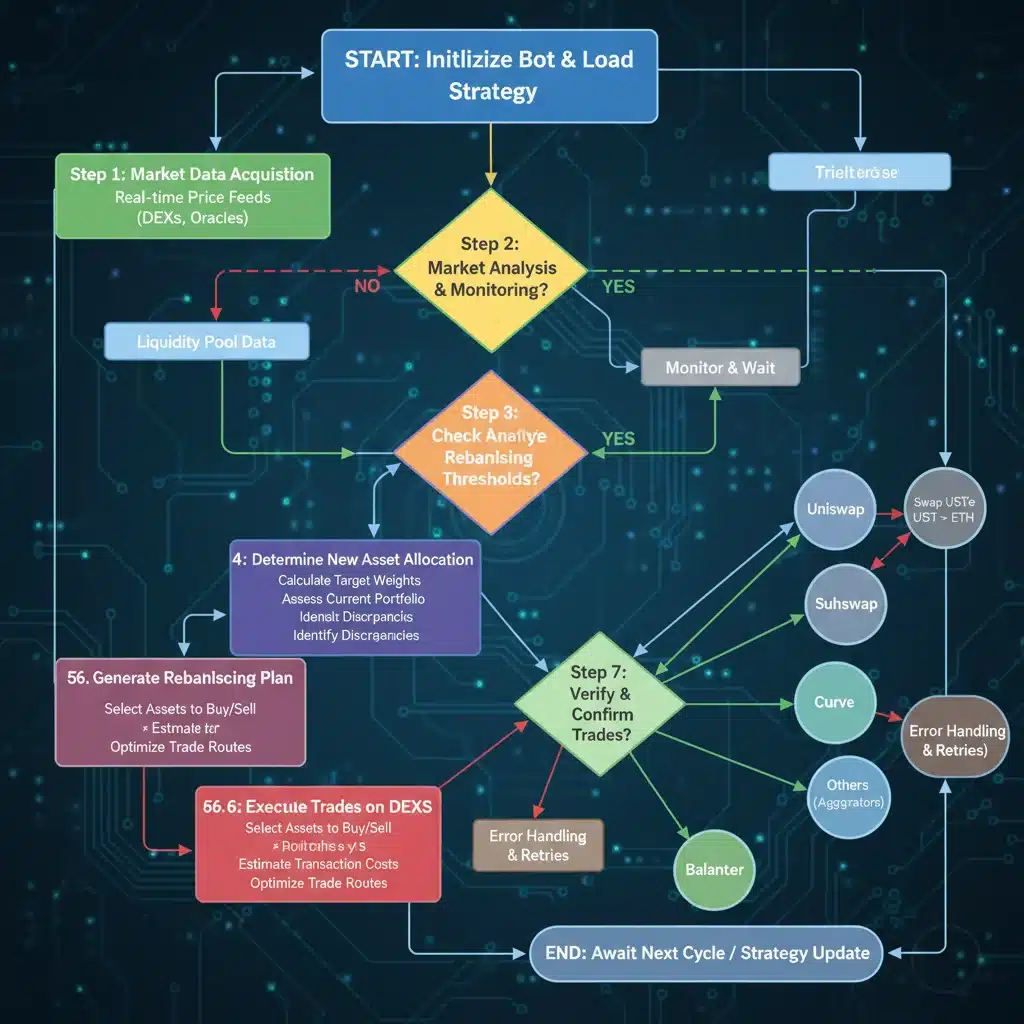
At the core of automated rebalancing are smart contracts. These self-executing agreements, coded on the blockchain, can be programmed to trigger rebalancing trades based on predefined rules (e.g., price thresholds, time intervals, or performance metrics). This eliminates the need for manual intervention, reducing human error and emotional trading.
Decentralized Autonomous Organizations (DAOs) and Automated Vaults
DAOs are increasingly governing DeFi protocols, and automated vaults (like those offered by Yearn Finance or Alpha Homora) are becoming more sophisticated. These vaults can automatically deploy user funds into various yield-generating strategies, including rebalancing between different assets or protocols to optimize returns and manage risk. Users deposit funds, and the vault’s underlying smart contracts handle the intricate process of strategy execution, including rebalancing.
AI and Machine Learning Integration
The frontier of automated DeFi portfolio rebalancing lies in the integration of AI and machine learning. These technologies can analyze vast amounts of market data, identify trends, predict price movements, and dynamically adjust rebalancing parameters in real-time. AI algorithms can learn from past market behavior to optimize trade execution, minimize slippage, and even anticipate future yield opportunities across different protocols. This level of intelligence moves beyond simple rule-based rebalancing to truly adaptive and predictive portfolio management.
Cross-Chain Rebalancing Solutions
As the multi-chain ecosystem continues to grow, automated rebalancing solutions will need to operate seamlessly across different blockchains (Ethereum, Polygon, Binance Smart Chain, Solana, etc.). Bridges and cross-chain communication protocols will enable automated systems to move assets efficiently between chains to capture the best yields or rebalance exposure, despite the inherent complexities.
Key Considerations for Implementing Automated DeFi Portfolio Rebalancing
While the benefits of automated DeFi portfolio rebalancing are clear, successful implementation requires careful planning and consideration of several factors:
1. Defining Your Investment Goals and Risk Tolerance
Before setting up any automation, clearly define what you want to achieve. Are you aiming for aggressive growth, stable income, or capital preservation? What level of volatility are you comfortable with? Your answers will dictate your target asset allocation and the aggressiveness of your rebalancing strategy.
2. Choosing the Right Assets and Protocols
Not all DeFi assets or protocols are suitable for automated rebalancing. Focus on reputable projects with audited smart contracts, sufficient liquidity, and a proven track record. Avoid highly illiquid assets or experimental protocols that carry excessive risk. Diversify across different asset classes (stablecoins, blue-chip altcoins, yield-bearing tokens) and protocol types (lending, DEXs, derivatives).
3. Understanding Transaction Costs (Gas Fees and Slippage)
Every transaction on a blockchain incurs gas fees. Frequent rebalancing, especially on networks like Ethereum, can eat into your profits. Automated strategies need to be optimized to minimize these costs. This might involve batching trades, using Layer 2 solutions, or selecting networks with lower fees. Slippage, the difference between the expected price of a trade and the price at which it is executed, is another critical factor. Automated systems should employ smart routing to minimize slippage, especially for larger trades.
4. Security and Smart Contract Risk
Interacting with multiple DeFi protocols and relying on automated smart contracts introduces security risks. Always use audited and battle-tested protocols. Understand the security models of any automated rebalancing platform you use. Consider hardware wallets and multi-signature wallets for enhanced security.
5. Monitoring and Adjusting Your Strategy
Automation does not mean set-it-and-forget-it. The DeFi landscape is constantly evolving. You must regularly monitor your automated rebalancing strategy’s performance, assess its effectiveness, and be prepared to adjust parameters or even switch strategies as market conditions or your goals change.
Achieving 12% Higher Annual Performance: A Realistic Outlook for 2026
The claim of achieving 12% higher annual performance through automated DeFi portfolio rebalancing is ambitious but realistic, given the current inefficiencies and opportunities within the DeFi market. Here’s how it can be achieved:
1. Capitalizing on Volatility
Automated rebalancing forces you to ‘buy low and sell high’ (or at least, buy relatively lower and sell relatively higher) by continuously adjusting your portfolio back to its target weights. When an asset performs well, the system sells a portion, locking in gains. When an asset underperforms, the system buys more, averaging down your cost basis. This disciplined approach, especially in volatile markets, can significantly outperform a static portfolio.
2. Optimized Yield Farming and Liquidity Provision
Advanced automated strategies can dynamically allocate funds to the highest-yielding, risk-adjusted opportunities across various lending protocols, liquidity pools, and staking platforms. As APYs fluctuate, an automated system can seamlessly move capital to maximize returns, a feat impossible to manage manually. This continuous optimization of capital utilization is a major driver of enhanced performance.
3. Reduced Emotional Trading
Fear and greed are powerful emotions that often lead to suboptimal investment decisions. Automated rebalancing removes the emotional element, adhering strictly to predefined rules. This disciplined approach prevents investors from panic-selling during downturns or chasing pumps, which are common pitfalls that erode returns.
4. Efficient Risk Management
By consistently maintaining your desired risk profile, automated rebalancing prevents your portfolio from becoming overexposed to high-risk assets or under-exposed to potential growth. This proactive risk management protects against significant drawdowns and ensures a more stable growth trajectory.
5. Minimizing Opportunity Cost
Manual rebalancing is time-consuming. The time spent analyzing markets, performing calculations, and executing trades is time not spent on other productive activities. Automation frees up this time, and more importantly, allows trades to be executed instantly when conditions are met, minimizing missed opportunities due to delays.
The Future of DeFi Portfolio Management: Trends for 2026
Looking ahead to 2026, several trends will shape the landscape of DeFi portfolio rebalancing and automation:
1. Increased Institutional Adoption
As DeFi infrastructure matures and regulatory clarity improves, more institutional investors will enter the space. This will drive demand for even more sophisticated, compliant, and robust automated rebalancing solutions, pushing the boundaries of current technology.
2. Hyper-Personalized Strategies
AI and machine learning will enable hyper-personalized rebalancing strategies tailored to individual investor profiles, real-time market sentiment, and even external macroeconomic indicators. Investors will have access to highly customized automation that adapts dynamically to their unique financial goals and risk appetites.
3. Enhanced Cross-Chain Interoperability
True cross-chain interoperability will become a reality, allowing automated rebalancing systems to seamlessly execute trades and manage assets across any blockchain without significant friction or high costs. This will unlock a vastly larger universe of yield opportunities and diversification options.
4. Integration with Traditional Finance
The lines between traditional finance (TradFi) and DeFi will continue to blur. Automated DeFi rebalancing solutions may integrate with TradFi portfolio management tools, allowing for a holistic view and management of both digital and traditional assets from a single interface.
5. Focus on Capital Efficiency and Risk-Adjusted Returns
The market will mature beyond simply chasing the highest APYs. A greater emphasis will be placed on capital efficiency, risk-adjusted returns, and sustainable yield generation. Automated rebalancing tools will incorporate advanced metrics to evaluate the true risk-reward profiles of various DeFi opportunities.
Conclusion: Embrace Automation for Superior DeFi Performance
The journey through the DeFi landscape in 2026 promises to be exhilarating, but only for those equipped with the right tools and strategies. Automated DeFi portfolio rebalancing is no longer a luxury but a necessity for maintaining optimal risk-reward ratios and unlocking significantly higher annual performance. By understanding the different rebalancing strategies, embracing the power of smart contracts and AI, and carefully considering the practical implications, investors can position themselves to thrive.
The potential for 12% higher annual performance is a testament to the power of disciplined, automated management in a dynamic and opportunity-rich environment. As DeFi continues its exponential growth, those who proactively adopt and refine their automated rebalancing strategies will be the ones to reap the most substantial rewards, ensuring their portfolios are always aligned with their financial objectives and the ever-changing tides of the decentralized economy.
Start exploring the automated solutions available today and prepare your DeFi portfolio for the future of finance. The time to optimize is now.