Maximizing DeFi Yields 2026: Aave V4 Stablecoin Lending Strategy

Achieving a 15% APY in 2026 by leveraging stablecoin lending on Aave V4 is a sophisticated DeFi strategy that combines optimized asset allocation with advanced risk management to generate substantial passive income.
Are you looking to unlock significant passive income in the ever-evolving world of decentralized finance? The landscape of crypto innovation is rapidly advancing, and maximizing DeFi yields in 2026: a 15% APY strategy using stablecoin lending on Aave V4 presents a compelling opportunity for astute investors. This guide will navigate the intricacies of achieving such returns, offering a clear roadmap for leveraging Aave V4’s enhanced capabilities.
Understanding Aave V4: The Evolution of Decentralized Lending
Aave V4, projected to be a cornerstone of DeFi in 2026, represents a significant leap forward in decentralized lending protocols. It builds upon the successes of its predecessors by introducing enhanced capital efficiency, improved risk management frameworks, and a more modular architecture. These advancements are crucial for investors seeking robust and sustainable yield opportunities.
The core functionality of Aave remains consistent: users can lend out their crypto assets to earn interest, or borrow assets by providing collateral. However, V4 introduces several innovations designed to optimize these processes, making it a powerful tool for yield generation. Understanding these foundational elements is the first step towards crafting an effective strategy.
Key Innovations in Aave V4
- Dynamic Interest Rate Models: Aave V4 refines its interest rate curves, making them more responsive to market demand and supply. This can lead to more attractive lending rates during periods of high utilization.
- Cross-Chain Interoperability: Expect greater seamless integration across multiple blockchain networks, expanding the pool of available assets and borrowers. This broadens the scope for stablecoin lending.
- Enhanced Governance Mechanisms: A more robust governance system allows for swifter and more efficient protocol upgrades and parameter adjustments, adapting to market conditions more effectively.
- Improved Liquidation Mechanisms: V4 aims to make liquidations more efficient and less impactful on borrowers, enhancing overall protocol stability.
These innovations collectively create a more mature and resilient lending environment, which is paramount when targeting ambitious APY figures like 15%. The ability of Aave V4 to adapt and integrate new features will be a defining factor in its performance and the sustainability of high yields.
Stablecoin Lending: The Foundation of a 15% APY Strategy
Stablecoins are central to any high-yield DeFi strategy due to their price stability, which mitigates the volatility inherent in other cryptocurrencies. Lending stablecoins on platforms like Aave V4 allows investors to earn predictable interest without exposure to drastic price fluctuations. This stability is critical for targeting a consistent 15% APY.
The demand for stablecoin borrowing typically stems from traders seeking leverage, arbitrage opportunities, or simply needing working capital within the DeFi ecosystem. This consistent demand, coupled with Aave V4’s optimized liquidity pools, creates a fertile ground for lenders to earn attractive yields. Our strategy hinges on identifying the most liquid and in-demand stablecoin pairs within the Aave V4 ecosystem.
Why Stablecoins for High APY?
- Reduced Volatility: Stablecoins peg their value to fiat currencies or other stable assets, protecting principal from market swings. This makes them ideal for income generation.
- Consistent Demand: The utility of stablecoins in trading, borrowing, and various DeFi applications ensures a continuous need for liquidity, driving lending rates.
- Predictable Returns: While not entirely fixed, stablecoin lending rates tend to be less volatile than those of unpegged cryptocurrencies, allowing for better APY forecasting.
Selecting the right stablecoins will involve analyzing factors such as market capitalization, regulatory scrutiny, and the underlying collateral mechanisms. In 2026, we anticipate a more diversified stablecoin market, offering various options for lenders to optimize their portfolios on Aave V4 while aiming for that 15% APY.
Crafting the 15% APY Strategy: A Multi-faceted Approach
Achieving a 15% APY on Aave V4 in 2026 requires more than simply depositing stablecoins. It involves a dynamic, multi-faceted strategy that leverages various protocol features and market conditions. This approach will combine optimized asset selection, active monitoring, and strategic rebalancing to capitalize on the most lucrative opportunities.
Our strategy integrates an understanding of Aave V4’s interest rate models, anticipating periods of higher demand for specific stablecoins. It also considers the potential for additional incentive programs, such as liquidity mining rewards, which can significantly boost overall APY. The goal is to maximize the base lending rate while strategically capturing these supplementary incentives.
Components of the Strategy
- Optimized Stablecoin Allocation: Diversify across several high-performing stablecoins (e.g., USDC, USDT, DAI, potentially new regulated stablecoins in 2026) to mitigate risk and capture the best rates.
- Leveraging Flash Loans (Advanced): For those with expertise, strategic use of flash loans for arbitrage or liquidation opportunities can generate additional yield that indirectly supports the lending pool.
- Governance Participation: Active participation in Aave governance can influence protocol parameters, potentially leading to more favorable lending conditions or the introduction of new reward schemes.
This comprehensive strategy ensures that investors are not solely reliant on the base lending rate but are actively positioning themselves to benefit from the full spectrum of opportunities available within Aave V4. Constant adaptation to market dynamics will be key to sustaining the 15% APY target.
Risk Management and Mitigation in DeFi Lending
While the prospect of a 15% APY is attractive, DeFi is not without risks. Effective risk management is paramount to protecting capital and ensuring the sustainability of your lending strategy on Aave V4. Understanding and mitigating these risks is as crucial as identifying yield opportunities.
Potential risks include smart contract vulnerabilities, oracle failures, stablecoin de-pegging events, and broader market contagion. Aave V4, with its enhanced security audits and decentralized governance, aims to minimize these, but vigilance remains essential. Our strategy incorporates layers of protection to safeguard against these unforeseen events.
Key Risk Mitigation Techniques
- Diversification: Spreading stablecoin deposits across multiple stablecoins and potentially even different lending protocols (though our focus is Aave V4) reduces exposure to a single point of failure.
- Regular Monitoring: Continuously track interest rates, stablecoin peg stability, and Aave V4’s protocol health metrics. Automated alerts can be invaluable here.
- Understanding Collateralization Ratios: While lending stablecoins, understanding the health factor and potential for liquidation (if borrowing) is critical. For pure lending, monitoring borrower collateral is indirect but important.
- Staying Informed on Protocol Upgrades: Keep abreast of Aave V4 developments and security audits to ensure continued trust in the platform’s integrity.
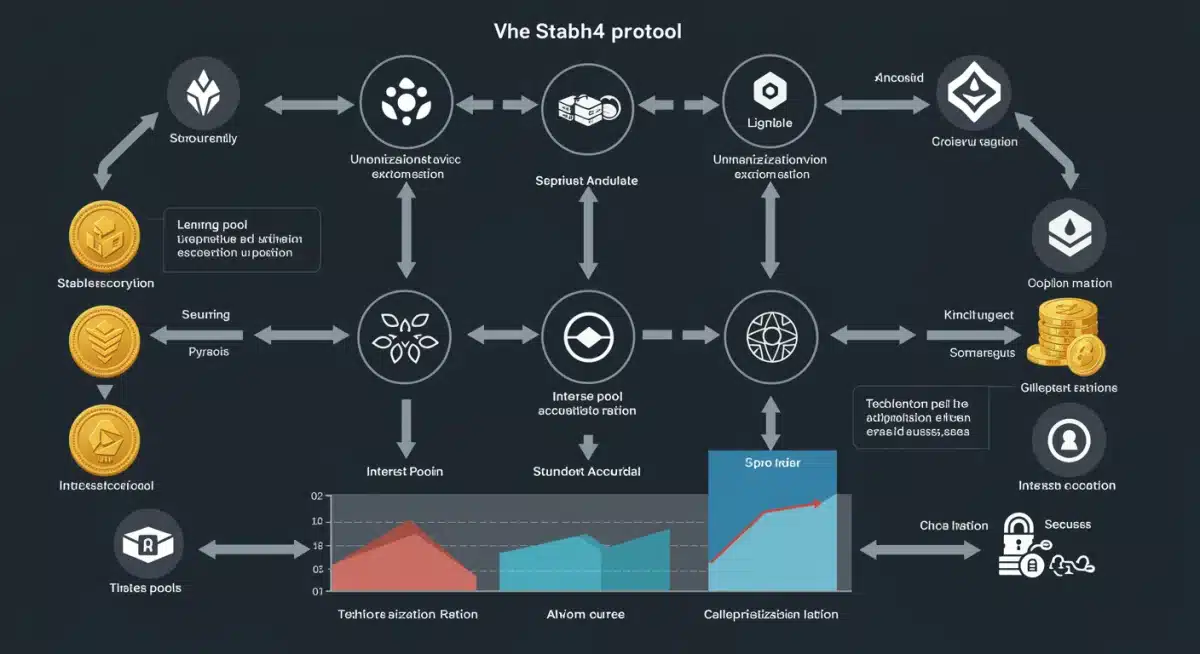
Implementing these risk management practices significantly enhances the robustness of your 15% APY strategy. It transforms a potentially volatile endeavor into a calculated and more secure investment, aligning with the principles of responsible financial management within DeFi.
The Role of Market Dynamics and Regulatory Landscape in 2026
The DeFi landscape in 2026 will undoubtedly be shaped by evolving market dynamics and a maturing regulatory environment. These factors will directly impact the feasibility and sustainability of achieving a 15% APY on Aave V4. A forward-looking strategy must account for these external influences.
Increased institutional adoption of DeFi could bring greater liquidity and demand for stablecoin borrowing, potentially driving up lending rates. Conversely, stricter regulations on stablecoins or decentralized protocols could introduce new compliance costs or operational restrictions. Staying ahead of these trends is vital for adapting the strategy effectively.
Anticipating 2026 Market & Regulatory Shifts
In 2026, we expect a more defined regulatory framework for stablecoins, particularly in major jurisdictions like the United States. This could lead to a bifurcation of the stablecoin market, with some assets gaining regulatory approval and others facing increased scrutiny. Our strategy will prioritize lending in stablecoins that demonstrate strong regulatory compliance and transparency, ensuring long-term viability.
Furthermore, the competitive landscape among DeFi lending protocols will likely intensify. While Aave V4 is positioned as a leader, new entrants or innovative features from competitors could influence market share and interest rates. Continuous research and adaptation will be necessary to maintain optimal yields.
Understanding these broader market and regulatory forces allows for proactive adjustments to the lending strategy, ensuring that the target 15% APY remains achievable and sustainable amidst a dynamic financial ecosystem.
Advanced Strategies and Future Outlook for Aave V4
Beyond basic stablecoin lending, advanced strategies within Aave V4 can further optimize yields and contribute to the 15% APY target. These include leveraging yield farming opportunities, participating in liquidity provider incentives, and exploring integrated DeFi primitives that interact with Aave’s liquidity pools. The modularity of V4 is expected to facilitate such complex interactions.
The future of Aave V4 in 2026 is poised for continued innovation. We can anticipate deeper integrations with institutional finance, potentially offering new avenues for stablecoin demand and higher lending rates. The protocol’s ability to evolve and incorporate new features will be key to its long-term success and the sustained profitability of our strategy.
Exploring Advanced Yield Generation
- Liquidity Provider Incentives: Some stablecoin pools on Aave V4 might offer additional tokens as incentives for providing liquidity, significantly boosting overall APY.
- Yield Aggregators: Utilizing sophisticated yield aggregators that automatically rebalance stablecoin deposits across various Aave V4 pools (or even other protocols) to capture the highest available rates.
- Integration with Structured Products: As DeFi matures, we may see more structured financial products built on top of Aave V4, offering enhanced yield opportunities with tailored risk profiles.
The outlook for Aave V4 remains strong, with a clear trajectory towards increased decentralization, security, and capital efficiency. Investors who stay informed and are willing to adapt their strategies will be best positioned to capitalize on these advancements and achieve their ambitious 15% APY goals in 2026.
| Key Strategy Component | Brief Description |
|---|---|
| Aave V4 Understanding | Familiarity with V4’s dynamic interest rates, cross-chain support, and enhanced governance. |
| Stablecoin Focus | Lending highly liquid and regulated stablecoins to minimize volatility risk. |
| Active Risk Management | Diversification, continuous monitoring, and awareness of smart contract and de-pegging risks. |
| Market and Regulatory Awareness | Adapting strategy based on evolving DeFi market trends and regulatory changes in 2026. |
Frequently Asked Questions about Aave V4 and DeFi Yields
Aave V4 is the latest iteration of the decentralized lending protocol, featuring enhanced capital efficiency, improved risk management, and a more modular architecture. It offers dynamic interest rates and greater cross-chain interoperability, aiming for a more resilient and adaptable DeFi lending experience in 2026.
While ambitious, a 15% APY is achievable through a multi-faceted strategy. This involves optimizing stablecoin selection, actively monitoring market rates, and potentially leveraging additional incentives like liquidity mining rewards. It requires consistent engagement and adaptation to market conditions.
Key risks include smart contract vulnerabilities, stablecoin de-pegging events, and oracle failures. While Aave V4 incorporates robust security measures, careful diversification, continuous monitoring, and understanding protocol health are essential for mitigating these risks effectively.
Selecting highly liquid and reputable stablecoins is crucial. Different stablecoins may offer varying interest rates based on demand and supply dynamics. Diversifying across a few top-tier, well-regulated stablecoins can help optimize yields while spreading risk, contributing to the 15% APY goal.
Yes, evolving regulations, especially concerning stablecoins, could significantly impact DeFi lending. Stricter compliance or new operational requirements might influence liquidity and interest rates. Staying informed about the regulatory landscape in 2026 is vital for adapting the strategy and maintaining target yields.
Conclusion
Achieving a 15% APY through stablecoin lending on Aave V4 in 2026 is a challenging yet attainable goal for those willing to engage deeply with the DeFi ecosystem. This strategy demands a comprehensive understanding of Aave V4’s mechanics, meticulous stablecoin selection, proactive risk management, and continuous adaptation to market and regulatory shifts. By embracing these principles, investors can effectively navigate the complexities of decentralized finance to generate significant passive income and solidify their financial position in the digital age.