Beyond Ethereum: Top 6 Layer-2 Altcoins for High Staking Rewards in 2026
Beyond Ethereum: Top 6 Layer-2 Altcoins for High Staking Rewards in 2026
The cryptocurrency landscape is evolving at an unprecedented pace, with investors constantly seeking new avenues for growth and passive income. While Ethereum remains the undisputed king of smart contracts, its scalability limitations have paved the way for innovative Layer-2 solutions. These solutions not only address Ethereum’s challenges but also offer compelling opportunities for investors, particularly through staking rewards. As we look towards 2026, a select group of Layer-2 altcoins are emerging as frontrunners, promising significantly higher staking yields—potentially 15% or more—compared to traditional options. This article delves into six such projects, analyzing their technology, market position, and the potential for lucrative staking returns.
The quest for higher returns is a natural driver in any investment market, and cryptocurrency is no exception. Staking, a process where holders lock up their assets to support the network’s operations in exchange for rewards, has become a cornerstone of passive income generation in the crypto space. However, not all staking opportunities are created equal. The annual percentage yield (APY) can vary wildly based on the blockchain’s consensus mechanism, network activity, tokenomics, and demand. For those willing to venture beyond the well-trodden paths of Ethereum’s mainnet, the Layer-2 ecosystem presents a vibrant frontier filled with high-potential altcoins offering attractive staking incentives. Our focus for 2026 is on projects that not only demonstrate robust technological foundations and growing ecosystems but also project sustainable and high staking reward structures.
Understanding Layer-2 Solutions and Their Importance
Before diving into specific altcoins, it’s crucial to grasp the fundamental concept of Layer-2 scaling solutions. Ethereum, despite its innovation, faces significant hurdles in terms of transaction speed, throughput, and cost, especially during periods of high network congestion. These issues, often referred to as the ‘blockchain trilemma’ (the challenge of achieving decentralization, security, and scalability simultaneously), limit Ethereum’s ability to serve a global user base efficiently.
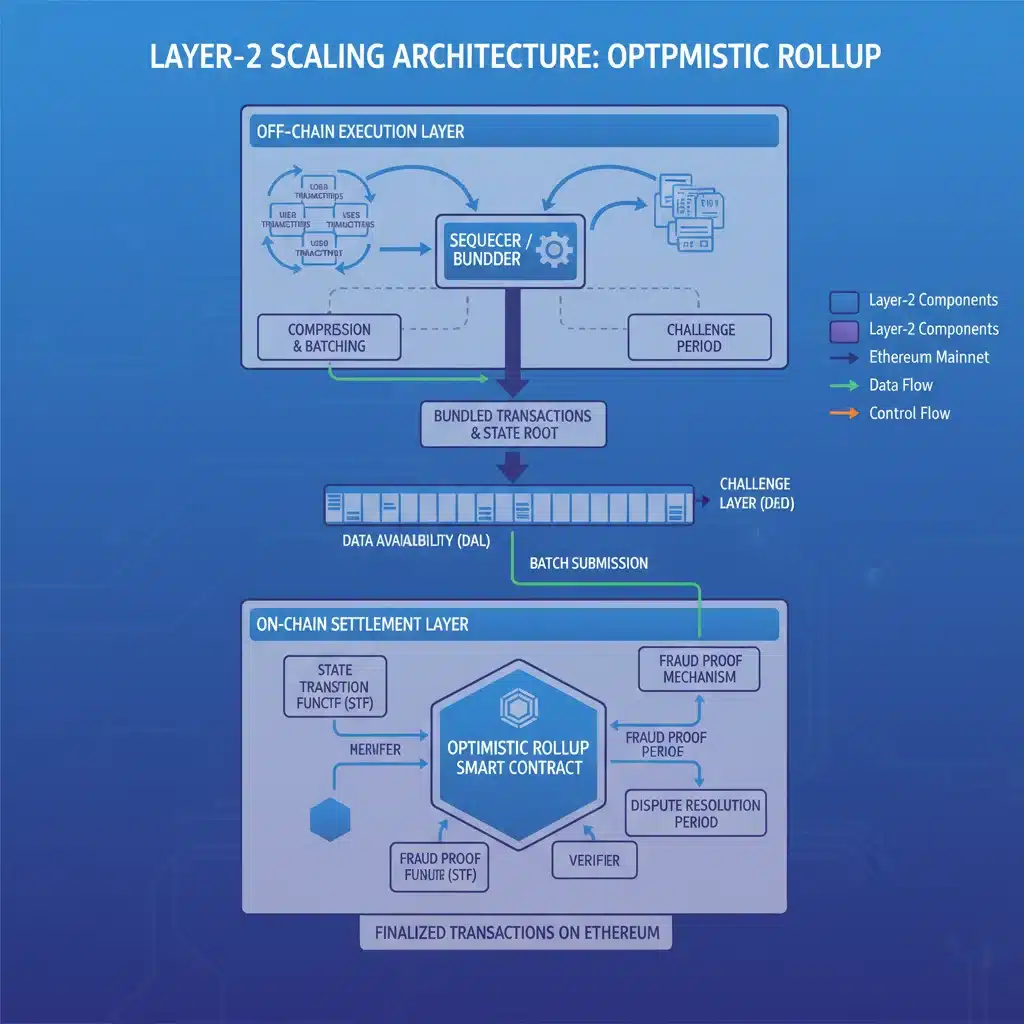
Layer-2 solutions are built on top of the existing Ethereum blockchain (Layer-1) to offload transactional burden from the mainnet. They process transactions off-chain and then periodically submit bundled proofs or summaries back to the Ethereum mainnet for final settlement. This approach dramatically increases transaction throughput, reduces fees, and enhances overall network efficiency without compromising the security and decentralization provided by Ethereum. The various types of Layer-2 solutions include:
- Optimistic Rollups: These assume transactions are valid by default and only run computations if challenged. Examples include Optimism and Arbitrum.
- ZK-Rollups (Zero-Knowledge Rollups): These use cryptographic proofs (zero-knowledge proofs) to validate transactions off-chain, providing a higher degree of security and finality. zkSync and StarkNet are prominent examples.
- Sidechains: Independent blockchains with their own consensus mechanisms, connected to Ethereum via two-way bridges. Polygon (Matic Network) is a well-known sidechain.
- Validium: Similar to ZK-Rollups but data availability is handled off-chain, offering even greater scalability but with different security trade-offs.
- Plasma: A framework for building scalable off-chain computations, though less popular now due to complexity.
The growth of the Layer-2 ecosystem is not just a technical necessity; it’s a strategic imperative for the broader adoption of decentralized applications (dApps) and DeFi. As these networks mature, their native tokens gain utility, often including staking mechanisms that reward users for contributing to network security and governance. This is where the opportunity for higher staking rewards truly shines.
Factors Driving High Layer-2 Staking Rewards
Several factors contribute to the potentially higher APYs offered by Layer-2 altcoins. Understanding these can help investors make informed decisions:
- Network Growth and Adoption: Newer or rapidly expanding Layer-2 networks often offer higher initial staking rewards to incentivize participation and secure their network. As more users and dApps migrate to these platforms, the demand for their native tokens can increase.
- Tokenomics and Inflation: The supply schedule of a token, including its inflation rate and distribution model for staking rewards, plays a crucial role. Projects with well-designed tokenomics can maintain attractive staking yields without excessively diluting the token’s value.
- Consensus Mechanism: Many Layer-2 solutions utilize Proof-of-Stake (PoS) or a variant of it, where staking is integral to network security. The specific design of the PoS mechanism can influence reward rates.
- Utility and Demand: Tokens with strong utility within their ecosystem (e.g., for gas fees, governance, or liquidity provision) tend to have higher demand. This demand can support higher staking rewards as more users want to hold and stake the token.
- Competition: The competitive landscape among Layer-2s can also drive up staking rewards as projects vie for user attention and staked capital.
- Early Stage Potential: Investing in promising Layer-2 projects at an earlier stage can lead to significant capital appreciation in addition to staking income, though this comes with higher risk.
With these considerations in mind, let’s explore six Layer-2 altcoins that are poised to offer over 15% higher staking rewards by 2026.
1. Polygon (MATIC): The Scalability Giant
Polygon, formerly known as Matic Network, is a well-established Layer-2 scaling solution that has already achieved significant adoption. While it started as a Plasma-based sidechain, Polygon has evolved into a comprehensive suite of scaling solutions, including Polygon PoS, Polygon zkEVM, and Polygon Supernets. Its interoperability with Ethereum and its vibrant ecosystem of dApps make it a formidable player.
Why Polygon for High Staking Rewards?
- Established Ecosystem: Polygon boasts thousands of dApps and millions of users, driving consistent demand for its native MATIC token.
- Evolving Technology: The introduction of Polygon zkEVM and other ZK-rollup solutions positions Polygon at the forefront of Layer-2 innovation, ensuring long-term relevance.
- Sustainable Staking Model: MATIC staking has historically offered competitive APYs, and with continued network growth and fee generation, these rewards are expected to remain attractive. Validators and delegators secure the Polygon PoS chain, earning rewards from transaction fees and protocol inflation.
- Future Growth: As Ethereum’s scalability needs continue to grow, Polygon’s diverse offerings are likely to see increased adoption, translating into sustained demand for MATIC and potentially higher staking yields.
While MATIC’s staking rewards might fluctuate, the project’s robust fundamentals and continuous development suggest that it could maintain an attractive APY, potentially exceeding 15% for active participants and long-term holders in various DeFi protocols built on Polygon.
2. Arbitrum (ARB): The Optimistic Powerhouse
Arbitrum is a leading Optimistic Rollup solution designed to improve Ethereum’s scalability, speed, and cost-efficiency. It achieves this by executing transactions off-chain and then posting compressed transaction data to the Ethereum mainnet. Arbitrum has gained immense popularity due to its EVM compatibility, allowing developers to easily migrate existing Ethereum dApps without significant code changes.
Why Arbitrum for High Staking Rewards?
- Dominant Market Share: Arbitrum has consistently held a significant market share among Layer-2s, attracting a vast ecosystem of DeFi protocols, NFTs, and gaming projects.
- Strong Community and Development: The Arbitrum DAO governs the network, and active community participation ensures continuous development and improvement.
- Future Staking Mechanisms: While ARB’s native staking mechanism is still evolving, the token’s role in governance and potential future fee-sharing models or liquidity provision incentives within its ecosystem could lead to very high effective staking rewards. Projects built on Arbitrum often offer attractive yield farming and liquidity staking opportunities that indirectly benefit ARB holders.
- High Transaction Volume: As one of the most used Layer-2s, Arbitrum processes a substantial volume of transactions, generating fees that could eventually contribute to staking rewards, or at least drive demand for ARB.
The potential for ARB to offer rewards exceeding 15% by 2026 largely depends on the finalization of its staking model and the continued expansion of its DeFi ecosystem, which is highly probable given its current trajectory.
3. Optimism (OP): Ethereum’s Closest Ally
Optimism is another prominent Optimistic Rollup solution that closely aligns with Ethereum’s vision and roadmap. It’s known for its commitment to decentralization and its strong developer community. Optimism’s architecture allows for fast and cheap transactions while maintaining a high degree of security rooted in Ethereum.
Why Optimism for High Staking Rewards?
- Ecosystem Growth: Optimism’s ecosystem is rapidly expanding, with numerous dApps and protocols choosing it for its scalability and developer-friendliness.
- Governance and Utility: The OP token is central to Optimism’s decentralized governance, allowing holders to vote on key network upgrades and resource allocation. This utility drives demand and provides a strong foundation for staking.
- Retroactive Public Goods Funding: Optimism’s innovative approach to funding public goods through sequencer fees could create a sustainable model for rewarding OP holders and contributors, potentially leading to attractive staking or yield opportunities.
- Superchain Vision: Optimism’s ‘Superchain’ vision, allowing for an interconnected network of L2s, could significantly expand its reach and utility, boosting OP’s value and potential staking returns.
As Optimism continues to onboard more projects and solidify its Superchain narrative, the demand for OP and the opportunities for high staking rewards through various DeFi integrations within its ecosystem are expected to grow, potentially offering well over 15% APY in the coming years.
4. zkSync (ZK): The Zero-Knowledge Frontier
zkSync is a leading ZK-rollup solution developed by Matter Labs, focusing on providing highly scalable and secure transactions on Ethereum. ZK-rollups offer superior security guarantees compared to optimistic rollups because they use cryptographic proofs to verify the correctness of off-chain computations, eliminating the need for a challenge period.
Why zkSync for High Staking Rewards?
- Advanced Technology: ZK-rollups are considered the long-term solution for Ethereum scalability due to their inherent security and efficiency. zkSync Era (its EVM-compatible ZK-rollup) is at the forefront of this technology.
- High Demand for ZK-tech: As the crypto space matures, the demand for robust, secure, and private scaling solutions will only increase, positioning zkSync favorably.
- Airdrop and Future Staking: While zkSync has not yet launched its native token (ZK) or a direct staking mechanism, the anticipation of its token launch and potential airdrop has generated immense excitement. Once launched, it’s highly probable that ZK will have a staking model designed to incentivize early adopters and secure the network, potentially offering very high initial rewards to attract liquidity and participation.
- Growing Ecosystem: A rapidly expanding ecosystem of dApps is already building on zkSync Era, indicating strong developer interest and future user adoption.
The potential for zkSync’s (ZK) staking rewards to exceed 15% is high, especially in its early phases post-launch, as it seeks to establish itself as a dominant ZK-rollup. Investors should closely monitor its tokenomics and staking announcements.
5. StarkNet (STRK): Empowering Scalable DApps
StarkNet is another prominent ZK-rollup, developed by StarkWare, designed to scale Ethereum by allowing dApps to achieve massive computation scale without compromising security. It utilizes STARK proofs, which are highly efficient and transparent, to verify off-chain transactions.
Why StarkNet for High Staking Rewards?
- Innovative STARK Technology: StarkNet’s use of STARK proofs sets it apart, offering a powerful and future-proof scaling solution for complex dApps.
- Strong Backing and Development: StarkWare is a well-funded and highly respected team in the blockchain space, ensuring continuous innovation and ecosystem growth.
- Native Token (STRK) Utility: The STRK token is used for transaction fees, governance, and potentially for staking to secure the network or participate in its decentralized sequencing. Similar to zkSync, the staking model for STRK is expected to be highly attractive to incentivize network participation.
- Dedicated Developer Community: StarkNet has fostered a dedicated developer community building specialized dApps that benefit from its unique scaling capabilities.
With the STRK token now launched, its staking opportunities are becoming clearer. The initial reward structures and the demand for its unique ZK-rollup technology suggest that STRK staking could offer very competitive yields, potentially well above 15%, especially as the network matures and attracts more users and capital by 2026.
6. Celestia (TIA): The Modular Blockchain Pioneer
Celestia is a groundbreaking project that introduces the concept of modular blockchains, specifically focusing on data availability and consensus. It aims to solve the data availability problem for rollups by separating execution from consensus, allowing Layer-2s to be built more efficiently and securely. While not a Layer-2 in the traditional sense, Celestia provides a crucial infrastructure layer that enables the scalability of future Layer-2s and other modular blockchains.
Why Celestia for High Staking Rewards?
- Pioneering Modular Design: Celestia’s innovative architecture addresses a fundamental bottleneck for scaling blockchains, making it a critical piece of the future crypto infrastructure.
- High Demand for Data Availability: As more Layer-2s and sovereign rollups launch, the need for a robust and scalable data availability layer like Celestia will skyrocket, driving demand for its TIA token.
- Attractive Staking Mechanism: TIA uses a Proof-of-Stake consensus mechanism, and its staking rewards are designed to incentivize network security and participation. Early indications and the token’s utility suggest that TIA staking could offer very high APYs.
- Ecosystem Growth Potential: Celestia is fostering a vibrant ecosystem of modular blockchains and rollups built on its data availability layer, which will further enhance TIA’s utility and value.
Given its foundational role in the modular blockchain paradigm and the inherent demand for its services, Celestia (TIA) is well-positioned to offer staking rewards significantly above 15% by 2026, making it a compelling option for those looking to invest in infrastructure-level innovation.
Risks and Considerations for Layer-2 Staking
While the prospect of high staking rewards is enticing, it’s crucial to acknowledge the inherent risks associated with investing in and staking Layer-2 altcoins:
- Market Volatility: Cryptocurrency markets are highly volatile. Even with high staking rewards, a significant drop in the token’s price can outweigh any gains from staking.
- Smart Contract Risk: Staking often involves interacting with smart contracts, which can have vulnerabilities or bugs that could lead to loss of funds.
- Impermanent Loss: While not directly related to staking, if you’re providing liquidity to DeFi pools that use these Layer-2 tokens, impermanent loss is a significant risk.
- Liquidity Risk: Some staking mechanisms might lock up your tokens for a specific period, limiting your ability to sell them quickly if market conditions change.
- Regulatory Risk: The regulatory landscape for cryptocurrencies is still evolving, and new regulations could impact the viability or profitability of certain projects.
- Technological Risk: Layer-2 solutions are complex and relatively new. Technical issues, network failures, or competition from superior solutions could impact a project’s long-term success.
- Inflationary Pressure: High staking rewards often come from new token issuance (inflation). While this incentivizes participation, excessive inflation can dilute the token’s value over time if not balanced by strong demand and utility.
It is paramount for investors to conduct thorough due diligence, understand the specific risks of each project, and only invest what they can afford to lose. Diversification across multiple Layer-2 projects can also help mitigate risk.
How to Maximize Your Layer-2 Staking Rewards
To make the most of Layer-2 staking opportunities, consider the following strategies:
- Research Thoroughly: Understand the project’s technology, team, tokenomics, community, and roadmap. Look for projects with strong fundamentals and real-world utility.
- Choose Reputable Platforms: Stake your tokens on official network validators or well-vetted decentralized staking platforms to minimize smart contract risk.
- Understand the Staking Mechanism: Some projects offer direct staking, while others require participation in liquidity pools or specific DeFi protocols to earn rewards. Know the process and any associated lock-up periods.
- Reinvest Rewards (Compounding): Reinvesting your earned staking rewards can significantly increase your overall returns through the power of compounding.
- Monitor Market Conditions: Keep an eye on the overall crypto market, as well as specific news and developments related to your chosen Layer-2 projects, to make timely decisions.
- Diversify Your Portfolio: Don’t put all your eggs in one basket. Spread your investments and staking across several promising Layer-2 altcoins to hedge against individual project risks.
- Stay Informed on Governance: For tokens with governance utility, actively participate in voting or at least stay informed about proposals that could impact the network and your staking rewards.
The Road Ahead for Layer-2 Staking
The trajectory for Layer-2 solutions is unequivocally upward. As Ethereum continues its evolution (e.g., with EIP-4844 ‘Dencun’ upgrade further improving data availability for rollups), the efficiency and cost-effectiveness of Layer-2s will only become more pronounced. This synergy will lead to greater adoption, increased transaction volumes, and ultimately, a stronger demand for the native tokens of these scaling solutions.
For investors seeking to generate substantial passive income, the Layer-2 ecosystem offers a compelling frontier. The six altcoins discussed—Polygon, Arbitrum, Optimism, zkSync, StarkNet, and Celestia—represent a diverse range of technological approaches, each with its unique strengths and potential for high staking rewards. By 2026, it is highly probable that many of these projects will not only have solidified their positions as critical infrastructure components but also offer sustainable staking yields that comfortably exceed the 15% mark, making them attractive additions to a forward-thinking crypto portfolio.
However, it is crucial to reiterate that high rewards often come with higher risks. A disciplined approach, thorough research, and a clear understanding of market dynamics are essential for navigating this exciting yet volatile landscape. For those prepared to delve into the innovations beyond Ethereum’s Layer-1, the future of Layer-2 staking promises a rewarding journey.
Conclusion
The future of decentralized finance and Web3 applications hinges on the scalability and efficiency provided by Layer-2 solutions. As these technologies mature and their ecosystems expand, the native tokens of leading Layer-2 projects will become increasingly valuable. For investors, this translates into unique opportunities for passive income through staking. The six altcoins highlighted—Polygon, Arbitrum, Optimism, zkSync, StarkNet, and Celestia—are at the vanguard of this movement, each demonstrating the potential to deliver over 15% higher staking rewards by 2026. By carefully selecting projects, understanding their underlying technology, and managing risks effectively, investors can position themselves to capitalize on the next wave of innovation in the crypto space and unlock significant passive income streams. Always remember to do your own research (DYOR) and consult with a financial advisor before making any investment decisions.