Optimizing Gas Fees in DeFi Transactions for 2026: 5 Proven Strategies to Reduce Costs by up to 30% on Ethereum and Layer 2s.
In the rapidly evolving world of Decentralized Finance (DeFi), one constant challenge has been, and continues to be, the volatility and often exorbitant nature of DeFi gas fees. These transaction costs, paid to network validators, are the lifeblood of blockchain operations, particularly on networks like Ethereum. However, they can significantly eat into profits and deter users, especially those with smaller capital. As we look towards 2026, the landscape of DeFi is maturing, and with it, the strategies for managing and reducing these crucial costs. This comprehensive guide will delve into five proven strategies that can help you cut your DeFi gas fees by up to 30% or more, focusing on both the Ethereum mainnet and the burgeoning ecosystem of Layer 2 solutions.
Understanding DeFi gas fees is the first step towards optimizing them. Gas is a unit of computational effort required to execute operations on the Ethereum blockchain. Each operation, from a simple token transfer to a complex smart contract interaction, consumes a certain amount of gas. This gas is then multiplied by the ‘gas price’ (measured in Gwei, a tiny fraction of an Ether) to determine the total transaction fee. High network congestion, driven by increased demand for block space, directly translates to higher gas prices, making transactions more expensive. This dynamic has made efficient gas management not just a preference, but a necessity for anyone serious about participating in DeFi.
The year 2026 is anticipated to bring further advancements in blockchain technology and wider adoption of DeFi. While Ethereum’s scalability upgrades, such as sharding, are still in development, Layer 2 solutions have already emerged as powerful contenders in the battle against high DeFi gas fees. These technologies offer a lifeline to users by processing transactions off the mainnet, bundling them, and then settling them onto Ethereum, drastically reducing costs and increasing throughput. But it’s not just about Layer 2s; strategic timing, efficient contract interaction, and leveraging new protocols also play pivotal roles. Let’s explore these strategies in detail.
Strategy 1: Embrace Layer 2 Scaling Solutions for Reduced DeFi Gas Fees
The most impactful strategy for mitigating DeFi gas fees in 2026 is the widespread adoption and utilization of Layer 2 (L2) scaling solutions. These innovative technologies are built on top of the Ethereum mainnet, inheriting its security while vastly improving scalability and reducing transaction costs. Think of them as express lanes built on top of a busy highway. Instead of every car (transaction) paying a toll on the main highway, many cars are grouped together and pay a single, much smaller toll on the express lane, then exit onto the main highway much more efficiently.
Understanding the Layer 2 Ecosystem
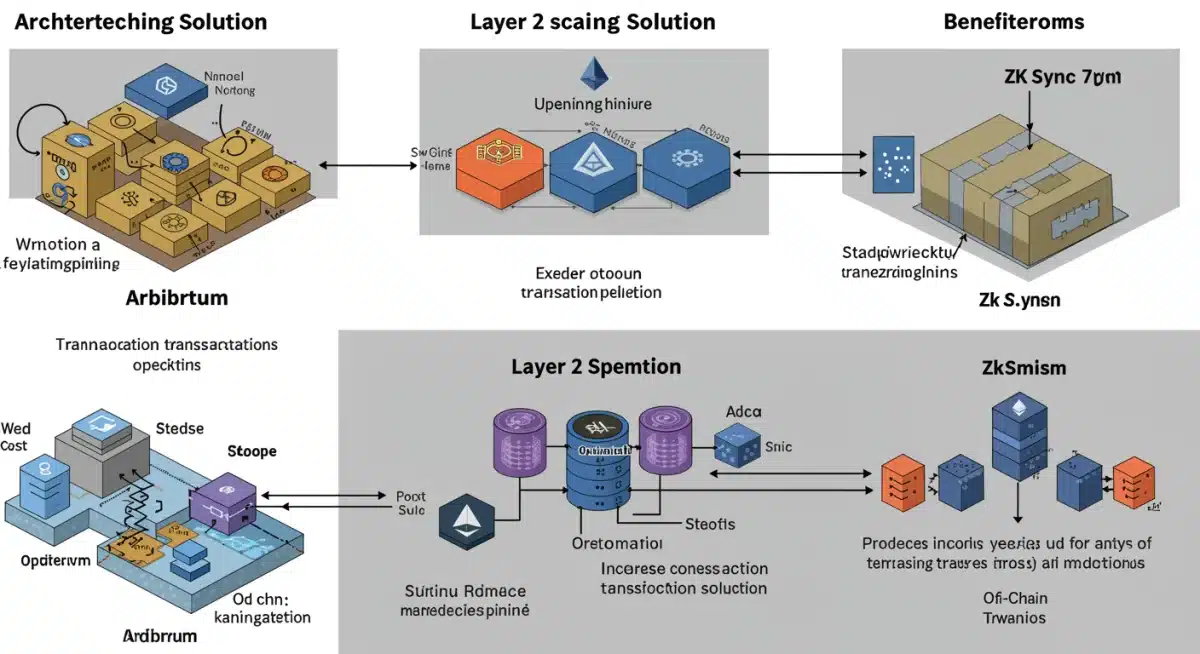
The L2 ecosystem is diverse, featuring several prominent types of solutions, each with its own technical approach and benefits:
- Optimistic Rollups (e.g., Arbitrum, Optimism): These solutions ‘optimistically’ assume that all transactions are valid. They allow for faster transaction processing and lower fees by executing transactions off-chain and only posting a compressed version of the transaction data to the Ethereum mainnet. A fraud-proof mechanism allows a challenge period during which any incorrect transactions can be identified and reverted. This period, usually around 7 days, is the main drawback for withdrawals to the mainnet. However, bridges and third-party services are emerging to mitigate this withdrawal delay.
- ZK-Rollups (e.g., zkSync, StarkNet, Polygon zkEVM): These are considered the long-term holy grail of Layer 2 scaling due to their superior security and faster finality. ZK-Rollups use ‘zero-knowledge proofs’ to cryptographically prove the validity of off-chain transactions without revealing all the transaction data. This means that once a batch of transactions is submitted to the mainnet, its validity is instantly verifiable, eliminating the need for a challenge period. While more complex to implement, their efficiency and security are unparalleled, making them increasingly attractive for reducing DeFi gas fees.
- Sidechains (e.g., Polygon PoS): While technically distinct from rollups, sidechains like Polygon PoS chain have also played a significant role in reducing transaction costs. They are independent blockchains with their own consensus mechanisms that run parallel to Ethereum and are connected via a two-way bridge. While they offer high throughput and low fees, their security is derived from their own validators, not directly from Ethereum’s mainnet, which is a key differentiator from rollups.
How Layer 2s Reduce DeFi Gas Fees
The primary mechanism by which Layer 2s cut down DeFi gas fees is by aggregating multiple transactions into a single batch. Instead of paying gas for each individual transaction on the expensive Ethereum mainnet, users collectively pay for one single transaction that settles the entire batch. This amortization of gas costs across many users leads to significant savings, often reducing fees by 10x to 100x compared to transacting directly on Ethereum.
For example, a transaction that might cost $20-$50 on Ethereum during peak hours could cost mere cents on an L2 solution. This makes DeFi accessible to a much broader audience, enabling micro-transactions and more frequent interactions with protocols that would otherwise be cost-prohibitive. As more DeFi protocols deploy on Layer 2s, and as user interfaces become more seamless, transacting on L2s will become the default for most DeFi activities by 2026, dramatically lowering the overall burden of DeFi gas fees.
Strategy 2: Strategic Transaction Timing and Gas Limit Management
Even with the rise of Layer 2s, a significant portion of high-value or specific DeFi activities will still occur on the Ethereum mainnet. For these instances, strategic transaction timing and diligent gas limit management remain crucial for minimizing DeFi gas fees. This strategy leverages the fluctuating nature of network congestion to your advantage.
Understanding Network Congestion and Gas Prices
Ethereum gas prices are highly dynamic, changing every few seconds based on demand. When the network is busy, transaction requests surge, and validators prioritize transactions offering higher gas prices. Conversely, during periods of low activity, gas prices drop significantly. Identifying these less congested periods can lead to substantial savings.
Generally, network activity tends to be lower during off-peak hours, such as late nights, early mornings UTC, or weekends. Weekdays during peak business hours in the US and Europe often see the highest congestion. Tools like Etherscan’s Gas Tracker or various dApp-specific gas estimators provide real-time data and historical trends, allowing users to anticipate and choose optimal times for their transactions. Waiting an hour or two can sometimes reduce a transaction fee by 20-50%, directly impacting your overall DeFi gas fees.
Optimizing Gas Limits
Every transaction has a ‘gas limit’ – the maximum amount of gas you’re willing to spend. While most wallets automatically estimate a suitable gas limit, understanding it can prevent overpaying or failed transactions. Setting too low a gas limit will result in a ‘out of gas’ error, causing the transaction to fail but still consuming the gas spent up to that point. Setting it too high doesn’t necessarily mean you pay more (unused gas is refunded), but it’s crucial to ensure the estimated limit is sufficient for the operation.
For complex smart contract interactions, such as swapping tokens on a decentralized exchange (DEX) or providing liquidity, the gas limit can be higher than for a simple ETH transfer. Many wallets allow you to adjust the gas limit manually. For typical DeFi operations, giving a slight buffer (e.g., 10-20% above the estimated gas limit) can ensure transaction success without significantly increasing your potential cost, as unused gas is returned. However, for advanced users, precise gas limit estimation can further fine-tune DeFi gas fees.
Strategy 3: Utilize Gas Price Prediction Tools and Bots
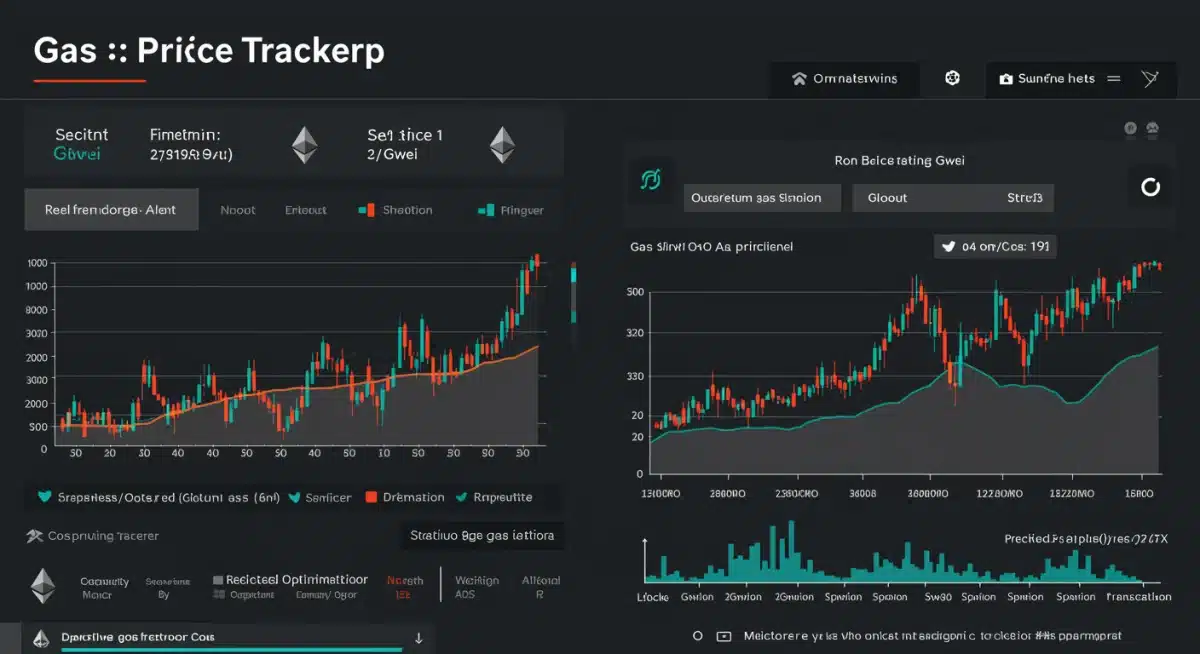
Building on strategic timing, leveraging advanced gas price prediction tools and even automated bots represents a more sophisticated approach to managing DeFi gas fees. These tools use historical data, current network conditions, and machine learning algorithms to forecast future gas prices, giving users a competitive edge.
Real-time Gas Trackers and Predictors
Beyond basic gas trackers, advanced prediction services can offer insights into short-term gas price movements. These services often provide:
- Historical Data Analysis: Identifying patterns in gas price fluctuations over days, weeks, and months.
- Congestion Alerts: Notifying users when gas prices drop below a certain threshold or are expected to rise significantly.
- Predictive Models: Using AI to forecast gas prices for the next 15 minutes, hour, or even longer, based on pending transactions, mempool size, and block fill rates.
By consulting these tools before initiating a transaction, users can make informed decisions, potentially waiting for a dip in prices to execute their trades or interactions, thereby directly reducing their DeFi gas fees. Many dApps are also integrating these prediction services directly into their user interfaces, making it easier for the average user to benefit.
Automated Gas Bots (for advanced users)
For highly active traders or protocols, automated gas bots can take gas optimization to the next level. These bots are programmed to monitor gas prices continuously and execute transactions only when the price falls within a predefined acceptable range. This eliminates the need for manual monitoring and ensures that transactions are always sent at the most opportune moment.
While developing and deploying such bots requires technical expertise, they can be immensely beneficial for operations like arbitrage, liquidations, or regular rebalancing of portfolios where timing and cost efficiency are paramount. However, users must be cautious about the security implications and potential risks associated with giving automated systems control over their funds or transaction initiation.
Strategy 4: Batching Transactions and Using Efficient Smart Contracts
Another powerful strategy to lower DeFi gas fees involves optimizing how you interact with the blockchain itself, specifically through transaction batching and by prioritizing efficient smart contracts. This approach focuses on reducing the computational work required for your operations.
Transaction Batching
Transaction batching refers to combining multiple operations into a single transaction. Instead of sending three separate transactions to interact with different DeFi protocols or perform multiple token swaps, a user can often bundle these actions into one smart contract call. This significantly reduces the overall gas cost because you pay the base transaction fee only once, plus the gas for the combined operations, which is typically much less than the sum of individual transaction fees.
For example, if you need to approve a token, swap it, and then stake the resulting tokens, performing these as three separate transactions will incur three base transaction fees. If a protocol or a third-party tool allows you to batch these into one, you save on two of those base fees, leading to a substantial reduction in DeFi gas fees. Projects like MetaMask’s ‘transaction bundling’ features or specific DeFi aggregators are increasingly offering such functionalities, making them more accessible to users.
Leveraging Efficient Smart Contracts and Aggregators
Not all smart contracts are created equal in terms of gas efficiency. Some protocols are designed with highly optimized code, leading to lower gas consumption for the same operation compared to less efficient contracts. As DeFi matures, developers are increasingly focusing on gas optimization during contract development.
Using DeFi aggregators (e.g., 1inch, Matcha) can also contribute to lower DeFi gas fees. These platforms scan multiple decentralized exchanges and liquidity pools to find the best swap rates and often route transactions through the most gas-efficient paths or even batch trades for users. By abstracting away the underlying complexity and optimizing the execution, aggregators can help users save on slippage and gas costs simultaneously. Always research and choose protocols known for their gas efficiency and security.
Strategy 5: Bridge and Cross-Chain Solutions
As the blockchain ecosystem expands beyond Ethereum, cross-chain interoperability and bridging solutions become increasingly vital for managing DeFi gas fees. Instead of being confined to one network, users can leverage the lower transaction costs of other chains and move assets seamlessly when necessary.
The Role of Bridges in DeFi
Blockchain bridges allow assets and data to be transferred between different blockchain networks. For instance, if you hold assets on Ethereum but want to perform a transaction on a cheaper chain like Avalanche, Solana, or BNB Smart Chain, a bridge can facilitate this transfer. Once on the alternative chain, transactions for swaps, lending, or staking can be executed at a fraction of the cost of Ethereum mainnet transactions.
While bridging itself incurs a fee, and often a waiting period, the cumulative savings from multiple transactions on a cheaper chain can far outweigh the initial bridging cost. This strategy is particularly effective for users who plan to engage in frequent, smaller transactions that would be prohibitively expensive on Ethereum.
Considering Alternative L1s and Their Cost Structures
Beyond Layer 2s, the broader blockchain landscape offers numerous alternative Layer 1 (L1) blockchains that boast significantly lower transaction fees than Ethereum. Chains like Solana, Avalanche, Fantom, and Near Protocol have thriving DeFi ecosystems with their own DEXs, lending platforms, and yield farming opportunities. While these chains do not inherit Ethereum’s security directly, they offer distinct advantages in terms of speed and cost.
Diversifying your DeFi activities across multiple chains, using bridges to move assets strategically, can be a powerful way to minimize your overall DeFi gas fees. It’s important to research the security and decentralization of these alternative L1s and their respective bridges, as the risk profiles can differ. However, for cost-conscious users, exploring these options is a crucial step towards comprehensive gas fee optimization in 2026 and beyond.
The Future of DeFi Gas Fees: What to Expect by 2026
Looking ahead to 2026, the landscape of DeFi gas fees is set to undergo significant transformation. Ethereum’s continued development, particularly with the implementation of sharding (proto-danksharding and full sharding), will eventually increase the network’s capacity and inherently lower base transaction costs over the long term. However, these are complex upgrades that will take time to fully realize their potential.
In the interim, and likely well into 2026, Layer 2 solutions will remain the primary drivers of gas fee reduction. We can expect to see:
- Increased Adoption of ZK-Rollups: As ZK-Rollup technology matures and becomes easier to deploy, more DeFi protocols will migrate to these solutions due to their superior security and instant finality. This will further drive down DeFi gas fees.
- Enhanced User Experience: Wallets and dApps will continue to integrate Layer 2s more seamlessly, making it easier for users to bridge assets and transact on L2s without needing deep technical knowledge. Cross-L2 communication will also become more efficient.
- Protocol-Level Optimizations: DeFi protocols themselves will continue to innovate, designing more gas-efficient smart contracts and offering batching functionalities directly within their platforms.
- Multichain DeFi: The trend towards a multichain future will accelerate, with users comfortably navigating between Ethereum, various Layer 2s, and other performant Layer 1 blockchains to find the most cost-effective execution environment for their specific needs.
The goal is to reach a point where DeFi gas fees are no longer a significant barrier to entry or a deterrent for everyday transactions. While they may never be entirely free, the strategies outlined above, combined with ongoing technological advancements, promise a future where DeFi is more accessible, efficient, and cost-effective for everyone.
Conclusion: Mastering DeFi Gas Fees for a Profitable Future
Optimizing DeFi gas fees is not just about saving money; it’s about maximizing your profitability, increasing your participation, and ensuring the long-term sustainability of your DeFi endeavors. As the DeFi ecosystem continues its rapid expansion, understanding and actively implementing strategies to reduce transaction costs will be paramount for both new and experienced users alike. The five proven strategies discussed – embracing Layer 2 solutions, strategic transaction timing, utilizing prediction tools, batching transactions, and leveraging cross-chain solutions – offer a robust framework for achieving significant cost reductions, potentially up to 30% or more, by 2026.
The future of decentralized finance is bright, characterized by innovation, accessibility, and efficiency. By staying informed about the latest technological advancements and diligently applying these optimization techniques, you can navigate the complexities of blockchain transaction costs with confidence. Don’t let high DeFi gas fees hold you back; empower yourself with these strategies and unlock the full potential of your DeFi journey.
Remember, the landscape is constantly shifting. Continuous learning and adaptation will be key to staying ahead in the dynamic world of DeFi. Engage with communities, follow project updates, and always prioritize security alongside cost efficiency. By doing so, you’ll be well-positioned to thrive in the evolving decentralized financial paradigm of 2026 and beyond.