RWAs: The Next Big Altcoin Opportunity
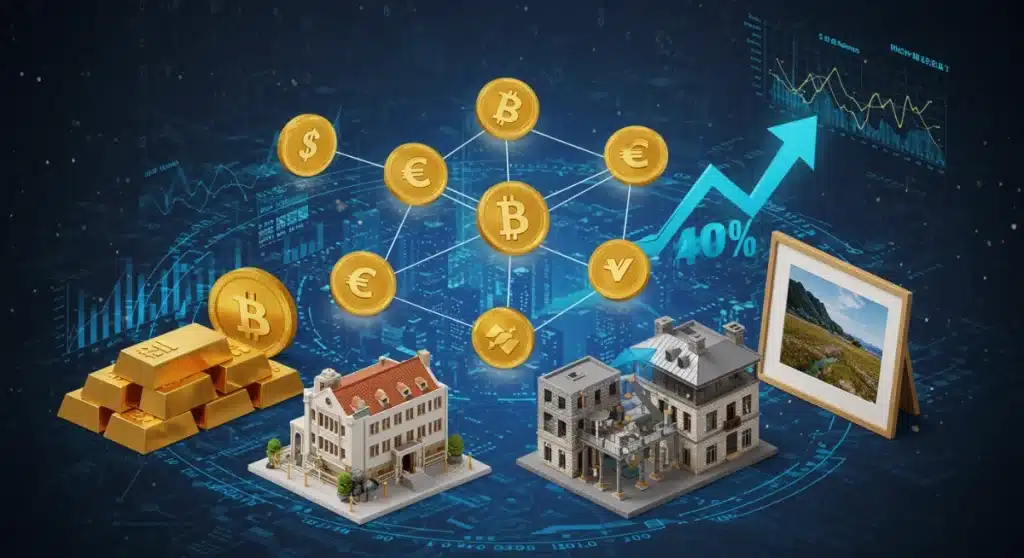
Real-World Assets (RWAs) are poised to be the next major altcoin sector, with tokenization platforms driving a projected 40% market capitalization increase by the end of 2025 due to their ability to bridge traditional finance with blockchain technology.
The cryptocurrency landscape is constantly evolving, with new narratives and technological advancements emerging to reshape financial paradigms. Among these, the tokenization of Real-World Assets (RWAs) stands out as a transformative force, presenting what many believe will be the next significant altcoin opportunity. This detailed analysis explores the platforms driving this revolution and the compelling reasons why their market capitalization could surge by an impressive 40% by the close of 2025.
Understanding Real-World Assets (RWAs) Tokenization
Real-World Assets (RWAs) refer to tangible and intangible assets that exist outside the blockchain but are represented on-chain as digital tokens. This process, known as tokenization, transforms traditional assets like real estate, commodities, art, and even intellectual property into programmable, divisible, and tradable digital tokens. It’s a fundamental shift that promises to unlock liquidity and accessibility previously unimaginable in traditional finance.
The core appeal of RWAs lies in their ability to bridge the gap between conventional financial markets and the burgeoning decentralized finance (DeFi) ecosystem. By bringing real-world value onto the blockchain, these assets can leverage the transparency, immutability, and efficiency that blockchain technology offers. This integration is not merely a technological novelty; it addresses long-standing inefficiencies in traditional asset markets, from high transaction costs to limited trading hours and geographical restrictions.
The concept of tokenization has been around for some time, but recent advancements in blockchain infrastructure, regulatory clarity, and institutional interest have accelerated its adoption. As more traditional financial institutions and investors begin to recognize the benefits, the flow of capital into RWA-backed tokens is expected to increase significantly, driving market growth.
Key Drivers for RWA Market Growth
Several profound factors are converging to propel the RWA market towards substantial growth. These drivers are both technological and economic, creating a fertile ground for innovation and investment.
Increased Institutional Adoption
Institutional players are increasingly exploring RWA tokenization. Banks, asset managers, and even sovereign wealth funds are recognizing the potential for enhanced liquidity, fractional ownership, and streamlined operations. Their entry brings significant capital and credibility to the sector.
- Traditional finance firms are launching pilot programs and dedicated RWA divisions.
- Regulatory frameworks are evolving to accommodate digital asset ownership.
- Large-scale investors are looking for new avenues to diversify portfolios with blockchain-backed assets.
Enhanced Liquidity and Accessibility
Tokenization breaks down large, illiquid assets into smaller, more manageable units. This fractionalization makes historically inaccessible investments, like prime real estate or fine art, available to a broader range of investors, enhancing liquidity in markets that were once very restrictive.
Furthermore, blockchain-based trading platforms operate 24/7, eliminating geographical and time-based trading limitations inherent in traditional markets. This continuous accessibility contributes significantly to overall market liquidity and investor engagement.
The ease of transfer and reduced settlement times offered by blockchain also make RWA tokens highly attractive. Instead of lengthy legal processes and intermediaries, ownership can be transferred almost instantly and securely, reducing costs and friction.
Leading Tokenization Platforms and Their Offerings
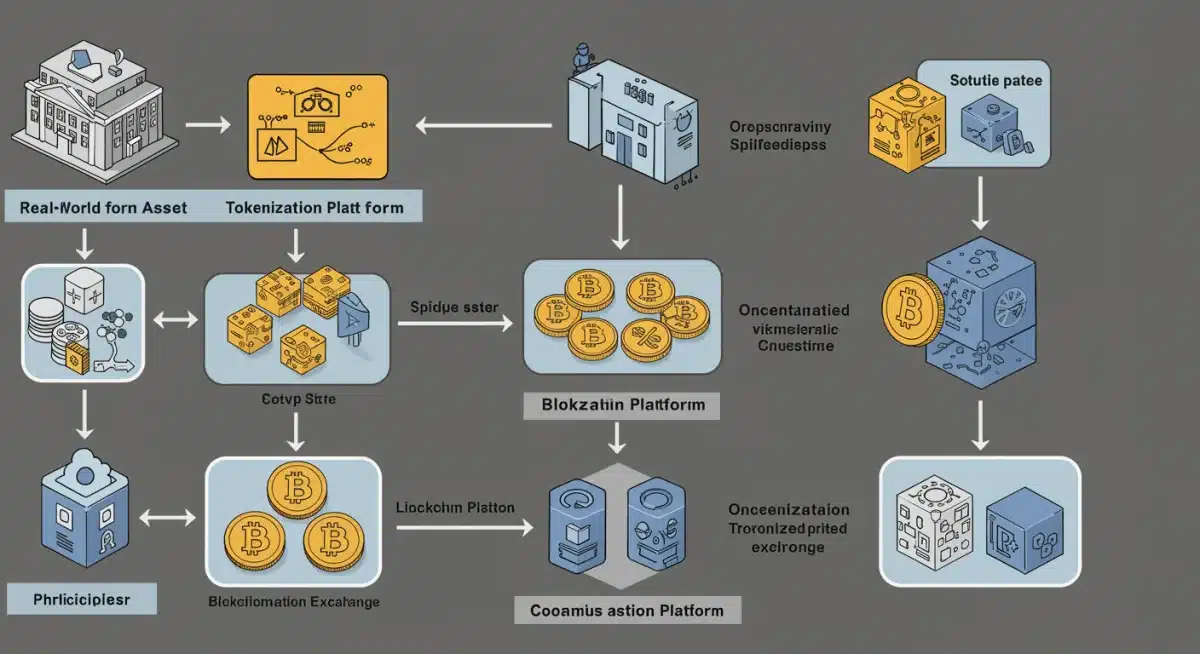
The success of the RWA sector hinges on robust, secure, and scalable tokenization platforms. These platforms are the backbone, providing the infrastructure for converting physical assets into digital tokens and managing their lifecycle on the blockchain.
Prominent Platforms in the RWA Space
Several platforms are currently making significant strides in the RWA space, each with unique approaches and target markets. Understanding their offerings is crucial for assessing the overall market potential.
- MakerDAO (DAI): While primarily known for its stablecoin DAI, MakerDAO has been a foundational player in leveraging RWAs as collateral, particularly through its involvement with real-world assets like U.S. Treasury bonds, to back its stablecoin, demonstrating a key use case for RWA integration in DeFi.
- Centrifuge (CFG): Centrifuge is a leading platform focused on bringing real-world assets like invoices and supply chain financing onto the blockchain. It enables businesses to tokenize their assets and access liquidity through DeFi protocols, offering a practical solution for small and medium-sized enterprises (SMEs).
- Polymath (POLY): Polymath specializes in security tokens, providing a platform for issuing and managing regulated securities on the blockchain. Its focus on compliance and legal frameworks makes it a strong contender for institutional-grade RWA tokenization.
These platforms are not just technical solutions; they are building ecosystems that connect asset originators, investors, and various DeFi protocols. The interoperability between these platforms and the broader crypto ecosystem is vital for the sustained growth and utility of RWA tokens.
The innovation within these platforms extends to addressing regulatory compliance, ensuring that tokenized assets adhere to existing financial laws and regulations. This focus on compliance is paramount for mainstream adoption and for attracting institutional capital seeking legal clarity and security.
The Economic Impact and Future Projections
The economic implications of RWA tokenization are vast, promising to unlock trillions of dollars in value currently locked in illiquid assets. The projected 40% increase in market capitalization by the end of 2025 is not an arbitrary figure but is grounded in several economic and market analyses.
Projected Market Capitalization Growth
Analysts anticipate that the RWA market will experience exponential growth due to increased adoption, technological maturity, and a more favorable regulatory environment. This growth will be fueled by both new capital entering the crypto space specifically for RWAs and the migration of traditional capital seeking higher yields and efficiency.
The total addressable market for RWAs is enormous, encompassing global real estate, debt markets, commodities, and other asset classes. Even a small percentage of these markets transitioning to tokenized forms represents a substantial increase in crypto market capitalization.
Furthermore, the development of sophisticated DeFi protocols that can utilize RWA tokens as collateral for lending, borrowing, and other financial services will further drive demand and utility. This symbiotic relationship between RWAs and DeFi will be a key catalyst for market expansion.
Challenges and Considerations for RWA Adoption
Despite the immense potential, the path to widespread RWA adoption is not without its challenges. Addressing these hurdles is crucial for the sustainable growth of the sector and for achieving the projected market capitalization increase.
Regulatory Uncertainty
One of the primary challenges is the evolving and often fragmented regulatory landscape. Different jurisdictions have varying approaches to digital assets, and clear guidelines for the tokenization and trading of RWAs are still being developed. This uncertainty can deter institutional investors who require legal clarity.
Ensuring compliance with existing securities laws, property laws, and financial regulations is complex. Platforms must navigate these legal frameworks to provide secure and legally sound tokenization solutions. This often involves working closely with legal experts and regulatory bodies.
Technological Interoperability and Scalability
The seamless integration of diverse real-world assets onto various blockchain networks requires robust interoperability solutions. Different blockchains have different standards and capabilities, and bridging these can be a technical challenge. Scalability is also a concern, as the volume of transactions for large-scale RWA adoption could strain existing blockchain infrastructures.
Developing secure and efficient oracles that reliably connect off-chain asset data to on-chain tokens is another critical technical hurdle. The accuracy and integrity of these data feeds are paramount for maintaining the value and trust in RWA tokens. Innovations in cross-chain communication and layer-2 solutions are vital for overcoming these technological limitations.
Investing in RWA Altcoins: Opportunities and Risks
For investors looking to capitalize on the RWA trend, understanding both the opportunities and the inherent risks is essential. While the potential for high returns is significant, the nascent nature of the market also presents unique considerations.
Identifying Promising Projects
Investing in RWA altcoins requires careful due diligence. Look for projects with a strong team, clear use cases, robust technological infrastructure, and a demonstrable commitment to regulatory compliance. Platforms that have already secured partnerships with traditional financial institutions or have a proven track record of successful asset tokenization are often good indicators of potential.
Consider the type of assets a platform is tokenizing. Some platforms focus on less volatile assets like real estate or bonds, which might offer more stable returns, while others might focus on more speculative assets. Diversification across different RWA categories and platforms can help mitigate risk.
Navigating Market Volatility
Like all cryptocurrencies, RWA altcoins are subject to market volatility. While they are backed by real-world assets, their market price can still be influenced by broader crypto market sentiment, liquidity fluctuations, and specific project developments. A long-term investment horizon is often advisable in this evolving sector.
Furthermore, assessing the underlying value of the tokenized asset and the legal enforceability of its on-chain representation is crucial. Investors should understand the mechanisms for redemption, liquidation, and dispute resolution for the specific RWA tokens they hold. This due diligence ensures that the digital representation truly reflects the value of the physical asset.
The Future Landscape of Tokenized Real-World Assets
The future of Real-World Assets (RWAs) tokenization is bright, with the potential to fundamentally alter how we perceive and interact with ownership, investment, and finance. The projected growth by 2025 is just the beginning of a much larger transformation.
As technology matures and regulatory frameworks become clearer, we can expect to see an even broader range of assets being tokenized. This could include everything from intellectual property rights and patents to carbon credits and natural resources. The possibilities are vast, opening up new avenues for investment and economic participation globally.
The integration of RWAs with other emerging blockchain technologies, such as decentralized autonomous organizations (DAOs) and advanced smart contracts, will create even more innovative financial products and services. Imagine DAOs collectively owning tokenized real estate portfolios or smart contracts automating the distribution of rental income from tokenized properties. These advancements will further enhance efficiency and transparency.
Ultimately, RWAs are set to democratize access to financial markets, reduce barriers to entry for investors, and create a more efficient and transparent global financial system. The journey is complex, but the trajectory towards significant growth and revolutionary change is undeniable. The altcoins powering this movement are well-positioned to be at the forefront of the next financial frontier.
| Key Point | Brief Description |
|---|---|
| RWA Definition | Tangible/intangible assets represented as digital tokens on a blockchain, bridging traditional finance and DeFi. |
| Growth Drivers | Institutional adoption, enhanced liquidity, fractional ownership, and 24/7 trading drive market expansion. |
| Leading Platforms | MakerDAO, Centrifuge, and Polymath are key players offering diverse tokenization solutions. |
| Challenges | Regulatory uncertainty, technological interoperability, and scalability are critical hurdles to overcome. |
Frequently Asked Questions About RWA Tokenization
Real-World Assets (RWAs) are tangible or intangible assets that exist outside the blockchain but are represented as digital tokens on a blockchain. Examples include real estate, art, commodities, and even intellectual property. Tokenization allows for fractional ownership and increased liquidity for these assets.
RWAs are seen as the next big opportunity because they bridge traditional finance with the efficiency and transparency of blockchain. They unlock immense value from illiquid assets, attract institutional capital, and offer new investment avenues, leading to significant market growth potential.
This projection is driven by increasing institutional adoption, enhanced liquidity through fractionalization, the development of robust tokenization platforms, and evolving regulatory clarity. These factors collectively attract substantial capital and expand the asset classes available for tokenization.
Key risks include regulatory uncertainty across different jurisdictions, the technical challenges of interoperability and scalability of blockchain platforms, and market volatility inherent in the crypto space. Investors also face the challenge of assessing the underlying asset’s value and legal enforceability.
Tokenization platforms ensure security through robust blockchain encryption and smart contracts. Legality is addressed by adhering to existing financial regulations, often involving legal frameworks for asset ownership and transfer. Many platforms partner with legal experts to ensure compliance and enforceability.
Conclusion
The tokenization of Real-World Assets represents a pivotal moment in the evolution of digital finance. By seamlessly integrating traditional assets with blockchain technology, RWAs are not just creating another niche in the crypto market; they are laying the groundwork for a more accessible, efficient, and transparent global financial system. The projected 40% increase in market capitalization by the end of 2025 for tokenization platforms is a testament to this transformative potential. While challenges remain, particularly in regulatory harmonization and technological scalability, the undeniable benefits of enhanced liquidity, fractional ownership, and institutional interest position RWAs as a leading contender for the next major altcoin success story.