Stablecoin Regulation US States 2026: Security Frameworks Compared

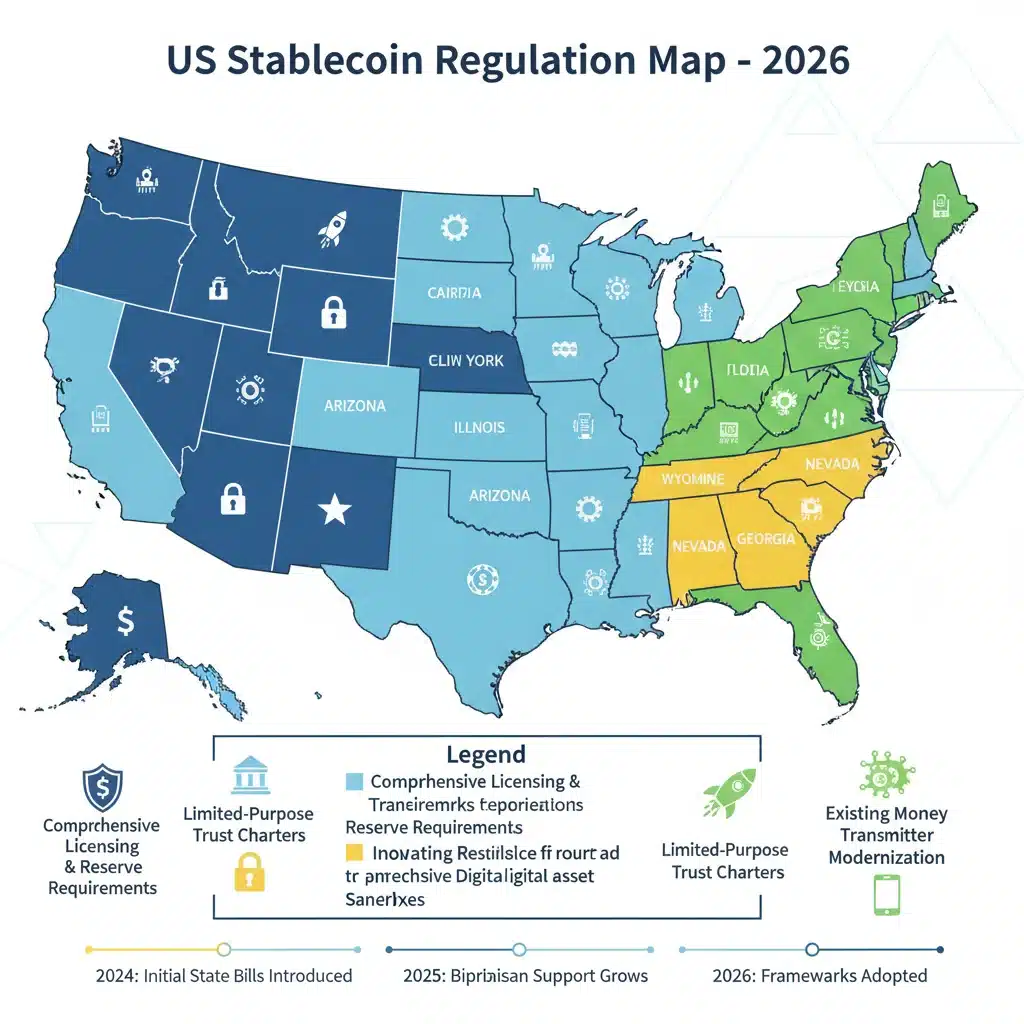
The year 2026 marks a pivotal moment in the evolution of stablecoins within the United States. What began as an experimental corner of the cryptocurrency market has matured into a significant component of the digital economy, attracting trillions in transaction volume and the attention of regulators nationwide. The absence of a unified federal framework for stablecoin regulation has led to a fascinating, albeit complex, patchwork of state-level initiatives. This article delves deep into the comparison and analysis of stablecoin regulation states in 2026, examining which frameworks prioritize security, foster innovation, and ultimately offer the most robust protection for consumers and the broader financial system.
The Shifting Sands of Stablecoin Regulation in 2026
Stablecoins, digital assets pegged to a stable asset like the US dollar, have long promised the efficiency of cryptocurrencies with the stability of traditional fiat. However, their rapid growth has also brought forth concerns regarding reserve backing, transparency, liquidity, and systemic risk. In the absence of comprehensive federal legislation, individual US states have stepped up, creating a diverse regulatory ecosystem that reflects varying philosophies and priorities. Understanding this landscape is crucial for anyone involved in digital assets, from issuers and exchanges to investors and policymakers.
By 2026, several states have already enacted or are in the process of implementing distinct regulatory regimes for stablecoins. These frameworks often draw inspiration from existing money transmission laws, banking charters, and even entirely new legislative constructs designed specifically for digital assets. The ultimate goal across these diverse approaches is generally twofold: to ensure the stability and reliability of stablecoins and to protect consumers from potential fraud or insolvency. Yet, the methods to achieve these goals vary significantly, leading to a dynamic and sometimes challenging environment for stablecoin operators.
The comparative analysis of these state-level regulations reveals a spectrum of approaches, ranging from highly prescriptive, bank-like oversight to more permissive, innovation-focused frameworks. Each approach carries its own set of advantages and disadvantages, influencing everything from the cost of compliance to the speed of technological development within that jurisdiction. Our exploration will dissect these varying frameworks, highlighting their core tenets and evaluating their effectiveness in striking the delicate balance between security and innovation.
Key Regulatory Frameworks Adopted by Stablecoin Regulation States
In 2026, the regulatory landscape for stablecoins across US states can broadly be categorized into a few dominant models, though many states employ hybrid approaches. These models dictate the operational requirements, reserve management, auditing standards, and consumer protection measures for stablecoin issuers and service providers. A critical examination of these frameworks is essential to understand the future trajectory of digital asset adoption and stability.
1. The Banking Charter Model
Some states have opted to regulate stablecoin issuers under existing or specially adapted banking charters. This approach typically requires stablecoin issuers to obtain a state banking license, subjecting them to rigorous capital requirements, liquidity rules, and oversight by state banking regulators. States like Wyoming have been pioneers in this area, establishing Special Purpose Depository Institutions (SPDIs) specifically designed for digital asset businesses. This model emphasizes financial stability and consumer protection by aligning stablecoin operations with traditional banking standards.
Security Features: This model offers high levels of security due to strict reserve requirements (often 1:1 backing with highly liquid assets), regular audits by state banking authorities, and deposit insurance (in some cases, for fiat reserves). Operational resilience and risk management are also heavily scrutinized, providing a robust safety net for users.
Impact on Innovation: While offering strong security, the banking charter model can be perceived as burdensome for smaller innovators due to high compliance costs and stringent regulatory hurdles. It might favor larger, more established financial institutions entering the stablecoin space.
2. The Money Transmitter License (MTL) Model with Enhancements
Many states, building upon their existing money transmitter laws, have adapted these frameworks to encompass stablecoin activities. This model requires stablecoin issuers to obtain a money transmitter license, mandating compliance with anti-money laundering (AML) and know-your-customer (KYC) regulations, as well as certain reserve maintenance requirements. However, by 2026, several states have begun to enhance these MTLs with specific provisions tailored to stablecoins, such as clearer definitions of eligible reserves and more frequent reporting obligations.
Security Features: This approach provides a foundational level of security through AML/KYC compliance, which combats illicit financial activities. Enhanced versions often include more specific reserve attestations and capital requirements, improving the reliability of stablecoin backing. Consumer complaint mechanisms are also typically in place.
Impact on Innovation: The MTL model is generally more accessible than banking charters for a wider range of businesses, potentially fostering more innovation by lowering the barrier to entry. However, the varying nature of MTL requirements across states can create a complex compliance maze for companies operating nationally.
3. Dedicated Digital Asset Legislation
A third, and increasingly prominent, model involves states enacting entirely new legislation specifically designed for digital assets, including stablecoins. These laws often seek to carve out a distinct regulatory category for crypto, recognizing its unique characteristics while imposing tailored requirements. States pursuing this path aim to be at the forefront of digital asset policy, attracting blockchain businesses with clear and forward-thinking regulations.
Security Features: Dedicated legislation allows for bespoke security measures that can directly address the unique risks of stablecoins, such as smart contract vulnerabilities, algorithmic stability mechanisms, and decentralized governance models. It can also mandate specific disclosures, independent audits, and robust cybersecurity protocols.
Impact on Innovation: This model has the potential to be highly innovation-friendly by providing legal clarity and certainty. By designing regulations specifically for digital assets, states can avoid shoehorning new technologies into outdated frameworks, potentially accelerating growth and adoption within their borders.
Deep Dive into Leading Stablecoin Regulation States in 2026
To illustrate the diversity and impact of these frameworks, let’s examine a few prominent examples among stablecoin regulation states in 2026:
Wyoming: The Pioneer of Crypto Banking
Wyoming continues to lead with its innovative approach, primarily through its SPDI charter. By 2026, several stablecoin issuers have obtained these charters, subjecting them to strict banking-like regulations. This means:
- 100% Reserve Requirements: SPDIs must hold 100% of their stablecoin reserves in highly liquid, unencumbered assets, often segregated from operational funds.
- Regular Audits: Frequent and independent audits verify reserve backing and operational soundness.
- Custody Standards: Strict requirements for the custody of digital assets, ensuring their safety from theft or loss.
- Capital Requirements: SPDIs must maintain sufficient capital to absorb potential losses.
Security Assessment: Wyoming’s framework offers one of the highest levels of security for stablecoins, akin to traditional banking institutions. The emphasis on full reserve backing and rigorous oversight significantly mitigates insolvency risks and enhances consumer trust.
Innovation Assessment: While compliance-heavy, Wyoming’s clear regulatory path has attracted significant players, demonstrating that robust regulation can coexist with innovation, especially for those seeking long-term stability and legitimacy.
New York: The BitLicense Standard
New York’s BitLicense, established years ago, remains a formidable regulatory framework that also applies to stablecoin issuers operating within the state or serving New York residents. While not exclusively for stablecoins, its requirements have shaped the market significantly. By 2026, the Department of Financial Services (NYDFS) continues to refine its expectations, particularly regarding reserve management and transparency for stablecoins.
Security Assessment: The BitLicense mandates robust cybersecurity programs, capital requirements, and comprehensive AML/KYC policies. For approved stablecoins, NYDFS often requires independent attestations of reserves and clear redemption policies, providing a strong layer of consumer protection.
Innovation Assessment: The BitLicense is often criticized for its stringent and costly application process, which can deter smaller startups. However, for those who successfully navigate it, it offers a stamp of regulatory approval that can enhance credibility and market access.
Texas: A Balanced Approach with Blockchain Focus
Texas has emerged as a significant player in the digital asset space, adopting a more balanced approach that seeks to foster innovation while ensuring appropriate oversight. By 2026, Texas’s regulatory framework for stablecoins often falls under its revised money services business (MSB) laws, with specific guidance from the Department of Banking. The state has also been proactive in clarifying the legal status of digital assets under its commercial law.
Security Assessment: Texas requires MSBs, including stablecoin operators, to maintain adequate reserves, adhere to AML/KYC standards, and undergo periodic examinations. The state’s focus on legal clarity for digital assets also contributes to a more secure operating environment by reducing legal uncertainties.
Innovation Assessment: Texas aims to be an attractive jurisdiction for blockchain businesses by offering a clear, yet less onerous, regulatory path compared to some other states. This approach encourages growth and experimentation within a defined legal framework.
California: Exploring Future Frameworks
California, a hub of technological innovation, has been carefully considering its approach to stablecoin regulation. While not having a single, overarching stablecoin law by 2026, the state has been exploring various legislative proposals, often leaning towards a comprehensive framework that addresses consumer protection, environmental impact, and financial stability. Its approach is likely to be influential given the state’s economic size and tech leadership.
Security Assessment: Any future Californian framework is expected to incorporate strong consumer protection measures, transparency requirements for reserves, and potentially robust cybersecurity mandates, reflecting a progressive stance on digital asset safety.
Innovation Assessment: California’s eventual framework will likely aim to balance its regulatory goals with its desire to remain a leader in technological innovation, potentially offering a model that could influence federal policy.
Comparative Analysis: Which Framework Offers More Security?
When comparing the various frameworks among stablecoin regulation states, the question of which offers more security is paramount. Security in stablecoins encompasses several dimensions: reserve reliability, operational resilience, consumer protection, and systemic risk mitigation.
The Banking Charter Model (e.g., Wyoming SPDI) generally stands out for offering the highest level of security. Its stringent requirements for 100% reserves, independent audits, capital adequacy, and the oversight of experienced banking regulators provide a robust safety net. This model minimizes the risk of stablecoin issuers becoming insolvent and ensures that users can redeem their stablecoins for fiat at par, even during times of market stress. The regulatory infrastructure is designed to prevent bank runs and ensure financial stability, which directly translates to enhanced security for stablecoin holders.
The Money Transmitter License (MTL) Model with Enhancements (e.g., Texas, and modified approaches in other states) provides a foundational level of security. AML/KYC compliance is critical for preventing illicit activities, and enhanced reserve requirements improve reliability. However, the level of scrutiny on reserve management and capital adequacy might not be as exhaustive as under a banking charter. While generally secure for day-to-day operations, the resilience during extreme market volatility might vary depending on the specific enhancements adopted by each state.
Dedicated Digital Asset Legislation (e.g., potential future frameworks, or evolving laws in states like Louisiana or Arizona) has the potential to offer tailored and highly effective security measures. By addressing the unique technological and economic characteristics of stablecoins, these frameworks can implement innovative security protocols, such as requirements for smart contract audits, decentralized governance oversight, and specific algorithmic stability tests for non-fiat-backed stablecoins. The effectiveness here largely depends on the specificity and enforcement capabilities of the legislation. When well-designed, it can offer security comparable to, or even surpassing, traditional models by addressing novel risks.
Factors Contributing to Enhanced Security:
- 1:1 Reserve Backing: The most crucial element. Frameworks mandating full, liquid, and independently verifiable reserves significantly reduce solvency risk.
- Independent Audits/Attestations: Regular, third-party verification of reserves and financial health builds trust and transparency.
- Segregation of Customer Funds: Preventing the commingling of operational funds with customer reserves is vital for protection during insolvency.
- Capital Requirements: Ensuring issuers have sufficient capital to absorb operational losses or unexpected events.
- Regulatory Oversight and Enforcement: Active supervision by competent state agencies capable of enforcing regulations and intervening when necessary.
- Consumer Protection Mechanisms: Clear disclosure requirements, complaint resolution processes, and safeguards against fraud.
- Cybersecurity Standards: Mandates for robust cybersecurity infrastructure to protect digital assets from hacking and theft.
In 2026, states adopting frameworks that incorporate a majority of these factors, particularly full reserve backing and rigorous independent oversight, are unequivocally offering more security. Wyoming’s SPDI model exemplifies this comprehensive approach, setting a high bar for stablecoin safety.
Impact on Innovation and Market Dynamics
The diverse regulatory approaches among stablecoin regulation states also have a profound impact on innovation and market dynamics. Highly prescriptive regulations, while offering security, can increase compliance costs and stifle experimentation, potentially driving innovators to more permissive jurisdictions or even offshore.
Conversely, overly permissive regulations, while fostering rapid innovation, might expose consumers to undue risks, potentially leading to market instability or high-profile failures that could harm the broader digital asset ecosystem. The ideal framework strikes a balance, providing sufficient guardrails without stifling the technological advancements that stablecoins promise.
States like Texas, aiming for a balanced approach, seek to attract innovation by providing clarity without excessive burdens. Their emphasis on legal recognition and tailored guidance can create an environment where new stablecoin use cases, such as programmable money or cross-border payments, can flourish responsibly. Dedicated digital asset legislation, when thoughtfully crafted, can also be a boon for innovation, as it allows regulators to understand and address the specific needs of the technology, rather than forcing it into an ill-fitting traditional mold.

Challenges and the Path Forward
Despite the progress made by various stablecoin regulation states by 2026, significant challenges remain. The lack of federal uniformity creates regulatory arbitrage opportunities and complexities for stablecoin issuers operating across state lines. A stablecoin issued under stringent Wyoming SPDI rules might face different requirements when transacting with users in New York or California, leading to operational inefficiencies and compliance headaches.
Furthermore, the rapid evolution of stablecoin technology, including algorithmic stablecoins and those backed by baskets of assets, continually presents new regulatory puzzles. States must remain agile, adapting their frameworks to address emerging risks and opportunities without stifling legitimate innovation.
The ultimate path forward likely involves a greater degree of federal coordination, if not outright federal legislation, to harmonize the regulatory landscape. However, until such a framework emerges, the state-level experiments provide valuable insights and demonstrate diverse models for effective oversight. Learning from the successes and challenges of these pioneering states will be crucial for developing a robust and secure stablecoin ecosystem nationwide.
Conclusion: Navigating the Complexities of Stablecoin Regulation in 2026
The landscape of stablecoin regulation states in 2026 is a testament to the dynamic nature of digital asset policy. From Wyoming’s bank-like charters to New York’s established BitLicense and Texas’s balanced approach, each state contributes to a complex, multi-faceted regulatory environment. While frameworks like Wyoming’s SPDI model currently offer the most comprehensive security through stringent reserve requirements and banking oversight, other models are evolving to provide robust protection while fostering innovation.
For market participants, understanding these state-specific nuances is not merely a matter of compliance; it is critical for strategic planning, risk management, and identifying opportunities. As stablecoins continue to integrate into the mainstream financial system, the ongoing evolution of these state-level regulations will play a crucial role in shaping their future stability, security, and widespread adoption. The quest for the optimal balance between investor protection and technological advancement remains a central theme, and the diverse approaches of US states in 2026 offer a rich learning ground for the future of digital finance.
The journey towards a fully regulated and secure stablecoin market is far from over, but the efforts of individual states are undeniably paving the way, offering invaluable lessons on how to effectively govern these transformative digital assets. The coming years will undoubtedly see further refinement and perhaps a convergence of these diverse regulatory philosophies, ultimately aiming for a more secure and innovative stablecoin ecosystem across the United States.