US Digital Dollar Legislation: Crypto Holdings Impact 2026

The Future of Finance: How the 2026 Proposed US Digital Dollar Legislation Could Affect Your Crypto Holdings
The financial world is on the cusp of a monumental transformation, with central banks worldwide exploring and developing their own digital currencies. Among the most anticipated and potentially impactful of these initiatives is the proposed US Digital Dollar. As discussions and legislative frameworks take shape, particularly with a significant target date like 2026 looming, the cryptocurrency community and investors are keenly watching. The introduction of a Central Bank Digital Currency (CBDC) by the United States could fundamentally alter the landscape of digital finance, posing both unprecedented challenges and remarkable opportunities for those holding cryptocurrencies.
Understanding the intricacies of the proposed US Digital Dollar Crypto legislation is paramount for anyone involved in the digital asset space. This isn’t merely a technological upgrade; it’s a potential paradigm shift in monetary policy, financial regulation, and the very definition of money itself. The implications for existing cryptocurrencies, from Bitcoin to altcoins, could be far-reaching, affecting everything from market volatility and adoption rates to regulatory scrutiny and the overall value proposition of decentralized digital assets.
This comprehensive article will delve deep into the potential financial impact of the 2026 proposed US Digital Dollar legislation on your cryptocurrency holdings. We will explore the theoretical underpinnings of a US CBDC, analyze its potential design features, and critically assess how these elements might interact with and influence the broader crypto market. From regulatory frameworks and privacy concerns to market competition and investment strategies, we aim to provide a holistic view of what the future might hold for crypto investors in a world with a dominant US Digital Dollar. Prepare to navigate the complexities and position yourself strategically for the evolving digital finance ecosystem.
Understanding the US Digital Dollar: A Primer
Before we can fully grasp the impact on crypto, it’s essential to understand what a US Digital Dollar might entail. A Central Bank Digital Currency (CBDC) is a digital form of a country’s fiat currency, issued and backed by its central bank. Unlike cryptocurrencies like Bitcoin, which are decentralized and often volatile, a CBDC would be centralized, stable, and represent a direct liability of the central bank. This means it would carry the full faith and credit of the US government, making it inherently different from existing digital assets.
The Federal Reserve has been actively researching and discussing the potential benefits and risks of a US CBDC. Key motivations often cited include enhancing financial inclusion, improving payment system efficiency, reducing transaction costs, and maintaining the dollar’s international dominance in an increasingly digital world. However, the exact design of a US Digital Dollar Crypto remains a subject of intense debate. Would it be account-based or token-based? Would it be direct-to-consumer or intermediated through commercial banks? These design choices will have profound implications for its interaction with the crypto ecosystem.
For instance, an intermediated model, where commercial banks distribute the digital dollar, might integrate more smoothly with existing financial infrastructure but could offer fewer direct benefits in terms of financial inclusion. A direct-to-consumer model, while potentially revolutionary for payments, raises significant privacy concerns and could directly compete with commercial banking services. The legislative process leading up to 2026 will likely crystallize these design choices, shaping the competitive landscape for all digital assets.
The potential implementation of a US CBDC is not without its challenges. Cybersecurity threats, privacy implications, and the potential for disintermediation of commercial banks are significant hurdles that policymakers must address. The balance between innovation, security, and individual liberties will be a critical factor in how the US Digital Dollar is ultimately structured and received by the public and the financial markets.
Moreover, the global context cannot be ignored. Many other nations, including China with its digital yuan, are already far along in their CBDC development. The US’s approach will inevitably be influenced by these international developments, aiming to ensure the dollar’s continued relevance and leadership in global finance. The race for digital currency dominance is on, and the US Digital Dollar is a crucial player in this evolving narrative.
Direct Competition and Market Dynamics for Crypto Holdings
The most immediate and apparent impact of a US Digital Dollar Crypto on existing crypto holdings is direct competition. A government-backed, stable digital currency offers a compelling alternative to stablecoins, which currently bridge the gap between fiat and the volatile crypto market. If a digital dollar provides the same or superior efficiency, security, and stability as current stablecoins, it could significantly reduce their demand and utility, potentially leading to a decrease in their market capitalization and influence.
Beyond stablecoins, the digital dollar could also compete with other cryptocurrencies by offering a ‘safe’ digital asset for transactions and value storage. For those primarily using crypto for payments or as a hedge against inflation, a digital dollar could be seen as a more secure and regulated alternative, potentially drawing liquidity away from less established or more volatile cryptocurrencies. This shift could lead to increased selling pressure on certain crypto assets, impacting their price and overall market sentiment.
However, the impact isn’t necessarily uniformly negative. A digital dollar could also legitimize the broader concept of digital currency, potentially increasing mainstream adoption and understanding of the underlying blockchain technology. This increased familiarity could, in turn, lead to more people exploring other digital assets, including Bitcoin and Ethereum, once they are comfortable with the concept of digital money. The key will be how the digital dollar is positioned and how it integrates with existing digital payment rails and financial services.
Furthermore, the introduction of a digital dollar might spur innovation within the crypto space. Developers might focus on creating more specialized applications, decentralized finance (DeFi) protocols, or unique utility tokens that offer features not replicable by a centralized CBDC. This creative competition could lead to a more diversified and robust crypto ecosystem in the long run.
The extent of competition will also depend on the digital dollar’s features. If it offers anonymity or pseudo-anonymity similar to cash, it might appeal to a different user base than if it’s fully traceable. If it has limitations on spending or interest-bearing features, it could influence how individuals choose between holding a digital dollar versus other digital or traditional assets. These design nuances are crucial in determining the market dynamics post-2026.
Regulatory Landscape and Compliance Challenges
The proposed 2026 US Digital Dollar legislation is inherently a regulatory move, and its implications for crypto holdings will largely be defined by the regulatory frameworks it establishes or influences. Currently, the regulatory status of various cryptocurrencies is fragmented and often unclear. A digital dollar could bring much-needed clarity, but it could also introduce new layers of compliance and oversight for the entire digital asset industry.
One major concern for crypto investors is the potential for stricter regulations on decentralized exchanges (DEXs) and self-custody wallets. If the digital dollar is designed with robust anti-money laundering (AML) and know-your-customer (KYC) requirements, regulators might extend similar stringent controls to other digital assets to prevent illicit activities from simply migrating to less regulated corners of the crypto market. This could make it more challenging and costly for individuals to transact with or hold certain cryptocurrencies, potentially impacting their liquidity and accessibility.
Conversely, a clear regulatory framework for the digital dollar could pave the way for more institutional investment in cryptocurrencies. With greater regulatory certainty, traditional financial institutions might feel more comfortable offering crypto-related products and services, which could bring significant capital and legitimacy to the market. The establishment of clear rules of engagement could foster a more mature and stable digital asset market, benefiting long-term crypto holders.
The legislation could also address the classification of various digital assets. Will certain cryptocurrencies be deemed securities, commodities, or something else entirely? The answers to these questions will dictate how they are regulated, taxed, and traded. A unified approach, even if initially stringent, could ultimately provide a clearer path for innovation and growth within the crypto sector.
Privacy is another critical regulatory battleground. While a digital dollar could offer programmable features and enhanced transaction transparency for law enforcement, this comes at the cost of individual financial privacy. The debate over the balance between privacy and surveillance will undoubtedly shape the public’s acceptance of a CBDC and, by extension, influence how similar privacy discussions play out for other cryptocurrencies. Crypto projects that prioritize privacy and decentralization might see renewed interest as a counter-narrative to a potentially highly controlled digital dollar.
Technological Integration and Interoperability
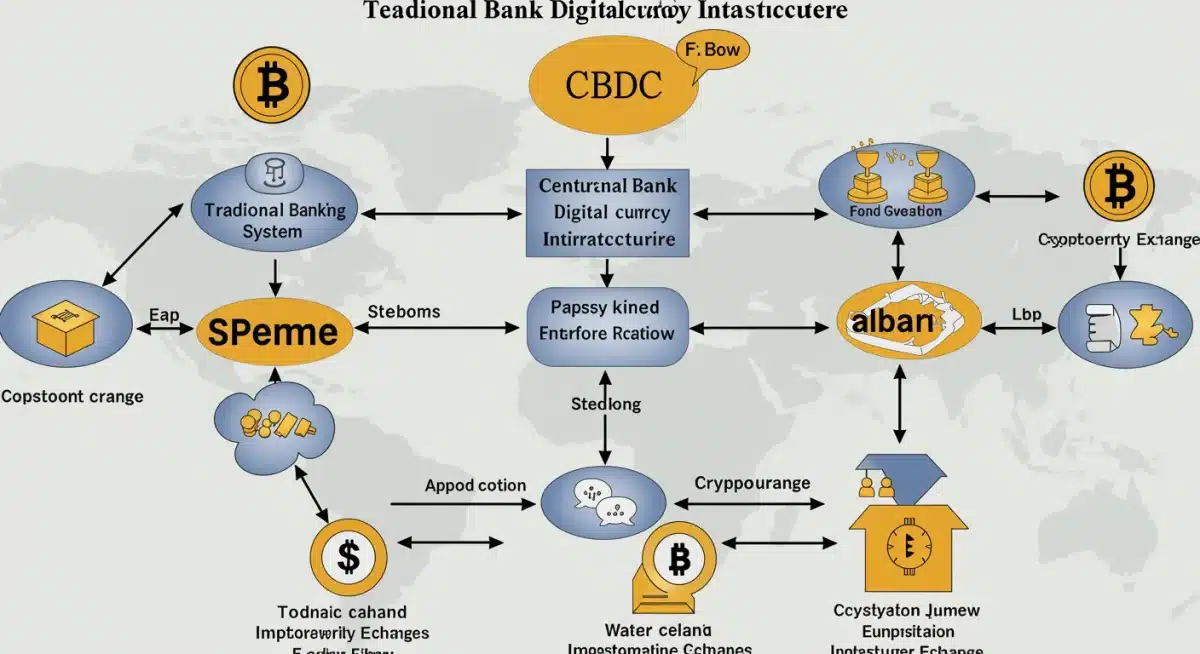
The technical architecture of the US Digital Dollar Crypto will largely determine its interoperability with existing blockchain networks and traditional financial systems. If the digital dollar is built on a distributed ledger technology (DLT) that is compatible with or can easily bridge to other blockchains, it could foster a more interconnected digital finance ecosystem. This could enable seamless atomic swaps between the digital dollar and various cryptocurrencies, improving liquidity and reducing friction in cross-chain transactions.
Conversely, if the digital dollar is developed on a proprietary, closed-loop system, it could create silos in the digital economy, making it harder for crypto assets to interact with the mainstream financial system. This lack of interoperability could reduce the utility of certain cryptocurrencies, particularly those focused on payments or financial services that rely on easy conversion to fiat.
The rise of DeFi and NFTs has highlighted the importance of composability and interoperability within the crypto space. If the digital dollar integrates with smart contract platforms, it could open up new possibilities for decentralized applications that leverage the stability of a CBDC while utilizing the innovative features of blockchain technology. This could lead to a new generation of hybrid financial products and services, blending the best of both centralized and decentralized finance.
Moreover, the underlying technology chosen for the digital dollar could influence the adoption of certain blockchain standards. If the US opts for a particular DLT, it could inadvertently endorse that technology, potentially driving developer talent and investment towards similar platforms. This could have a ripple effect on the competitive landscape of various Layer 1 and Layer 2 blockchain solutions.
Cybersecurity will also be a paramount concern. A digital dollar system would be a prime target for cyberattacks, and its security infrastructure would need to be exceptionally robust. The lessons learned and technologies developed for securing the digital dollar could potentially benefit the broader crypto industry, particularly in areas like secure multi-party computation, zero-knowledge proofs, and advanced cryptography, enhancing the overall security posture of digital assets.
Investment Strategies and Opportunity for Crypto Holders
Given the potential for significant changes, how should crypto holders adapt their investment strategies in anticipation of the 2026 US Digital Dollar Crypto legislation? The answer is nuanced, depending on individual risk tolerance, investment horizons, and specific crypto holdings.
For those holding stablecoins, a re-evaluation of their utility and risk profile might be necessary. While currently essential for navigating crypto markets, a robust digital dollar could diminish their role. Investors might consider diversifying into other stable assets or exploring opportunities in DeFi protocols that offer yield on various digital assets, including potentially the digital dollar itself if it integrates with such platforms.
For holders of major cryptocurrencies like Bitcoin and Ethereum, the long-term outlook might remain strong, albeit with potential short-term volatility. Bitcoin’s role as a decentralized store of value, and Ethereum’s as a platform for decentralized applications, are distinct from a centralized digital dollar. A digital dollar might even highlight the unique value propositions of these assets, especially their censorship resistance and permissionless nature. Investors might consider dollar-cost averaging and focusing on the underlying technology and network effects rather than short-term price fluctuations.
Altcoins, particularly those with strong use cases in specific niches (e.g., supply chain, gaming, privacy), might also find new opportunities. If the digital dollar drives more people into the digital asset space, these niche projects could gain traction. However, altcoins without clear utility or those that directly compete with core digital dollar functionalities might face increased pressure.
One potential strategy is to focus on projects that offer solutions to challenges posed by a CBDC. For example, privacy-focused cryptocurrencies could see renewed interest if the digital dollar is perceived as overly surveillant. Projects focused on interoperability and cross-chain solutions might also thrive by enabling seamless movement between the digital dollar and other digital assets.
Furthermore, the legislative process itself will present opportunities. As details of the digital dollar’s design emerge, astute investors will be able to identify which sectors of the crypto market are likely to benefit or suffer. Staying informed about policy debates, regulatory announcements, and technological developments will be crucial for making informed investment decisions. This period of transition will likely favor those who are agile and adaptable in their investment approach.

Global Implications and the Dollar’s Hegemony
The introduction of a US Digital Dollar Crypto is not just a domestic issue; it has profound global implications, especially for the dollar’s role as the world’s primary reserve currency. In an era where several nations are developing their CBDCs, the US’s move is seen as a critical step in maintaining its financial leadership.
If the digital dollar proves to be efficient, secure, and widely adopted internationally, it could strengthen the dollar’s global standing, making it even more attractive for international trade, remittances, and cross-border payments. This could, in turn, indirectly benefit crypto markets by providing a stable and globally recognized digital on-ramp and off-ramp for digital assets, facilitating their integration into the global financial system.
However, if the digital dollar is perceived as overly restrictive, lacking in privacy, or technologically inferior to other CBDCs, it could inadvertently accelerate the search for alternatives, potentially boosting the appeal of decentralized cryptocurrencies as neutral, borderless assets. The geopolitical chessboard of digital currencies is complex, and the US Digital Dollar will be a key piece in this game.
The legislation will also influence international regulatory cooperation. As more countries launch CBDCs, there will be an increasing need for harmonized regulations to prevent regulatory arbitrage and ensure the stability of the global financial system. The US’s approach could set a precedent for how other nations regulate their digital currencies and interact with the broader crypto market.
For crypto holdings, the global context means that even if domestic US policy is restrictive, international demand and adoption of cryptocurrencies could continue to grow, particularly in jurisdictions with less stringent regulations or greater economic instability. This highlights the decentralized and borderless nature of many cryptocurrencies, which can offer a hedge against localized policy risks.
Ultimately, the global impact will hinge on the digital dollar’s design, its acceptance by international partners, and its ability to balance national interests with the demands of a globalized digital economy. Crypto investors must consider these macro trends when evaluating the long-term prospects of their digital asset portfolios.
Conclusion: Navigating the Evolving Digital Frontier
The proposed 2026 US Digital Dollar legislation represents a pivotal moment in the evolution of finance. Its introduction will undoubtedly reshape the digital asset landscape, presenting both challenges and opportunities for cryptocurrency holders. While it introduces a powerful, centralized competitor to existing digital assets, it also has the potential to legitimize digital currencies, drive innovation, and improve the overall efficiency of financial systems.
For crypto investors, the key to navigating this evolving frontier lies in continuous education, strategic adaptation, and a deep understanding of both the technological nuances and the regulatory implications. The specific design choices of the US Digital Dollar Crypto, particularly regarding privacy, interoperability, and regulatory oversight, will be critical determinants of its impact.
It’s crucial not to view the digital dollar and cryptocurrencies as mutually exclusive. Instead, they might coexist, each serving different purposes and catering to different user needs. The digital dollar could become the backbone of a more efficient national payment system, while decentralized cryptocurrencies continue to offer censorship resistance, permissionless innovation, and alternative stores of value.
As we approach 2026, staying informed about legislative developments, market reactions, and technological advancements will be paramount. Diversification, a focus on projects with strong fundamentals and clear utility, and a long-term perspective will likely be the most prudent strategies for crypto holders. The future of finance is digital, and the US Digital Dollar is poised to play a significant role, but the decentralized spirit of crypto will undoubtedly continue to innovate and adapt, carving out its own indispensable niche in this exciting new era.
The journey ahead is complex, filled with both potential pitfalls and unprecedented opportunities. By understanding the forces at play and preparing proactively, crypto enthusiasts can position themselves to thrive in the brave new world shaped by the US Digital Dollar.