Cardano’s Voltaire Era: Governance, Decentralization, and Impact
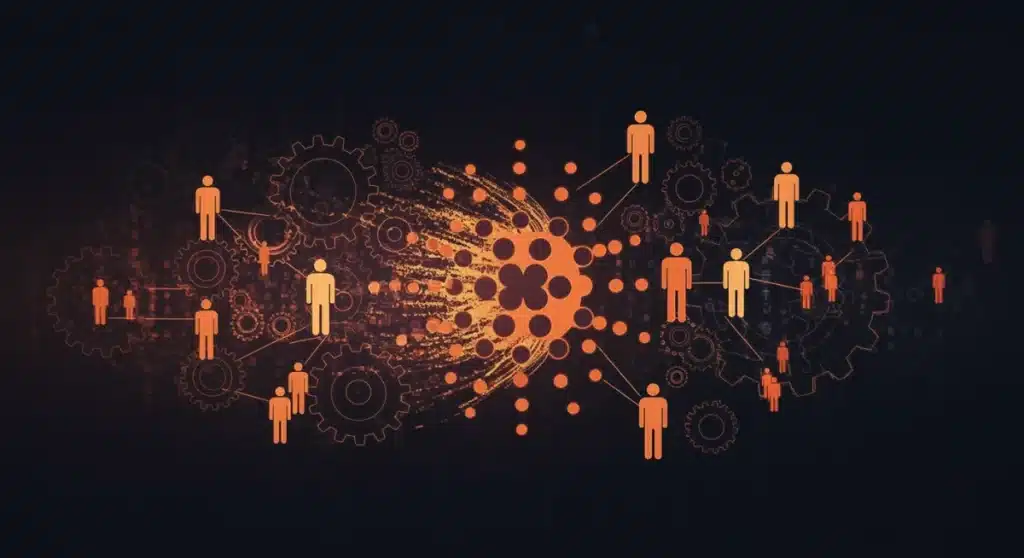
Cardano’s Voltaire Era introduces a comprehensive governance model, aiming for significant decentralization and community participation, with an anticipated 18% impact on these metrics by late 2025.
The advent of Cardano’s Voltaire Era marks a pivotal moment for the blockchain, promising a fully decentralized governance model that empowers its community. This shift is anticipated to have a profound impact, potentially boosting decentralization and community participation by an estimated 18% by late 2025.
Understanding the Voltaire Era’s Core Principles
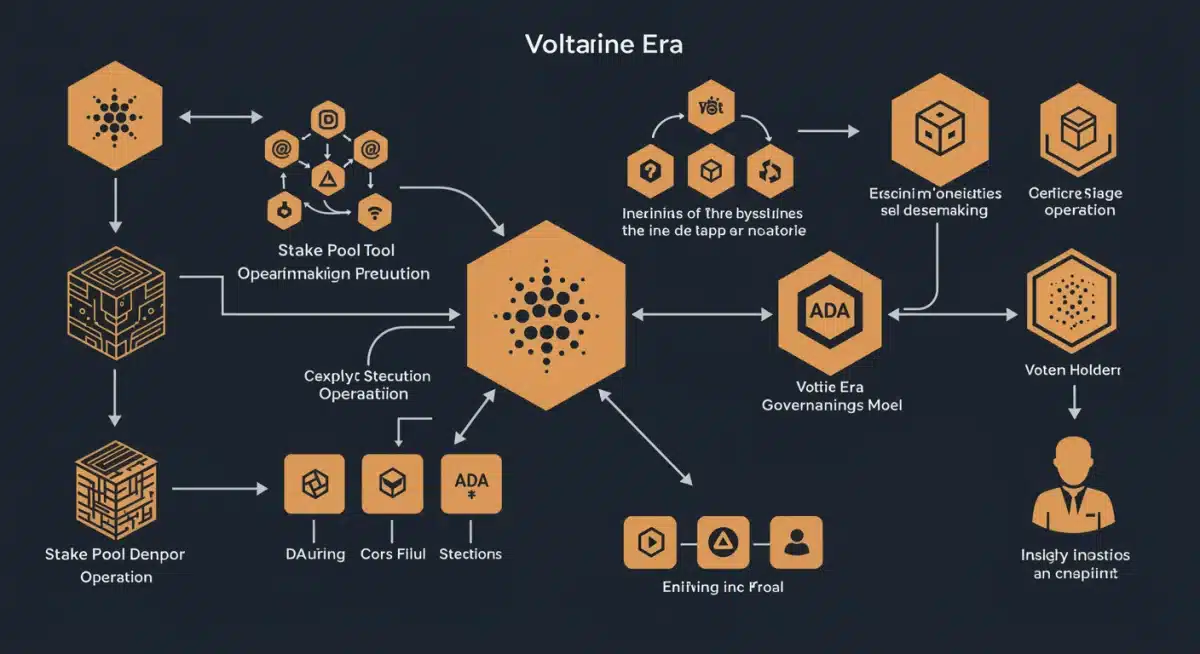
The Voltaire Era represents the final stage of Cardano’s development roadmap, focusing entirely on establishing a self-sustaining and decentralized governance system. This phase is designed to transfer control of the network from Input Output Global (IOG) to its community of ADA holders, ensuring a truly democratic future for the blockchain.
At its heart, Voltaire aims to create a framework where every ADA holder can participate in the platform’s evolution. This involves mechanisms for treasury management, proposal submission, and voting, moving beyond mere technical upgrades to a comprehensive system of collective decision-making.
The Role of CIPs and DApps
Cardano Improvement Proposals (CIPs) are central to the Voltaire Era, serving as the formal process for suggesting changes and enhancements to the network. These proposals can range from technical upgrades to protocol adjustments and even funding requests for ecosystem projects.
- Community-driven innovation: CIPs allow anyone to propose ideas, fostering a dynamic and innovative environment.
- Formal review process: Each CIP undergoes a rigorous review by the community, ensuring quality and alignment with Cardano’s vision.
- On-chain voting: Approved CIPs are put to a vote, enabling ADA holders to directly influence the network’s direction.
Decentralized Applications (DApps) also play a crucial role, providing platforms and tools that facilitate governance participation. These applications can simplify the voting process, enable easy access to treasury funds, and offer transparent tracking of proposals.
In essence, the Voltaire Era is not just about technical decentralization but also about fostering an active, engaged community capable of steering Cardano’s future. This holistic approach is expected to significantly enhance the network’s resilience and adaptability.
Catalyst for Decentralization: Project Catalyst and Treasury
Project Catalyst is Cardano’s experimental governance platform, acting as a crucial precursor to the full Voltaire implementation. It allows the community to propose, fund, and implement projects that enhance the Cardano ecosystem, providing a real-world testing ground for decentralized decision-making.
The Cardano Treasury, funded by transaction fees and a portion of block rewards, is the financial backbone of Voltaire. It provides the capital necessary to fund approved proposals, ensuring that innovative ideas can move from concept to execution without relying on a central entity.
How Project Catalyst Empowers the Community
Project Catalyst operates through a series of funding rounds, each focusing on specific challenges or themes within the Cardano ecosystem. Participants can submit proposals, review others’ submissions, and ultimately vote on which projects receive funding.
- Open proposal submission: Anyone with an idea for Cardano’s growth can submit a proposal.
- Community feedback and refinement: Proposals are subject to public review, allowing for constructive criticism and improvement.
- Direct funding allocation: Successful proposals receive ADA from the treasury, directly supporting development and innovation.
This iterative process allows Cardano to continuously evolve, driven by the collective intelligence and needs of its community. It’s a powerful mechanism for ensuring that development aligns with the network’s long-term vision and user base requirements.
The integration of Project Catalyst into the broader Voltaire framework means that the community will have direct control over a substantial treasury, enabling them to shape the blockchain’s future economically and technologically. This direct financial stewardship is a cornerstone of true decentralization.
Measuring the 18% Impact: Metrics and Projections
The projected 18% increase in decentralization and community participation by late 2025 is an ambitious yet achievable goal for Cardano’s Voltaire Era. This estimate is based on a combination of quantitative and qualitative metrics, tracking the evolution of governance processes and community engagement.
Decentralization, in this context, refers not only to the distribution of stake among stake pool operators but also to the spread of decision-making power across a wider base of ADA holders. Participation encompasses active involvement in voting, proposal submission, and community discussions.
Key Metrics for Decentralization
Several key indicators will be monitored to assess the progress of decentralization:
- Nakamoto coefficient: Measures the minimum number of entities required to compromise a majority of the network’s stake. A higher coefficient indicates greater decentralization.
- Distribution of stake pool operators: Tracking the number of independent stake pools and the proportion of total stake delegated to smaller pools.
- Geographic distribution of nodes: A wider spread of nodes globally reduces reliance on any single region.
These metrics provide a quantifiable way to track how power is distributed across the network, moving away from centralized control towards a more robust, distributed system. The 18% target reflects a significant improvement in these areas.
Evaluating Community Participation
Measuring community participation involves analyzing various engagement points:
- Voter turnout in Project Catalyst and on-chain votes: The percentage of eligible ADA holders participating in governance decisions.
- Number of unique proposal submitters: Indicates a broader base of individuals contributing ideas.
- Activity in governance forums and discussion channels: Reflects the level of active dialogue and debate within the community.
The 18% projection considers an increase in these participation rates, driven by improved governance tools, educational initiatives, and a clearer pathway for community members to exert influence. This growth signifies a more vibrant and engaged ecosystem.
Challenges and Opportunities in Implementing Voltaire
Implementing a fully decentralized governance system like Voltaire is not without its challenges. Ensuring broad participation, preventing voter apathy, and safeguarding against malicious actors are critical considerations. However, these challenges also present significant opportunities for innovation and community building.
One of the primary challenges is educating the vast and diverse Cardano community about the intricacies of on-chain governance. Simplified interfaces and clear communication will be vital for encouraging widespread engagement.
Addressing Potential Hurdles
Several potential hurdles need proactive solutions:
- Voter apathy: Developing incentives and clear communication strategies to encourage consistent participation.
- Centralization risks: Guarding against powerful entities accumulating excessive voting power, potentially through delegated voting mechanisms.
- Technical complexity: Ensuring governance tools are user-friendly and accessible to all ADA holders, regardless of technical proficiency.
These issues highlight the need for continuous refinement of the governance model and robust community engagement strategies. The success of Voltaire hinges on its ability to overcome these challenges effectively.
Leveraging Opportunities for Growth
The Voltaire Era presents numerous opportunities to strengthen Cardano:
- Enhanced network resilience: Decentralized decision-making makes the network more resistant to single points of failure or external pressure.
- Increased innovation: A broad base of contributors can generate diverse and creative solutions for network improvement.
- Stronger community ownership: Direct participation fosters a sense of responsibility and commitment among ADA holders.
By effectively navigating these challenges and seizing the opportunities, Cardano can set a new standard for blockchain governance, demonstrating the power of a truly decentralized and community-driven platform.
The Role of Constitutional Committees and Delegates
To ensure the smooth operation of governance and provide expert guidance, the Voltaire Era introduces the concept of Constitutional Committees and potentially, elected delegates. These roles are designed to balance direct democracy with informed decision-making, providing a structured approach to complex issues.
The Constitutional Committee will act as a safeguard, ensuring that proposals adhere to the foundational principles and objectives of the Cardano blockchain. This body will play a crucial role in maintaining the integrity and long-term vision of the network.
Constitutional Committee’s Responsibilities
The Constitutional Committee will have several key functions:
- Guardian of the constitution: Ensuring all governance actions align with Cardano’s core principles and proposed constitution.
- Facilitator of complex decisions: Providing expert review and guidance on highly technical or sensitive proposals.
- Mediator in disputes: Resolving disagreements and facilitating consensus within the governance process.
This committee is envisioned as a group of highly respected and knowledgeable individuals within the Cardano ecosystem, chosen for their expertise and commitment to the network’s values. Their role is critical in maintaining stability and direction during the transition to full decentralization.
Empowering Delegates for Informed Voting
Delegates, or ‘DReps’ (Delegated Representatives), are another integral part of Voltaire. They allow ADA holders who may not have the time or expertise to actively participate in every vote to delegate their voting power to trusted representatives. This mechanism aims to increase overall voter turnout and ensure informed decisions.
- Increased participation: Enables passive ADA holders to still have a voice through delegation.
- Expert representation: Delegates can specialize in different areas, offering informed votes on complex proposals.
- Accountability: Delegates are accountable to those who delegated their voting power, fostering transparency.
The introduction of DReps addresses a common challenge in large-scale decentralized governance: maintaining high participation rates and informed voting. By combining direct voting with delegated representation, Cardano aims to achieve a robust and efficient governance model.
Long-Term Vision: Cardano’s Future as a Self-Sustaining Ecosystem
The ultimate goal of Cardano’s Voltaire Era is to establish a fully self-sustaining and self-governing ecosystem. This long-term vision positions Cardano as a truly decentralized public infrastructure, capable of evolving and adapting without relying on any single entity or foundation.
This means that all future developments, funding allocations, and strategic decisions will be made by the community, for the community. It represents a paradigm shift from traditional corporate structures to a distributed, collective ownership model.
Key Pillars of a Self-Sustaining Ecosystem
Several foundational elements underpin this vision:
- Community-driven development: All upgrades and features are proposed and approved by ADA holders.
- Decentralized treasury management: Funds are allocated transparently through community votes.
- Robust governance framework: A clear and fair process for decision-making and dispute resolution.
These pillars ensure that Cardano can continue to innovate and grow, driven by the collective will of its participants. The network’s resilience will be significantly enhanced by this distributed control.
The Impact on Global Blockchain Adoption
A successful Voltaire implementation could significantly influence global blockchain adoption by showcasing a viable model for truly decentralized governance. This could inspire other projects and even traditional organizations to explore similar models of collective ownership and decision-making.
- Precedent for decentralization: Cardano’s model could become a blueprint for future blockchain projects.
- Increased trust and transparency: A fully community-governed network builds greater confidence among users and developers.
- Sustainable growth: The ability to self-fund and self-govern ensures long-term viability and adaptability.
The Voltaire Era is more than just an upgrade; it’s a foundational transformation that aims to secure Cardano’s place as a leading blockchain in the decentralized future. The projected 18% impact on decentralization and participation is a key indicator of this ambitious and transformative journey.
| Key Aspect | Brief Description |
|---|---|
| Voltaire Era Goal | Achieve full decentralized governance and community control of Cardano. |
| Projected Impact | 18% increase in decentralization and community participation by late 2025. |
| Key Mechanisms | CIPs, Project Catalyst, Cardano Treasury, Constitutional Committee, DReps. |
| Long-Term Vision | A self-sustaining, community-governed public blockchain infrastructure. |
Frequently Asked Questions about Cardano’s Voltaire Era
The primary goal is to establish a fully decentralized governance system where ADA holders collectively manage the network, including its treasury and future development, transitioning control from IOG to the community.
Voltaire is projected to increase decentralization by 18% by late 2025 through mechanisms like on-chain voting, a distributed treasury, and a broader distribution of decision-making power across ADA holders and stake pool operators.
Project Catalyst serves as an experimental governance platform, allowing the community to propose, fund, and implement projects using the Cardano Treasury, thereby testing and refining the decentralized governance processes before full Voltaire implementation.
DReps, or Delegated Representatives, are individuals to whom ADA holders can delegate their voting power. This enables more informed and widespread participation in governance decisions, especially for those unable to vote on every proposal.
The Constitutional Committee acts as a guardian of Cardano’s foundational principles and constitution. It provides expert guidance, ensures proposals align with the network’s vision, and mediates disputes, maintaining the integrity of the governance process.
Conclusion
The journey into Cardano’s Voltaire Era represents a profound commitment to true decentralization and community empowerment. By carefully implementing a robust governance framework, fostering active participation through Project Catalyst, and establishing a self-sustaining treasury, Cardano is poised to achieve its ambitious goal of an 18% increase in decentralization and community engagement by late 2025. This transformative phase is not merely an upgrade but a fundamental redefinition of how a blockchain network can be owned and operated by its global community, setting a new benchmark for the future of decentralized finance and beyond.