Avalanche Subnet Architecture: Powering 10+ dApps & 25% Market Share Growth
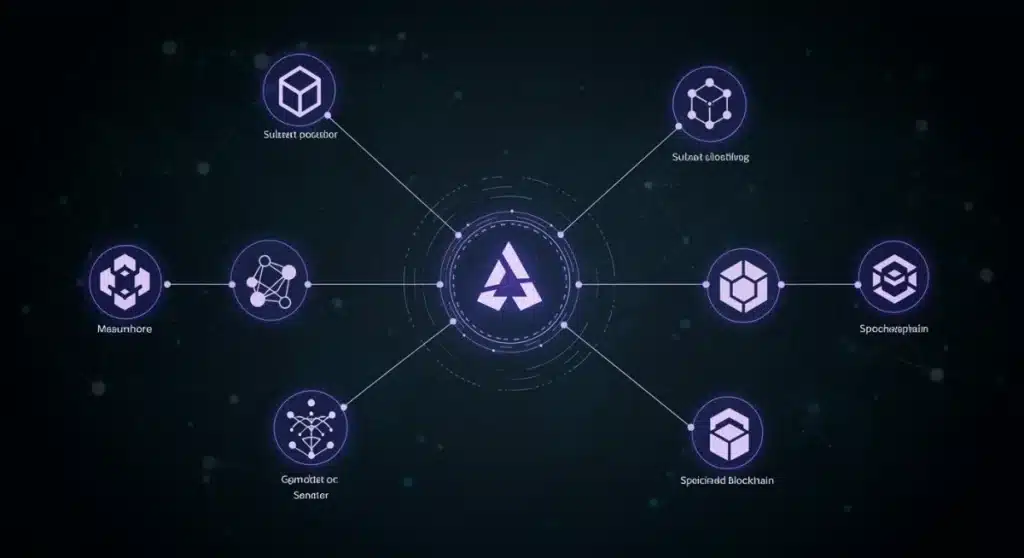
Avalanche’s Subnet architecture allows for the creation of application-specific blockchains, significantly enhancing scalability and customization, thereby attracting new decentralized applications and potentially expanding its market share by 25% in the coming year.
In the rapidly evolving landscape of decentralized finance, one technological innovation stands out for its potential to reshape how we interact with blockchain: Avalanche’s Subnet architecture. This groundbreaking approach is not merely an incremental upgrade; it represents a fundamental shift in blockchain design, enabling unparalleled customization and scalability. As we delve into its intricate workings, we uncover how this architecture is already fostering the development of over 10 new decentralized applications (dApps) and setting the stage for a projected 25% market share expansion within the next 12 months. Understanding Avalanche’s Subnets is crucial for anyone looking to grasp the future trajectory of altcoin dominance and the next generation of Web3 applications.
Understanding Avalanche’s core architecture
Avalanche’s success is deeply rooted in its innovative architectural design, which moves beyond the traditional monolithic blockchain model. Instead of a single, congested chain, Avalanche employs a network of chains, each optimized for specific functions. This multi-chain framework is foundational to its promise of high throughput and low latency, distinguishing it from many competitors.
At the heart of this architecture are three primary blockchains: the Platform Chain (P-Chain), the Exchange Chain (X-Chain), and the Contract Chain (C-Chain). Each serves a distinct purpose, contributing to the overall efficiency and security of the network. The P-Chain manages Subnets and validates the Avalanche network, the X-Chain handles asset creation and exchange, and the C-Chain is where smart contracts and dApps thrive, compatible with the Ethereum Virtual Machine (EVM).
The P-Chain: Orchestrating the network
The P-Chain is the meta-chain of Avalanche, responsible for coordinating validators and enabling the creation and management of Subnets. It’s the backbone that ensures the entire network operates cohesively and securely. Validators on the P-Chain stake AVAX tokens to secure the network and participate in consensus.
- Manages Subnet creation and validation.
- Coordinates network validators through staking.
- Ensures overall network security and integrity.
The P-Chain’s robust design allows for a decentralized and highly secure foundation upon which all other Avalanche activities are built. Its ability to manage an ever-growing number of Subnets is critical for the network’s long-term scalability and adaptability, making it a pivotal component in Avalanche’s ecosystem.
The innovation of Subnets: Customization and scalability
The true genius of Avalanche’s architecture lies in its Subnets. These are not merely sidechains; they are independent, customizable blockchains that operate within the Avalanche ecosystem, secured by a dynamic set of validators. This design offers an unparalleled degree of flexibility, allowing developers to create highly specialized blockchain environments tailored to their specific application needs.
Unlike other networks where all dApps compete for resources on a single chain, Subnets provide dedicated environments. This isolation prevents congestion and allows for predictable performance, a critical factor for enterprise-grade applications and high-frequency trading platforms. Each Subnet can define its own tokenomics, gas fees, and even its own virtual machine, opening up a vast array of possibilities for innovation.
Tailored blockchain environments
Subnets empower developers to build blockchains with specific functionalities, protocols, and regulatory compliance features. This level of customization is a game-changer for industries requiring strict data privacy or specialized consensus mechanisms, such as financial institutions or healthcare providers.
- Customizable tokenomics and gas fees.
- Support for various virtual machines (e.g., EVM, WASM).
- Ability to enforce specific regulatory compliance.
The ability to deploy bespoke blockchains without sacrificing the security and interoperability of the main Avalanche network is a significant advantage. This tailored approach fosters an environment where innovation can flourish, as developers are no longer constrained by the limitations of a general-purpose blockchain.
Driving dApp development: Over 10 new applications
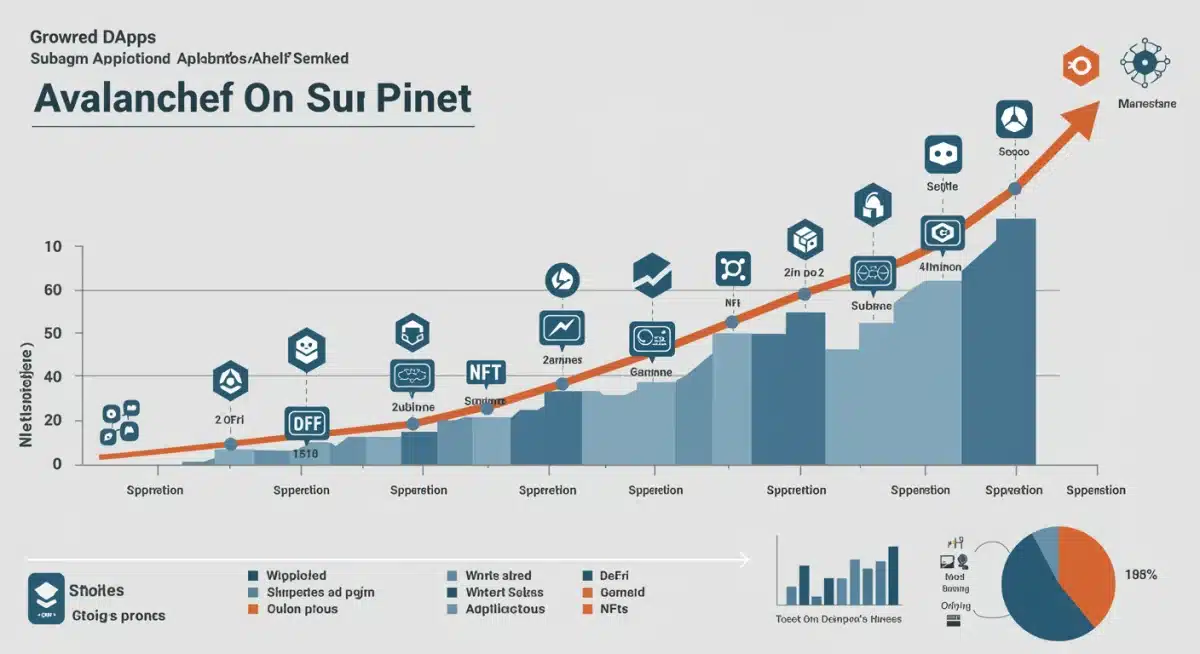
The flexibility and performance offered by Avalanche Subnets have proven to be a magnet for decentralized application developers. The promise of a dedicated, high-throughput environment, free from the congestion and high fees often associated with popular general-purpose blockchains, is incredibly appealing. This has resulted in a notable surge in new dApp deployments, with over 10 significant projects already leveraging Subnet technology.
These new dApps span a diverse range of categories, from sophisticated decentralized finance (DeFi) protocols to immersive gaming experiences and enterprise solutions. Each project benefits from the ability to configure its Subnet to perfectly match its operational requirements, leading to superior user experiences and greater overall efficiency. The ease of deployment and the robust developer tools provided by Avalanche further accelerate this adoption.
Diverse applications taking root
The new wave of dApps on Avalanche Subnets showcases the versatility of the architecture. For instance, gaming projects can create Subnets with extremely low transaction fees and high transaction speeds, crucial for in-game economies and NFT interactions. DeFi protocols can implement custom fee structures and integrate specific compliance features, attracting institutional capital.
These projects are not just migrating existing dApps; many are entirely new concepts that were previously unfeasible on more constrained blockchain architectures. The ability to innovate without being bottlenecked by network limitations is unlocking a new era of decentralized applications, pushing the boundaries of what blockchain technology can achieve.
Potential for 25% market share expansion
The rapid adoption of Avalanche’s Subnet architecture by new dApps is a strong indicator of its growing influence and potential for significant market share expansion. Analysts project a 25% increase in Avalanche’s market share within the next 12 months, driven primarily by the unique advantages Subnets offer. This growth isn’t just about attracting more users; it’s about capturing a larger segment of the overall blockchain ecosystem, particularly in areas requiring specialized or high-performance solutions.
The appeal of Subnets extends beyond individual developers to enterprises and even nation-states looking to deploy their own sovereign blockchains. The ability to control governance, data, and compliance within a dedicated network, while still benefiting from the security and interoperability of the Avalanche mainnet, is a compelling proposition. This positions Avalanche as a frontrunner in the race for institutional adoption and large-scale decentralized infrastructure.
Factors driving market share growth
Several key factors contribute to this optimistic outlook for Avalanche’s market share. The continuous development of developer tools, the growing community support, and strategic partnerships are all playing a crucial role. Furthermore, the increasing demand for specialized blockchain solutions, particularly in regulated industries, aligns perfectly with the capabilities of Subnets.
- Increased developer adoption due to customization.
- Attraction of institutional and enterprise clients.
- Strategic partnerships and ecosystem growth.
As more projects recognize the benefits of isolated, high-performance environments, the migration towards Avalanche’s Subnets is expected to accelerate. This will not only increase the total value locked (TVL) within the Avalanche ecosystem but also solidify its position as a leading platform for next-generation decentralized applications.
Challenges and opportunities in the competitive landscape
While Avalanche’s Subnet architecture presents a compelling vision for the future of blockchain, it operates within a highly competitive landscape. Other Layer 1 solutions are also innovating, offering their own approaches to scalability and customization. Therefore, Avalanche must continue to refine its technology, expand its ecosystem, and effectively communicate its value proposition to maintain its momentum.
One of the primary challenges lies in onboarding a diverse range of developers and projects, ensuring that the tools and resources available are comprehensive and user-friendly. The learning curve for new blockchain technologies can be steep, and simplifying the development process for Subnets will be crucial for sustained growth. Additionally, fostering a vibrant and supportive community is essential for long-term success, as it drives innovation and provides resilience.
Navigating the blockchain ecosystem
Despite the challenges, the opportunities for Avalanche are immense. The market for decentralized applications is still in its nascent stages, with vast untapped potential. By continuing to focus on niche markets that require highly specialized blockchain solutions, Avalanche can carve out a unique and defensible position.
- Continuous improvement of developer experience and tools.
- Strategic targeting of enterprise and governmental blockchain needs.
- Cultivating a robust and engaged community.
The ability to offer bespoke blockchain solutions positions Avalanche uniquely to capture segments of the market that demand more than a general-purpose chain can provide. This strategic focus, combined with ongoing technological advancements, will be key to overcoming competition and realizing its projected market share gains.
The future trajectory: Beyond 12 months
Looking beyond the immediate 12-month projection, the long-term implications of Avalanche’s Subnet architecture are even more profound. The modularity and flexibility inherent in Subnets suggest a future where blockchain technology is seamlessly integrated into a myriad of industries, each with its own customized and optimized chain. This vision extends far beyond traditional DeFi and gaming, touching upon sectors like supply chain management, digital identity, and even national digital currencies.
The concept of interconnected, application-specific blockchains, each serving a unique purpose, could lead to a highly efficient and resilient global decentralized infrastructure. As more developers and enterprises recognize the power of this paradigm, Avalanche’s role as a foundational layer for this new internet of value will become increasingly significant. The continuous evolution of Subnet technology, coupled with strategic ecosystem development, will cement its position as a leader in the next generation of blockchain innovation.
Envisioning a modular blockchain future
The modular nature of Subnets allows for continuous evolution without disrupting the entire network. This means individual Subnets can upgrade and adapt to new technological advancements or regulatory changes independently, fostering greater agility and resilience. This adaptability is critical for long-term sustainability in a rapidly changing technological landscape.
- Integration into diverse industries beyond crypto.
- Enhanced regulatory compliance through customizable chains.
- Foundation for national digital currencies and sovereign blockchains.
The ability to create a truly bespoke blockchain experience, from consensus mechanisms to virtual machines, ensures that Avalanche can cater to virtually any use case. This forward-thinking approach positions Avalanche not just as a platform for dApps, but as an infrastructure provider for the decentralized world, promising a future where blockchain technology is both pervasive and highly specialized.
| Key Aspect | Brief Description |
|---|---|
| Subnet Architecture | Customizable blockchains within Avalanche, offering dedicated resources and tailored environments. |
| dApp Growth | Over 10 new dApps leveraging Subnets for enhanced performance and customization. |
| Market Share Potential | Projected 25% market share expansion for Avalanche within the next 12 months. |
| Customization Benefits | Tailored tokenomics, gas fees, and virtual machines for specific application needs. |
Frequently Asked Questions about Avalanche Subnets
Avalanche Subnets are independent, customizable blockchains within the Avalanche ecosystem. They allow developers to create application-specific networks with tailored rules, validators, and tokenomics, ensuring dedicated resources and preventing congestion found on general-purpose blockchains.
Unlike many Layer 2 solutions that rely on a single mainnet for security and finality, Subnets are full-fledged blockchains with their own validators. They offer greater autonomy, customization, and can even have their own native tokens, making them more akin to sovereign chains within a larger ecosystem.
A wide variety of dApps are leveraging Subnets, including sophisticated DeFi protocols that require high throughput and custom fee structures, immersive blockchain gaming platforms needing low latency, and enterprise solutions for specific regulatory or data privacy needs across various industries.
The projection stems from Subnets’ ability to attract specialized projects and enterprises seeking dedicated, high-performance blockchain environments. This unique offering, combined with growing developer adoption and strategic partnerships, positions Avalanche to capture a significant portion of the evolving blockchain market.
Developers benefit from unparalleled flexibility, including custom gas fees, tokenomics, and virtual machines. They gain a dedicated, scalable environment that prevents congestion, offering predictable performance and the ability to meet specific application or regulatory requirements without compromise.
Conclusion
Avalanche’s Subnet architecture represents a pivotal advancement in blockchain technology, offering a robust and highly customizable framework for decentralized applications. By empowering developers to create bespoke blockchain environments, Subnets address critical issues of scalability, performance, and flexibility that often plague general-purpose chains. The current influx of over 10 new dApps and the projected 25% market share expansion within the next year underscore the profound impact this innovation is having on the crypto landscape. As the demand for specialized blockchain solutions continues to grow across various industries, Avalanche’s modular approach positions it as a formidable contender, set to redefine the boundaries of what decentralized networks can achieve.