Navigating Bitcoin Volatility 2026: Strategies for U.S. Investors

Navigating Bitcoin Volatility in 2026: Three Actionable Strategies to Mitigate Risk for U.S. Investors (PRACTICAL SOLUTIONS)
The cryptocurrency landscape is an ever-evolving frontier, and Bitcoin, as its pioneer, continues to captivate investors worldwide. However, its notorious volatility often presents a significant challenge, particularly for U.S. investors seeking stable growth and risk mitigation. As we look towards 2026, understanding and implementing robust strategies to navigate this inherent characteristic of the market becomes paramount. This comprehensive guide will delve into three actionable strategies designed to help U.S. investors not only survive but thrive amidst Bitcoin’s price swings, ensuring a more secure and potentially profitable investment journey.
The allure of Bitcoin is undeniable. Its decentralized nature, finite supply, and potential for significant returns have drawn in millions. Yet, stories of rapid gains are often accompanied by tales of equally swift dips, creating a psychological rollercoaster for many. For U.S. investors, navigating this volatility is complicated by regulatory considerations, tax implications, and the need for a prudent, long-term financial plan. Our focus here is on providing practical, implementable solutions that empower investors to approach the market with confidence, armed with strategies that address the core challenges of Bitcoin Volatility Strategies.
As the digital asset space matures, so too do the tools and understanding available to investors. Gone are the days when simply ‘hodling’ was the only widely recognized strategy. While it remains a powerful approach for some, a more nuanced and diversified strategy is often required to truly mitigate risk and optimize returns in a market as dynamic as Bitcoin’s. This article will break down these strategies, providing clear explanations and actionable steps, making them accessible to both seasoned crypto enthusiasts and newcomers to the digital asset space.
Understanding Bitcoin Volatility: The Landscape for U.S. Investors in 2026
Before diving into strategies, it’s crucial to grasp the nature of Bitcoin volatility. Unlike traditional assets, Bitcoin is influenced by a unique confluence of factors. These include geopolitical events, technological advancements in the blockchain space, regulatory announcements, market sentiment, and the actions of large institutional players. For U.S. investors, specific domestic policies and economic indicators also play a significant role. The year 2026 is anticipated to bring further maturation to the crypto market, potentially with increased institutional adoption and clearer regulatory frameworks, but also with continued exposure to global macroeconomic shifts.
Market sentiment, often driven by news cycles and social media, can trigger rapid price movements. A positive announcement regarding a major company adopting Bitcoin or a new ETF approval can send prices soaring, while a regulatory crackdown or a security breach can cause a sharp decline. Understanding these drivers is the first step towards developing effective Bitcoin Volatility Strategies. It’s not about predicting every price swing, but rather about understanding the underlying forces that contribute to market behavior and preparing for various scenarios.
Furthermore, the relatively smaller market capitalization of Bitcoin compared to traditional assets means that large trades, even by a single entity, can have a disproportionate impact on its price. This makes it susceptible to ‘whale’ movements, which can be challenging to anticipate. U.S. investors need to be aware of these dynamics and avoid making impulsive decisions based on short-term fluctuations. Instead, a well-thought-out plan, grounded in sound investment principles, is essential.
The regulatory environment in the U.S. is another critical factor. While progress has been made with the approval of Bitcoin ETFs, the broader regulatory landscape remains somewhat fragmented. Changes in tax laws, new reporting requirements, or shifts in how digital assets are classified can all affect investor confidence and, consequently, Bitcoin’s price. Staying informed about these developments is not just good practice; it’s a vital component of any robust Bitcoin Volatility Strategies.
Ultimately, Bitcoin’s volatility isn’t necessarily a negative; it’s a characteristic that can be leveraged if approached strategically. For savvy U.S. investors, understanding the sources of this volatility allows for the implementation of calculated moves that aim to capitalize on opportunities while minimizing downside risk. This foundational understanding sets the stage for the practical strategies we will explore next.
Strategy 1: Implement a Disciplined Dollar-Cost Averaging (DCA) Approach
One of the most effective and widely recommended Bitcoin Volatility Strategies, especially for long-term U.S. investors, is Dollar-Cost Averaging (DCA). This strategy involves investing a fixed amount of money at regular intervals, regardless of Bitcoin’s price. For example, an investor might decide to invest $100 into Bitcoin every two weeks, rather than attempting to time the market with a single lump sum investment.
The primary benefit of DCA is that it removes the emotional element from investing. Trying to predict market bottoms or tops is notoriously difficult, even for experienced traders. By consistently investing, you buy more Bitcoin when prices are low and less when prices are high, thereby averaging out your purchase price over time. This approach reduces the risk of making a large investment at an unfavorable peak and helps smooth out the impact of market fluctuations.
For U.S. investors, DCA also offers a simpler approach to managing their crypto portfolio without the constant stress of monitoring daily price movements. It encourages a long-term perspective, aligning well with the fundamental belief in Bitcoin’s future value. Setting up automated recurring buys through a reputable exchange or investment platform can make this strategy even more seamless and disciplined.
How to Implement DCA Effectively:
- Determine Your Investment Amount: Decide on a fixed amount you are comfortable investing regularly without impacting your financial stability. This amount should be consistent whether Bitcoin is up or down.
- Set Your Investment Frequency: Choose a regular interval – weekly, bi-weekly, or monthly – that aligns with your income cycle. Consistency is key.
- Automate Your Investments: Utilize features offered by cryptocurrency exchanges or financial apps that allow for automated recurring purchases. This ensures you stick to the plan and avoid emotional trading.
- Commit to the Long Term: DCA is most effective over extended periods. Resist the urge to deviate from your plan during periods of extreme market excitement or panic.
- Review Periodically (But Don’t Over-Optimize): While the goal is consistency, it’s wise to periodically review your overall financial situation and adjust your DCA amount if your circumstances change. However, avoid frequent changes based on market sentiment.
The beauty of DCA lies in its simplicity and effectiveness in mitigating the psychological stress associated with Bitcoin’s price swings. It transforms volatility from a source of anxiety into an opportunity to accumulate more assets at potentially lower average costs. This makes it an indispensable tool in any U.S. investor’s arsenal for navigating Bitcoin Volatility Strategies in 2026 and beyond.
Strategy 2: Diversify Your Portfolio Beyond Bitcoin
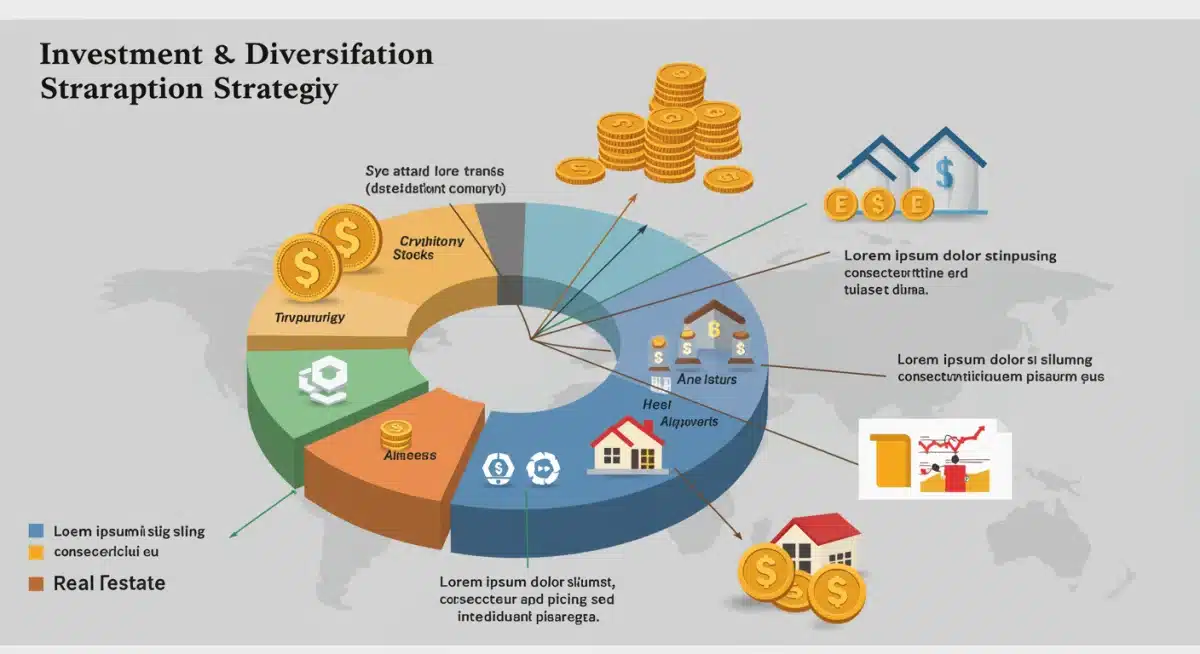
While Bitcoin is the dominant cryptocurrency, placing all your investment eggs in one basket, even a robust one like Bitcoin, can amplify risk. A crucial Bitcoin Volatility Strategy for U.S. investors is to diversify their cryptocurrency portfolio and, more broadly, their overall investment portfolio. Diversification isn’t just about holding different cryptocurrencies; it’s about spreading your investments across various asset classes to reduce overall risk.
Within the crypto space, diversification could mean allocating a portion of your capital to other established cryptocurrencies (altcoins) that have different use cases, technological foundations, or market dynamics. For instance, Ethereum (ETH) offers a different value proposition with its smart contract capabilities, while stablecoins can provide a temporary hedge against volatility without exiting the crypto ecosystem entirely. Researching projects with strong fundamentals, active development teams, and clear utility is vital when diversifying within crypto.
However, true diversification extends beyond just crypto. Integrating Bitcoin into a broader investment portfolio that includes traditional assets like stocks, bonds, real estate, and commodities can significantly reduce the impact of Bitcoin’s price swings on your overall wealth. The correlation between traditional assets and cryptocurrencies is not always straightforward, and at times, they may even move inversely, providing a natural hedge.
Key Considerations for Diversification:
- Asset Allocation: Determine an appropriate allocation for Bitcoin and other cryptocurrencies within your overall portfolio based on your risk tolerance, financial goals, and time horizon. Financial advisors often recommend a small percentage for highly volatile assets like crypto (e.g., 5-10%).
- Research Altcoins Thoroughly: If diversifying into other cryptocurrencies, conduct extensive due diligence. Understand their technology, market cap, community support, regulatory status, and potential for growth. Avoid speculative ‘meme coins’ if risk mitigation is your primary goal.
- Consider Stablecoins: During periods of extreme volatility, moving a portion of your crypto holdings into stablecoins (cryptocurrencies pegged to fiat currencies like the USD) can preserve capital without incurring the tax implications of converting back to fiat.
- Rebalance Periodically: As market conditions change, your portfolio allocations will shift. Periodically rebalance your portfolio to bring it back to your desired target allocation. This might involve selling some of your best-performing assets (e.g., Bitcoin after a significant rally) and buying more of your underperforming assets to maintain your risk profile.
- Consult a Financial Advisor: For complex portfolios, especially concerning tax implications in the U.S., seeking advice from a qualified financial advisor who understands digital assets is highly recommended.
By diversifying wisely, U.S. investors can build a more resilient portfolio that is better equipped to withstand the inherent volatility of Bitcoin. This strategy acknowledges that while Bitcoin offers immense potential, it’s part of a larger financial ecosystem, and a balanced approach is often the most prudent path to long-term success when implementing Bitcoin Volatility Strategies.
Strategy 3: Embrace a Long-Term Investment Horizon with a Clear Exit Strategy
Perhaps the most powerful, yet often overlooked, Bitcoin Volatility Strategy is adopting a long-term investment horizon coupled with a well-defined exit strategy. For U.S. investors, this means resisting the temptation to react to short-term price movements and instead focusing on Bitcoin’s fundamental value proposition over several years. The market’s daily, weekly, or even monthly fluctuations often become noise when viewed through a multi-year lens.
Historically, Bitcoin has demonstrated significant growth over longer periods, despite numerous dramatic pullbacks. Investors who have held Bitcoin for several years have generally seen substantial returns, outperforming those who attempted to trade actively based on short-term predictions. This long-term mindset allows investors to weather market downturns, seeing them as temporary setbacks rather than reasons for panic selling.
However, a long-term approach doesn’t mean simply ‘buying and forgetting.’ It must be complemented by a clear and realistic exit strategy. Many investors struggle with when to take profits, often holding through peaks only to see their gains evaporate in subsequent corrections. An exit strategy defines specific conditions under which you will sell a portion or all of your Bitcoin holdings, independent of market sentiment at that moment.
Developing Your Long-Term Horizon and Exit Strategy:
- Define Your Investment Goals: What are you hoping to achieve with your Bitcoin investment? Is it retirement savings, a down payment for a house, or wealth preservation? Your goals will dictate your time horizon.
- Set Price Targets and Triggers: Establish specific price points at which you will consider selling a portion of your Bitcoin. This could be a fixed price, a percentage gain, or when Bitcoin reaches a certain market capitalization.
- Consider Time-Based Exits: You might also decide to sell a portion of your holdings after a certain number of years, regardless of price, to rebalance your portfolio or utilize the funds for other purposes.
- Dollar-Cost Averaging Out (DCA Out): Just as you can DCA into Bitcoin, you can also DCA out. This involves selling a fixed amount of Bitcoin at regular intervals once you reach your target goals or time horizon, smoothing out your selling price and avoiding the need to time the market peak.
- Account for Tax Implications: For U.S. investors, understanding the tax implications of selling Bitcoin is critical. Long-term capital gains (assets held for more than a year) are typically taxed at a lower rate than short-term gains. Your exit strategy should factor in these tax efficiencies. Consult with a tax professional experienced in cryptocurrency.
- Regularly Review and Adjust (But Don’t Deviate Impulsively): Your financial goals and market conditions can change. Periodically review your long-term plan and exit strategy (e.g., annually) and make adjustments as necessary. However, ensure these adjustments are based on reasoned analysis, not emotional reactions to market news.
By combining a steadfast long-term perspective with a predefined exit strategy, U.S. investors can effectively manage the emotional toll of Bitcoin’s volatility. This approach helps to lock in gains when appropriate and provides a sense of control, turning the perceived risk of Bitcoin into a manageable component of a broader financial plan. This is a cornerstone of effective Bitcoin Volatility Strategies for sustainable growth.

Additional Considerations for U.S. Investors in 2026
Beyond these three core Bitcoin Volatility Strategies, U.S. investors face unique considerations that can impact their crypto journey. Understanding these nuances is vital for a holistic and compliant investment approach.
Regulatory Landscape and Compliance:
The regulatory environment in the United States is continuously evolving. As of 2026, we can anticipate further clarity and potentially stricter enforcement from bodies like the SEC, CFTC, and IRS. U.S. investors must stay informed about new laws regarding digital asset classification, stablecoin regulations, and DeFi protocols. Compliance is not optional; failure to adhere to regulations can result in significant penalties. Utilizing reputable, regulated exchanges and platforms that comply with U.S. laws is a foundational step.
Taxation of Cryptocurrency:
The IRS views cryptocurrency as property, meaning it’s subject to capital gains tax. Every taxable event – selling crypto for fiat, exchanging one crypto for another, or using crypto for purchases – triggers a tax obligation. Maintaining meticulous records of all transactions, including purchase dates, costs, and selling prices, is essential. Tools and services designed for crypto tax reporting can simplify this complex process. Proactive tax planning, possibly with the help of a crypto-savvy tax advisor, can help optimize your tax burden and avoid surprises.
Security and Custody:
With great digital assets comes great responsibility. The security of your Bitcoin is paramount. For U.S. investors, choosing secure storage solutions is a critical part of mitigating risk. Hardware wallets (cold storage) are generally considered the most secure option for significant holdings, as they keep your private keys offline. For smaller amounts or more frequent trading, reputable exchanges with strong security protocols (two-factor authentication, insurance, cold storage practices) are acceptable. Never share your private keys or seed phrases, and be vigilant against phishing scams and social engineering attacks.
Market Cycles and Halving Events:
Bitcoin’s price often moves in cycles, influenced by factors like its programmatic halving events, which reduce the supply of new Bitcoin entering the market. While 2026 is post-halving (the next one is expected in 2028), the effects of past halvings can still influence market sentiment and supply dynamics. Understanding these cycles can help U.S. investors contextualize price movements and maintain a long-term perspective, reinforcing the effectiveness of the Bitcoin Volatility Strategies discussed.
Technological Advancements and Ecosystem Growth:
The underlying technology of Bitcoin and the broader crypto ecosystem continues to advance rapidly. Developments in scaling solutions (like the Lightning Network), increased interoperability, and the growth of decentralized finance (DeFi) can all impact Bitcoin’s utility and value. Staying abreast of these technological shifts can help U.S. investors understand the long-term potential and evolving use cases of Bitcoin, which in turn supports a confident long-term investment approach.
By considering these additional factors, U.S. investors can build a more comprehensive and resilient investment framework, ensuring they are not only prepared for Bitcoin’s volatility but also compliant and secure in their digital asset holdings.
Conclusion: Mastering Bitcoin Volatility for U.S. Investors in 2026
Navigating the dynamic world of Bitcoin investment requires more than just optimism; it demands a strategic, disciplined, and informed approach, especially for U.S. investors facing a unique blend of market dynamics and regulatory considerations. The inherent volatility of Bitcoin, while daunting to some, presents opportunities for those equipped with the right Bitcoin Volatility Strategies.
By implementing a disciplined Dollar-Cost Averaging (DCA) approach, U.S. investors can smooth out their purchase prices, remove emotional biases, and build a substantial position over time. This strategy is a cornerstone for mitigating the impact of short-term price swings and fostering a long-term outlook.
Secondly, diversifying your portfolio, both within cryptocurrencies and across traditional asset classes, is crucial for risk management. Spreading investments reduces reliance on any single asset’s performance, creating a more resilient and balanced portfolio capable of weathering market storms. This isn’t just about adding altcoins; it’s about strategic asset allocation that aligns with your overall financial goals.
Finally, adopting a long-term investment horizon complemented by a clear exit strategy provides the psychological fortitude needed to hold through downturns and the discipline to take profits at opportune moments. This strategy empowers investors to view volatility as temporary noise rather than a reason for panic, allowing them to capitalize on Bitcoin’s long-term growth potential while securing their gains.
For U.S. investors in 2026, success in the Bitcoin market will also hinge on staying informed about the evolving regulatory landscape, meticulously managing tax obligations, prioritizing robust security measures, and understanding the broader market cycles and technological advancements. These additional considerations form the protective layers around your core investment strategies.
Ultimately, the journey of investing in Bitcoin is a marathon, not a sprint. By embracing these three actionable Bitcoin Volatility Strategies – DCA, diversification, and a long-term perspective with an exit plan – U.S. investors can approach the market with greater confidence, mitigate risks effectively, and position themselves for sustained success in the exciting, albeit volatile, world of digital assets. The future of finance is digital, and with these practical solutions, you can be a confident participant in that future.