Bitcoin Mining Profitability in 2026: Navigating U.S. Regulations and Energy Dynamics
The landscape of Bitcoin mining is perpetually evolving, a dynamic interplay of technological advancements, market fluctuations, and increasingly, regulatory pressures. As we cast our gaze towards 2026, the question of Bitcoin mining profitability becomes more intricate, particularly with the looming presence of new U.S. regulations and the enduring debate surrounding energy consumption. This comprehensive analysis aims to dissect these critical factors, offering insights into what miners can expect in the coming years and how they might adapt to thrive in an increasingly complex environment.
The Current State of Bitcoin Mining: A Brief Retrospective
Before delving into the future, it’s crucial to understand the foundation upon which 2026 will be built. Bitcoin mining, at its core, is the process of verifying transactions and adding them to the blockchain ledger. This process, known as Proof-of-Work (PoW), requires significant computational power, which in turn consumes electricity. Over the past decade, the industry has witnessed a dramatic shift from hobbyist miners using CPUs and GPUs to large-scale operations deploying specialized Application-Specific Integrated Circuits (ASICs).
The geographic distribution of mining has also seen significant changes. China, once the undisputed leader in Bitcoin hash rate, implemented a sweeping ban on cryptocurrency mining in 2021. This event triggered a mass migration of miners to other regions, most notably the United States, which quickly emerged as a new global hub. This relocation, while initially disruptive, also brought new opportunities and challenges, particularly concerning energy infrastructure and regulatory frameworks.
Current Bitcoin mining profitability is influenced by several key variables: the price of Bitcoin, the network’s hash rate (which determines mining difficulty), and the cost of electricity. Miners constantly optimize their operations, seeking out locations with cheap and abundant energy, often renewable sources, to maximize their returns. However, this pursuit of efficiency is now intersecting with a growing global awareness of environmental impact and a more proactive stance from governments.
U.S. Regulatory Landscape: A Game Changer for 2026
The United States, having become a dominant force in Bitcoin mining, is now at the forefront of developing regulatory frameworks for the industry. These regulations, expected to solidify and expand by 2026, are poised to significantly impact Bitcoin mining profitability. The nature of these regulations will likely encompass several key areas:
Environmental, Social, and Governance (ESG) Concerns
One of the most prominent drivers of new regulations is the ESG narrative. Critics often point to Bitcoin’s energy consumption as a major environmental concern. In response, U.S. policymakers are exploring ways to encourage or mandate more sustainable mining practices. This could include:
- Carbon Emission Reporting: Miners may be required to publicly report their carbon footprint, increasing transparency and accountability.
- Incentives for Renewable Energy: Tax breaks, grants, or other financial incentives could be offered to miners who exclusively use renewable energy sources (solar, wind, hydro, geothermal).
- Restrictions on Fossil Fuel Use: Conversely, there might be disincentives or outright restrictions on mining operations that rely heavily on non-renewable energy, particularly those contributing to local grid instability or pollution.
- Waste Heat Utilization: Regulations might encourage or even require miners to explore solutions for repurposing waste heat, for example, for heating greenhouses or industrial processes, turning a byproduct into a resource.
These ESG-driven regulations could increase operational costs for miners not already committed to sustainable practices, thereby directly affecting their Bitcoin mining profitability. However, for those who adapt early, it could also create a competitive advantage and unlock new funding opportunities from ESG-conscious investors.
Grid Stability and Energy Consumption Management
The rapid expansion of mining operations in certain regions has sometimes strained local power grids, leading to concerns about energy stability and availability for other consumers. U.S. regulations in 2026 might address this through:
- Demand Response Programs: Miners could be incentivized or mandated to participate in demand response programs, where they temporarily reduce their energy consumption during peak demand periods to support grid stability. This could involve agreements with utility companies that offer lower energy rates in exchange for flexibility.
- Permitting and Zoning Restrictions: New mining facilities might face stricter permitting processes, especially in energy-constrained areas. Zoning laws could be updated to designate specific industrial zones for high-energy consumers like data centers and mining farms.
- Energy Efficiency Standards: The government might introduce minimum energy efficiency standards for mining hardware, pushing manufacturers and operators to adopt more advanced, power-saving ASICs.
These measures, while aiming to ensure grid reliability, will inevitably add layers of complexity and potential cost to mining operations, influencing the overall Bitcoin mining profitability equation.
Taxation and Financial Reporting
Clarity on the taxation of cryptocurrency mining profits has been a long-standing issue. By 2026, it’s highly probable that the U.S. will have more robust and clear guidelines for:
- Income Tax: How mined Bitcoin is valued and when it becomes taxable income.
- Capital Gains Tax: The taxation of profits when mined Bitcoin is sold.
- Reporting Requirements: Stricter reporting requirements for mining operations, potentially aligning with existing financial industry standards.
Increased tax clarity, while potentially leading to higher tax liabilities for some, can also provide certainty for businesses, encouraging institutional investment and making long-term financial planning for Bitcoin mining profitability more predictable.
Know Your Customer (KYC) and Anti-Money Laundering (AML) Compliance
While primarily aimed at exchanges and custodial services, there’s a growing push to extend KYC/AML requirements to other parts of the crypto ecosystem. While direct application to individual miners is less likely, large-scale mining pools or mining-as-a-service providers could face enhanced scrutiny and reporting obligations. This would add administrative overhead and compliance costs, indirectly affecting the broader Bitcoin mining profitability landscape.
Energy Consumption in 2026: Efficiency, Renewables, and Innovation
The energy debate surrounding Bitcoin mining is far from over, but 2026 will likely see significant advancements and shifts in how energy is sourced and utilized. The drive for sustainable practices is not just regulatory; it’s also a business imperative for long-term Bitcoin mining profitability.
The Rise of Renewable Energy Integration
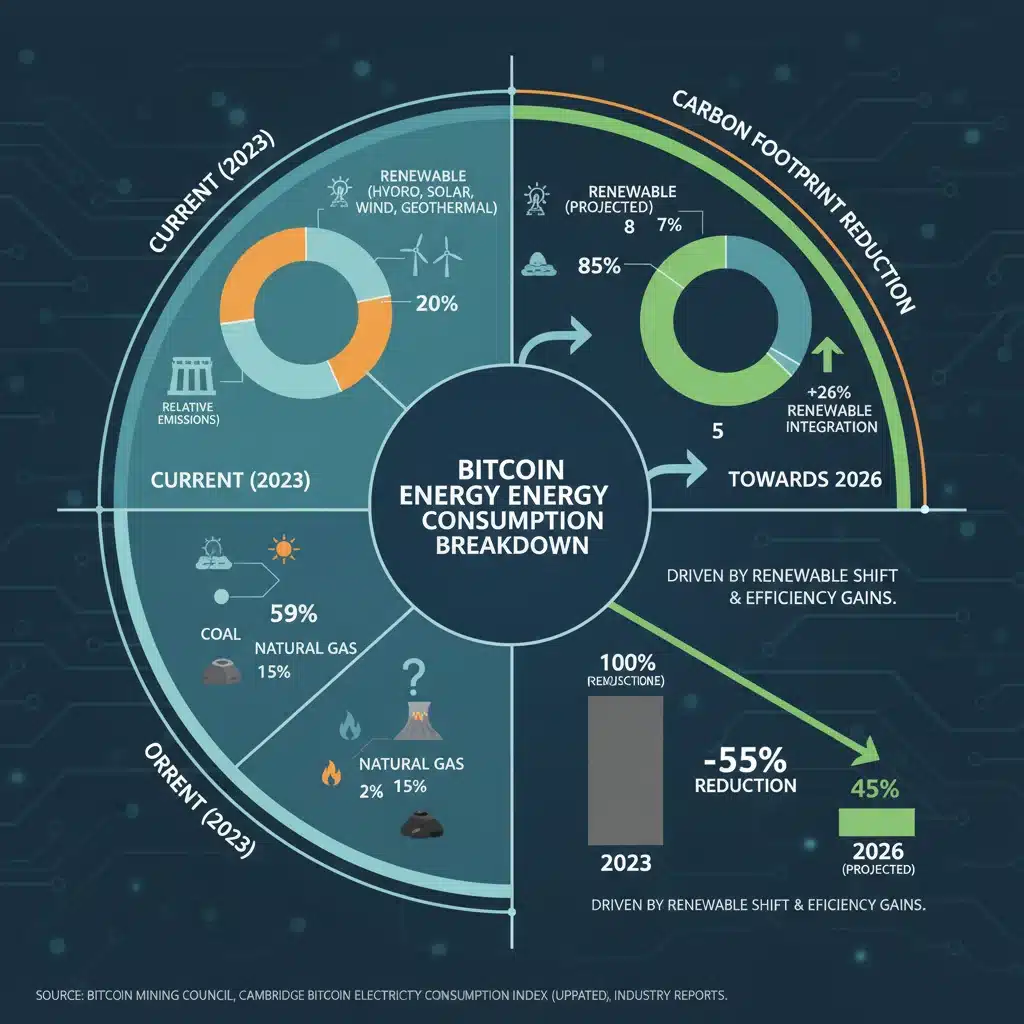
Miners are increasingly turning to renewable energy sources, not just for environmental reasons, but because they often offer lower, more stable operating costs. By 2026, we can expect:
- Increased Adoption of Stranded Energy: Miners will continue to capitalize on ‘stranded’ or underutilized energy sources, such as flared natural gas, excess hydroelectric power, or remote solar/wind farms. This not only reduces waste but also provides a revenue stream for energy producers and cheap power for miners.
- Direct Renewable Power Purchase Agreements (PPAs): More mining operations will enter into direct PPAs with renewable energy generators, securing long-term, stable electricity prices insulated from fossil fuel price volatility. This hedging strategy is crucial for predictable Bitcoin mining profitability.
- Hybrid Energy Solutions: Combining different renewable sources (e.g., solar with battery storage, or wind with natural gas as a backup) will become more common to ensure consistent power supply, mitigating the intermittency inherent in some renewables.
Technological Advancements in Mining Hardware
The relentless pursuit of efficiency in ASIC technology will continue. By 2026, new generations of mining hardware will offer:
- Higher Hash Rate per Watt: Each new generation of ASICs significantly improves the hash rate per unit of electricity consumed. This means miners can achieve higher computational power with the same or less energy, directly boosting Bitcoin mining profitability.
- Improved Cooling Solutions: Innovations in cooling, such as immersion cooling, allow ASICs to operate more efficiently and extend their lifespan, reducing maintenance costs and improving overall operational efficiency.
- Integration with Smart Grid Technologies: Future ASICs might be designed with built-in capabilities to interact with smart grids, automatically adjusting their power consumption in response to grid signals, further facilitating participation in demand response programs.
The Role of Energy Storage
Battery storage solutions will play a more significant role in 2026, especially for renewable-powered mining farms. Storing excess renewable energy during off-peak hours and deploying it during peak demand or when renewable generation is low will help stabilize power supply and reduce reliance on grid power, thereby enhancing Bitcoin mining profitability.
Impact on Bitcoin Mining Profitability: Challenges and Opportunities
The confluence of new U.S. regulations and evolving energy dynamics presents both significant challenges and unique opportunities for Bitcoin mining profitability in 2026.
Challenges to Profitability
- Increased Operational Costs: Compliance with ESG reporting, demand response programs, and stricter permitting will likely add to operational overheads.
- Higher Capital Expenditure: Investing in newer, more energy-efficient ASICs, renewable energy infrastructure, and advanced cooling systems requires substantial upfront capital.
- Regulatory Uncertainty: While clarity is improving, the possibility of unforeseen regulatory changes or stricter enforcement could still pose risks.
- Competition: As the industry matures and becomes more professionalized, competition among miners will intensify, potentially driving down individual profit margins.
- Bitcoin Price Volatility: The inherent volatility of Bitcoin’s price remains the single largest factor influencing profitability, making long-term revenue forecasting challenging.
Opportunities for Profitability
- Competitive Advantage through Sustainability: Miners who proactively adopt sustainable practices can gain a competitive edge, attracting ESG-focused investors and potentially securing preferential energy rates.
- Access to Cheaper, Stable Energy: Leveraging stranded energy, PPAs, and hybrid renewable solutions can significantly reduce electricity costs, a major determinant of Bitcoin mining profitability.
- Innovation and Efficiency: Early adoption of next-generation ASICs and advanced cooling technologies will lead to higher hash rates per watt, directly improving efficiency and profit margins.
- Market Maturation and Institutional Investment: Greater regulatory clarity and a focus on sustainability can attract more institutional investors, potentially leading to more stable Bitcoin prices and increased capital availability for mining operations.
- Participation in Energy Markets: Miners participating in demand response or grid balancing services can generate additional revenue streams, diversifying their income beyond just block rewards.
Strategies for Maximizing Bitcoin Mining Profitability in 2026
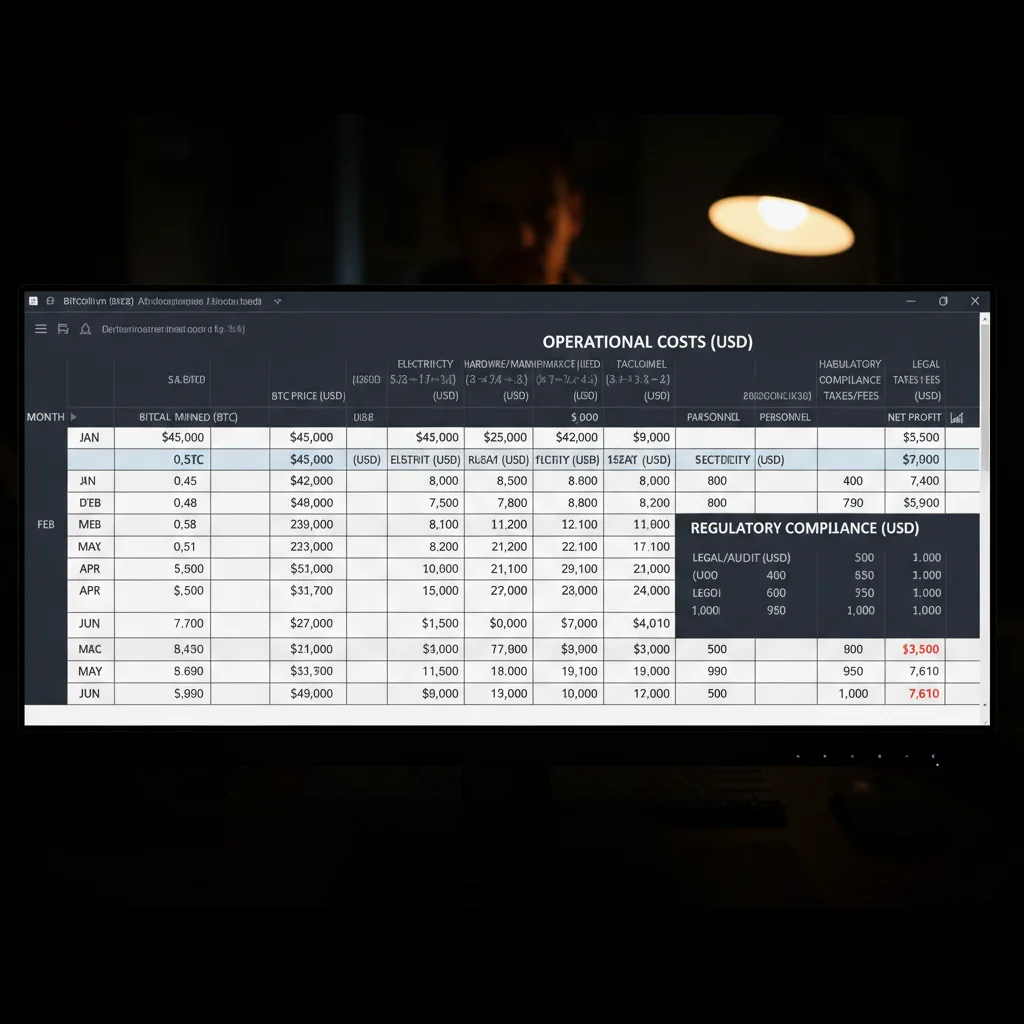
To navigate the evolving landscape and maximize Bitcoin mining profitability in 2026, miners will need to adopt proactive and adaptive strategies:
1. Embrace Sustainable Energy Solutions
This is no longer just an ethical choice but a strategic imperative. Investing in renewable energy sources, exploring stranded energy opportunities, and engaging in PPAs will be crucial for long-term cost stability and regulatory compliance. Miners should actively seek out regions with abundant and cheap renewable energy potential.
2. Prioritize Energy Efficiency and Hardware Upgrades
Regularly upgrading to the latest, most energy-efficient ASIC hardware is vital. The initial capital outlay will be offset by lower operational electricity costs and higher hash rates, directly impacting Bitcoin mining profitability. Furthermore, investing in efficient cooling systems like immersion cooling can prolong hardware life and optimize performance.
3. Proactive Regulatory Compliance and Engagement
Miners should stay informed about emerging U.S. regulations and actively engage with policymakers and industry groups. Early compliance can prevent costly retrofits or penalties down the line. Participating in dialogue can also help shape regulations to be more favorable to the industry while addressing legitimate concerns.
4. Diversify Revenue Streams
Beyond just mining block rewards, explore opportunities to participate in demand response programs with utility companies, providing grid stabilization services for additional income. Some miners are also experimenting with using waste heat for various applications, creating supplementary revenue.
5. Optimize Operational Management
Efficient management of mining facilities, including predictive maintenance, remote monitoring, and automated systems, can reduce downtime and operational costs. Strategic hedging against Bitcoin price volatility and energy cost fluctuations can also protect profit margins.
6. Geographic Diversification
While the U.S. is a major hub, diversifying mining operations across different regions or even countries can mitigate risks associated with localized regulatory changes or energy crises. This strategy requires careful consideration of each region’s energy costs, regulatory environment, and political stability.
The Broader Economic and Environmental Implications
The transformation of Bitcoin mining in the U.S. by 2026 will have broader implications. On the economic front, a more regulated and sustainable mining industry could create new jobs in renewable energy infrastructure, manufacturing, and technology. It could also attract more mainstream financial institutions to the crypto space, further legitimizing Bitcoin as an asset class.
Environmentally, the push towards cleaner energy in mining could serve as a catalyst for renewable energy development, particularly in remote areas where stranded energy exists. Bitcoin mining, when strategically deployed, can act as a flexible load that helps stabilize grids and monetize otherwise wasted energy, contributing to a more efficient and sustainable energy ecosystem. This positive environmental narrative is crucial for public perception and continued growth, directly influencing the long-term viability and Bitcoin mining profitability.
Conclusion: A Resilient Future for Bitcoin Mining
The year 2026 will undoubtedly mark a significant chapter in the history of Bitcoin mining. New U.S. regulations, driven by ESG concerns and grid stability, will fundamentally reshape how miners operate. Simultaneously, advancements in energy technology and hardware efficiency will continue to push the boundaries of what’s possible.
While challenges in the form of increased costs and regulatory hurdles are inevitable, they also present unparalleled opportunities for innovation and growth. Miners who embrace sustainability, invest in cutting-edge technology, and proactively adapt to the evolving regulatory landscape will be best positioned to maximize their Bitcoin mining profitability. The future of Bitcoin mining in the U.S. appears to be one of greater maturity, efficiency, and environmental responsibility, solidifying its role as a key player in the global digital economy.
The journey to 2026 will demand strategic foresight and operational agility, but for those who are prepared, the rewards in terms of sustained Bitcoin mining profitability and a strengthened industry presence will be well worth the effort.