Bitcoin’s Energy Debate 2025: U.S. Mining Economic Impacts
The 2025 Bitcoin energy debate significantly affects U.S. mining operations, impacting regulatory frameworks, operational expenditures, infrastructure development, and investment strategies, necessitating sustainable solutions for industry longevity.
The discussion surrounding Bitcoin’s energy consumption debate in 2025: 4 economic impacts for U.S. mining operations and solutions has intensified, becoming a pivotal factor for the cryptocurrency industry. As the digital asset ecosystem matures, the focus on environmental sustainability and energy efficiency is no longer a peripheral concern but a central challenge shaping the future of Bitcoin mining, particularly within the United States.
The Evolving Landscape of Bitcoin Mining in the U.S.
The U.S. has emerged as a global leader in Bitcoin mining, attracting significant investment and innovation. This prominence, however, comes with increased scrutiny regarding the energy footprint of these operations. The year 2025 marks a critical juncture, as technological advancements, regulatory pressures, and market dynamics converge to redefine what sustainable and profitable mining entails.
Understanding this evolving landscape requires a deep dive into the underlying forces at play. From state-level incentives to federal policy considerations, every aspect contributes to the complex environment in which U.S. miners operate. The narrative around Bitcoin’s energy use is often polarized, making it essential to dissect the realities from the rhetoric and identify tangible economic impacts.
Regulatory Scrutiny and Policy Frameworks
Government bodies, both federal and state, are increasingly examining the energy demands of Bitcoin mining. This scrutiny is leading to the development of new policy frameworks aimed at either mitigating environmental concerns or incentivizing sustainable practices. Miners must navigate a patchwork of regulations that can significantly influence their operational viability and long-term planning.
- Federal Oversight: Potential for national carbon taxes or specific energy consumption mandates for high-density computing.
- State-Level Initiatives: Varied approaches, from Texas’s pro-mining stance with grid flexibility to New York’s moratorium on certain proof-of-work operations.
- Environmental Impact Assessments: Increased requirements for miners to conduct and publicly report on their environmental footprint.
The regulatory environment is not static; it is constantly adapting to new information and public sentiment. This dynamic nature means that miners must remain agile, proactively engaging with policymakers and investing in compliance measures to ensure their continued operation. The cost of non-compliance, both financial and reputational, can be substantial.
The convergence of technological innovation and policy development is creating both challenges and opportunities. Those who can adapt swiftly to these changes, embracing new energy solutions and engaging constructively with regulators, are likely to thrive. Conversely, operations unwilling or unable to evolve may face significant headwinds.
Economic Impact 1: Increased Operational Costs and Profitability Pressures
One of the most immediate and tangible economic impacts for U.S. Bitcoin mining operations in 2025 is the escalation of operational costs, directly affecting profitability. The primary driver here is energy expenditure, which constitutes the largest variable cost for miners. As demand for electricity grows and regulatory pressures mount, energy prices are subject to volatility and upward trends.
This challenge is further compounded by the increasing difficulty of Bitcoin mining, which requires more computational power to earn rewards. Miners are caught in a squeeze: higher energy costs on one side and a need for ever-more efficient hardware on the other. This dynamic necessitates sophisticated operational strategies and a keen eye on energy procurement.
Energy Price Volatility and Grid Stability
U.S. energy markets are complex, with prices fluctuating due to weather events, geopolitical factors, and infrastructure limitations. Bitcoin miners, as large consumers, are particularly vulnerable to these swings. Moreover, their substantial energy draw can sometimes strain local grids, leading to calls for better grid management and concerns about stability.
- Peak Demand Charges: Miners often face higher rates during periods of peak electricity demand, impacting overall energy expenditure.
- Infrastructure Upgrades: The need for grid modernization to accommodate large-scale mining operations can lead to increased costs, potentially passed on to consumers or miners.
- Renewable Energy Integration: While beneficial for sustainability, integrating intermittent renewable sources can introduce complexity and cost to energy management.
To mitigate these pressures, many U.S. miners are exploring innovative energy purchasing agreements and demand-response programs. These strategies not only help stabilize costs but also position miners as responsible grid participants, capable of curtailing operations during times of high demand to support grid stability. This proactive approach can transform a potential liability into a community benefit.
The push for greater energy efficiency in mining hardware also remains a constant. Investing in the latest generation of Application-Specific Integrated Circuits (ASICs) is crucial for maintaining competitiveness, as older, less efficient models become economically unviable. This continuous upgrade cycle adds another layer of capital expenditure to the operational cost structure.
Economic Impact 2: Shifting Investment Towards Sustainable Infrastructure
The ongoing energy debate is profoundly reshaping investment patterns within the U.S. Bitcoin mining sector. Investors are increasingly prioritizing sustainability, directing capital towards operations that demonstrate a commitment to renewable energy sources and energy-efficient practices. This shift is not merely altruistic; it’s a strategic move to de-risk investments in an increasingly environmentally conscious and regulated market.
Companies that can showcase a clear path to net-zero emissions or significant reliance on green energy are finding it easier to attract funding, secure lower interest rates, and build stronger public relations. Conversely, operations perceived as energy-intensive or environmentally detrimental may struggle to secure capital, facing higher borrowing costs or even outright divestment.
The Rise of Green Mining Initiatives
The market is witnessing a surge in initiatives focused on ‘green mining.’ This includes co-locating mining facilities with renewable energy power plants, utilizing flared natural gas, or harnessing geothermal and hydroelectric power. These projects are not only environmentally friendly but often benefit from more stable and lower energy costs in the long run.
- Renewable Energy Partnerships: Miners forming direct partnerships with solar, wind, and hydro power producers to ensure a dedicated clean energy supply.
- Waste Heat Utilization: Innovative projects exploring the capture and reuse of heat generated by mining operations for other industrial or agricultural purposes.
- Carbon Credits and Offsets: Investment in carbon offsetting programs, though often seen as a temporary measure, to mitigate immediate environmental impact and enhance ESG profiles.
This pivot towards sustainable infrastructure requires significant upfront capital investment. However, the long-term benefits, including reduced operational risk, improved public perception, and access to a broader pool of environmentally conscious investors, often outweigh the initial costs. It’s a strategic imperative for any U.S. mining operation seeking longevity and competitive advantage in 2025 and beyond.
The investment landscape is evolving to favor transparency and verifiable sustainability metrics. Miners are increasingly expected to provide detailed reports on their energy sources, carbon footprint, and mitigation efforts. This demand for accountability is driving a more mature and responsible approach to capital allocation within the sector.
Economic Impact 3: Innovation in Energy Management and Hardware Efficiency
The intense scrutiny on Bitcoin’s energy consumption has spurred a wave of innovation in energy management solutions and hardware efficiency within U.S. mining operations. Companies are investing heavily in research and development to optimize every watt of power consumed, recognizing that efficiency is paramount for both profitability and public acceptance. This drive for innovation extends beyond merely buying newer ASICs; it encompasses the entire operational ecosystem.
From advanced cooling systems to sophisticated load balancing software, the focus is on maximizing hash rate per unit of energy. This technological arms race is not just about competing with other miners; it’s about proving that Bitcoin mining can be a net positive for energy grids and local economies, rather than a drain.
Advanced Cooling and Immersion Technology
Traditional air-cooling methods for mining rigs are being supplanted by more efficient alternatives. Immersion cooling, where ASICs are submerged in dielectric fluid, is gaining traction. This technology significantly reduces energy consumption for cooling, extends hardware lifespan, and allows for higher density deployments, thus improving overall operational efficiency.
- Fluid Dynamics Optimization: Engineers are designing custom immersion tanks and fluid circulation systems to ensure optimal heat dissipation.
- Heat Reuse Potential: The heat captured by immersion fluids can be more easily repurposed for heating buildings or greenhouses, creating secondary revenue streams.
- Reduced Maintenance: Immersion cooling protects hardware from dust and humidity, leading to fewer breakdowns and lower maintenance costs.
Beyond cooling, software innovations are playing a critical role in energy management. Artificial intelligence and machine learning algorithms are being deployed to predict energy prices, optimize mining schedules, and dynamically adjust power consumption based on grid conditions. These smart systems allow miners to operate more flexibly and economically, often participating in demand-response programs that benefit the wider energy infrastructure.
The continuous improvement in ASIC technology also remains a cornerstone of efficiency gains. Chip manufacturers are pushing the boundaries of semiconductor physics, delivering machines that are exponentially more powerful and energy-efficient with each generation. This relentless pursuit of hardware optimization is a testament to the industry’s commitment to addressing its energy footprint.
Economic Impact 4: Enhanced Community Engagement and Public Relations
The debate surrounding Bitcoin’s energy consumption has forced U.S. mining operations to prioritize enhanced community engagement and strategic public relations. Negative perceptions, often fueled by misinformation, can lead to local opposition, regulatory hurdles, and difficulty in expanding operations. Consequently, proactive outreach and transparent communication are becoming crucial components of a miner’s economic strategy in 2025.
Building trust within local communities involves more than just job creation; it requires demonstrating a commitment to environmental stewardship, contributing to local infrastructure, and being a responsible corporate citizen. This shift from operating in isolation to becoming an integrated community partner is vital for long-term viability.
Addressing Misconceptions and Highlighting Benefits
Many misconceptions about Bitcoin mining’s energy use persist. Miners are increasingly taking the initiative to educate the public and policymakers about their actual energy sources, efficiency improvements, and the benefits they bring to local economies. This includes highlighting job creation, tax revenues, and investments in local infrastructure.
- Open House Events: Inviting community members and local officials to visit mining facilities to see operations firsthand.
- Educational Campaigns: Funding or participating in initiatives that explain blockchain technology, Bitcoin’s role, and the environmental efforts of miners.
- Local Sponsorships: Investing in local schools, charities, and community projects to build goodwill and demonstrate commitment.
Furthermore, showcasing how mining operations can stabilize energy grids by acting as flexible loads, absorbing excess renewable energy, or participating in demand-response programs, is a powerful narrative. This positions miners not as energy hogs but as valuable partners in the transition to a more resilient and sustainable energy future.
The economic impact of positive public relations and strong community ties cannot be overstated. It translates into smoother permitting processes, reduced regulatory friction, and a more favorable operating environment. In 2025, a miner’s social license to operate is as important as its access to cheap power.
Solutions for Sustainable U.S. Bitcoin Mining Operations
Addressing the energy consumption debate requires a multi-faceted approach, integrating technological advancements, strategic partnerships, and robust policy advocacy. U.S. Bitcoin mining operations are actively pursuing several solutions to enhance their sustainability profile and secure their economic future. These solutions are not merely about compliance but about driving innovation and creating new value propositions.
The goal is to transform the perception of Bitcoin mining from an energy-intensive activity into a catalyst for renewable energy development and grid stabilization. This involves a collaborative effort among miners, energy providers, technology developers, and policymakers to create a more sustainable ecosystem.
Leveraging Stranded Energy and Waste Resources
One of the most promising solutions involves utilizing stranded energy resources that would otherwise go to waste. This includes flared natural gas, which is often burned off at oil wells, releasing methane into the atmosphere. Miners can set up operations at these sites, converting the gas into electricity to power their rigs, effectively turning a waste product into a valuable energy source.
- Oil Field Co-location: Deploying mobile mining units to capture and convert flared gas, reducing emissions and generating revenue.
- Hydroelectric Partnerships: Utilizing excess capacity from hydroelectric dams, especially during off-peak hours, to provide stable, clean power.
- Geothermal Energy: Exploring opportunities to establish mining facilities near geothermal power plants, tapping into a consistent, low-carbon energy source.
Beyond waste energy, miners are also exploring demand-response programs more aggressively. By agreeing to power down operations during periods of high grid demand, they can earn revenue and provide a valuable service to utilities, helping to prevent blackouts and stabilize electricity prices for consumers. This flexibility positions miners as critical infrastructure partners rather than mere consumers.
Furthermore, advocating for clear, supportive regulatory frameworks at both federal and state levels is essential. This includes pushing for policies that incentivize renewable energy adoption, provide tax breaks for sustainable mining practices, and streamline permitting processes for green mining infrastructure. A collaborative approach with policymakers can foster an environment where sustainable mining thrives.
The Future Outlook for U.S. Bitcoin Mining in 2025 and Beyond
The future of U.S. Bitcoin mining in 2025 and beyond will undoubtedly be shaped by its ability to navigate the energy consumption debate effectively. The four economic impacts—increased operational costs, shifting investment, innovation in efficiency, and enhanced public relations—are not isolated challenges but interconnected facets of a maturing industry. Success will hinge on adaptability, strategic foresight, and a commitment to sustainability.
As the industry continues to professionalize, the emphasis will increasingly be on demonstrating verifiable environmental, social, and governance (ESG) credentials. Miners who proactively embrace renewable energy, invest in cutting-edge efficiency technologies, and engage transparently with communities and regulators will be best positioned for long-term growth and profitability.
Technological Advancements Driving Sustainability
The pace of technological innovation in both mining hardware and energy management systems shows no signs of slowing. Further advancements in ASIC efficiency, combined with breakthroughs in cooling technologies and smart grid integration, will continue to reduce the per-transaction energy footprint of Bitcoin. This ongoing evolution is critical for addressing environmental concerns.
- Next-Generation ASICs: Continued development of more powerful and energy-efficient mining chips.
- Modular and Mobile Mining: Increased deployment of flexible, scalable mining units that can be moved to leverage diverse energy sources, including intermittent renewables.
- Decentralized Energy Grids: Potential for Bitcoin mining to play a role in balancing localized microgrids powered by renewable energy.
Ultimately, the energy debate is pushing the U.S. Bitcoin mining industry towards a more resilient, efficient, and environmentally responsible future. While challenges remain, the innovative spirit and economic incentives within the sector suggest a strong trajectory towards sustainable practices. The year 2025 represents a pivotal moment, setting the stage for how this vital industry will contribute to both the digital economy and global energy transition.
The narrative is shifting from simply consuming energy to actively participating in the energy transition. By harnessing otherwise wasted energy, stabilizing grids, and driving demand for renewables, Bitcoin mining has the potential to become a net positive force, securing its place as a legitimate and valuable industry within the U.S. economy.
| Key Impact | Brief Description |
|---|---|
| Operational Costs | Rising energy prices and increasing mining difficulty lead to higher expenditures and pressure on profit margins. |
| Investment Shift | Capital flows increasingly favor sustainable and green mining infrastructure to de-risk investments. |
| Innovation Drive | Intensified R&D in energy management, cooling, and hardware efficiency to optimize energy use. |
| Public Relations | Greater emphasis on community engagement and transparent communication to counter negative perceptions. |
Frequently Asked Questions About Bitcoin Energy in 2025
Regulatory changes in 2025 are expected to increase compliance costs and potentially limit operations for miners not adhering to sustainability standards. However, they may also incentivize green mining practices, creating new market opportunities and fostering responsible growth within the industry.
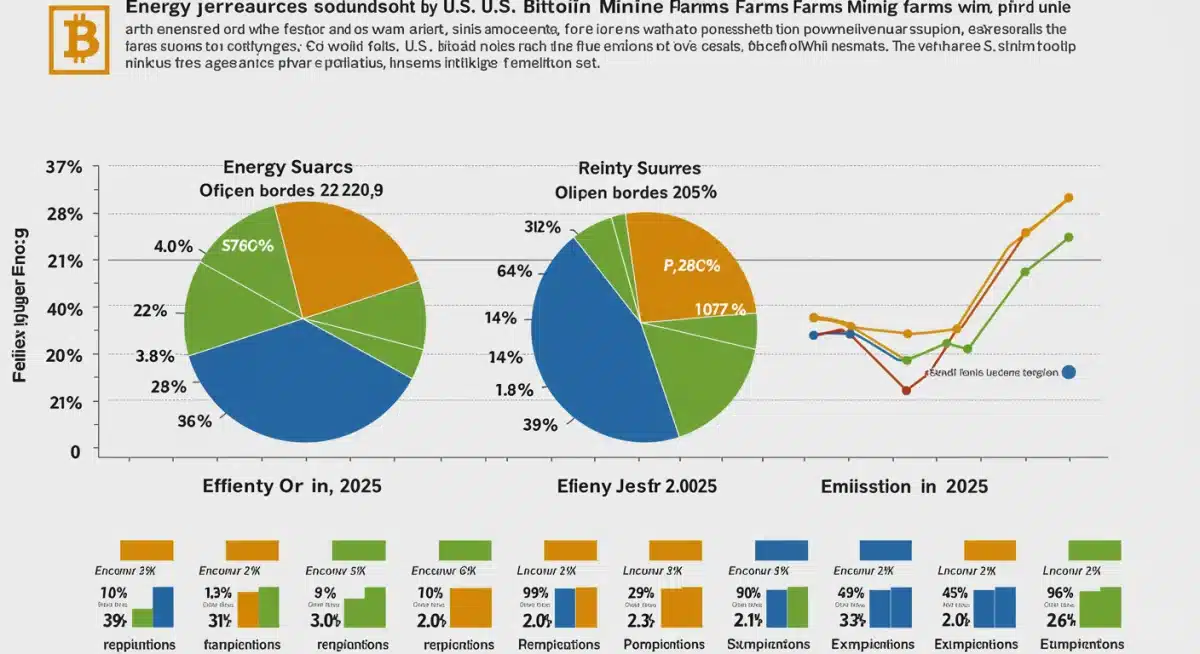
In 2025, U.S. Bitcoin miners increasingly leverage a diverse energy mix, with a growing emphasis on renewables like solar, wind, and hydroelectric power. Many also utilize flared natural gas and participate in demand-response programs to stabilize grids, diversifying away from traditional fossil fuels.
U.S. miners are addressing environmental concerns by investing in renewable energy, deploying energy-efficient hardware, implementing advanced cooling technologies like immersion cooling, and utilizing waste energy sources. They are also actively engaging in public education and community outreach to highlight these efforts.
While initial investments in sustainable practices can be high, they are expected to enhance long-term profitability. Reduced energy costs, access to green capital, improved public image, and compliance with future regulations can create a more stable and attractive operating environment, leading to greater financial returns.
Community engagement is crucial for U.S. mining operations as it builds trust and mitigates local opposition. By demonstrating economic benefits, environmental responsibility, and contributing to local infrastructure, miners can secure a social license to operate, fostering a more favorable and stable business environment.
Conclusion
The Bitcoin energy impact 2025 debate is undeniably a defining challenge for U.S. mining operations, yet it simultaneously presents a powerful impetus for innovation and sustainable growth. The economic impacts—ranging from heightened operational costs to a strategic reorientation of investment and an intensified focus on public relations—underscore the industry’s imperative to adapt. By embracing renewable energy, driving hardware efficiency, and fostering strong community ties, U.S. miners are not merely responding to criticism but actively shaping a more resilient and environmentally responsible future for the entire Bitcoin ecosystem.