2026 Altcoin Market: Key Indicators for US Traders
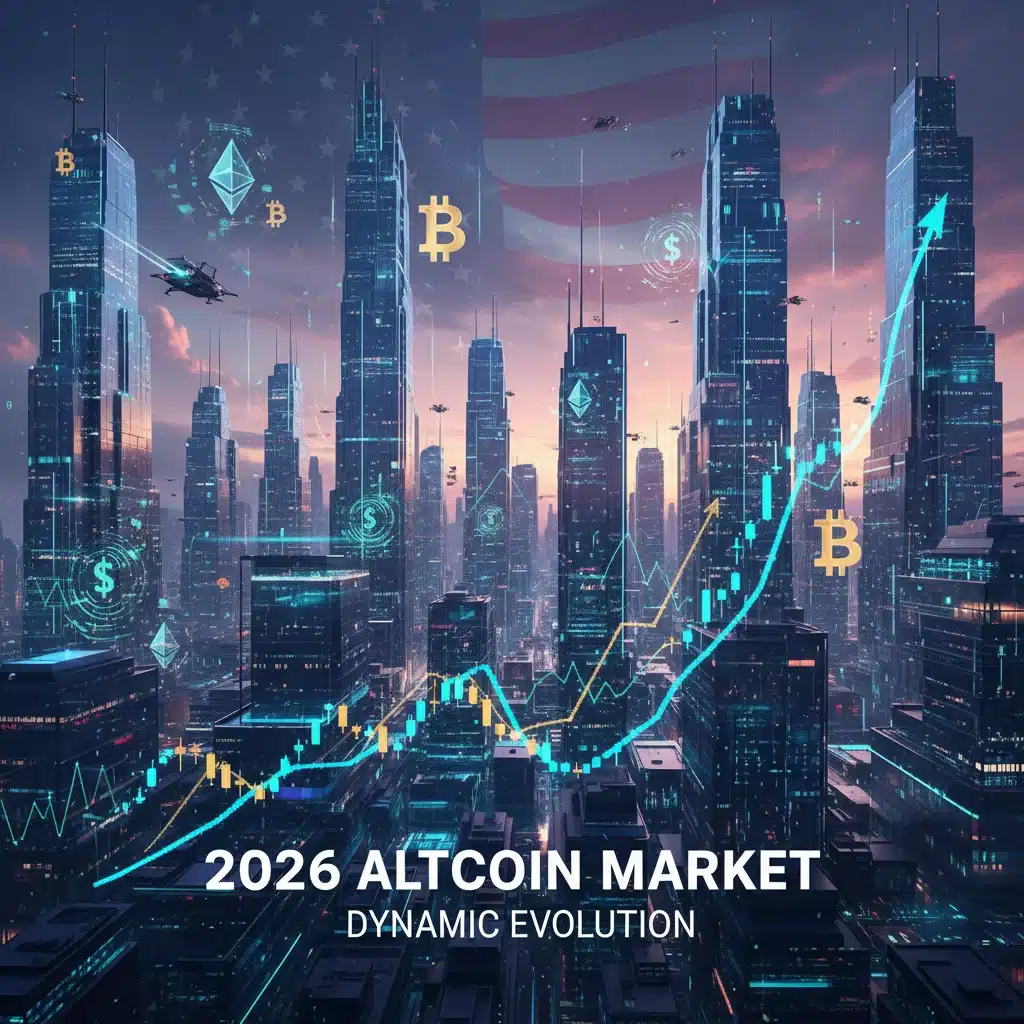
The cryptocurrency landscape is a constantly evolving frontier, and for U.S. traders, understanding the nuances of the 2026 Altcoin Market will be paramount to success. As we move further into the decade, altcoins – cryptocurrencies other than Bitcoin – are increasingly demonstrating their potential for innovation, disruption, and significant returns. However, this potential is accompanied by inherent volatility and complex market dynamics. This comprehensive guide aims to equip U.S. investors with a robust framework for navigating the anticipated 2026 Altcoin Market by dissecting four crucial indicators: market sentiment, the regulatory landscape, technological innovation, and macroeconomic factors.
The journey through the altcoin market is not merely about identifying the next big coin; it’s about understanding the underlying forces that drive its value, adoption, and overall trajectory. For U.S. traders, this means not only keeping an eye on global trends but also paying close attention to domestic policies and economic conditions that can significantly impact their investment decisions. The year 2026 is poised to be a pivotal period, building on the foundations laid in previous years and potentially ushering in new phases of growth and maturity for various altcoin projects.
Understanding the 2026 Altcoin Market: A Strategic Overview
The 2026 Altcoin Market is expected to be a melting pot of established projects, emerging technologies, and disruptive innovations. Unlike Bitcoin, which serves primarily as a store of value and a medium of exchange, altcoins often have specific use cases, ranging from powering decentralized finance (DeFi) applications and non-fungible tokens (NFTs) to facilitating supply chain management and providing scalable blockchain solutions. This diversity is both a strength and a challenge for investors. A deeper understanding of these diverse applications, coupled with a keen eye on market indicators, is essential for making informed decisions.
For U.S. traders, the domestic market presents both opportunities and constraints. Regulatory clarity, or lack thereof, can dramatically influence which altcoins are accessible, how they are traded, and the tax implications of such activities. Therefore, a proactive approach to monitoring these indicators is not just beneficial but necessary for optimizing returns and mitigating risks within the 2026 Altcoin Market. Let’s delve into each of these critical indicators in detail.
Indicator 1: Market Sentiment – The Pulse of the Altcoin Ecosystem
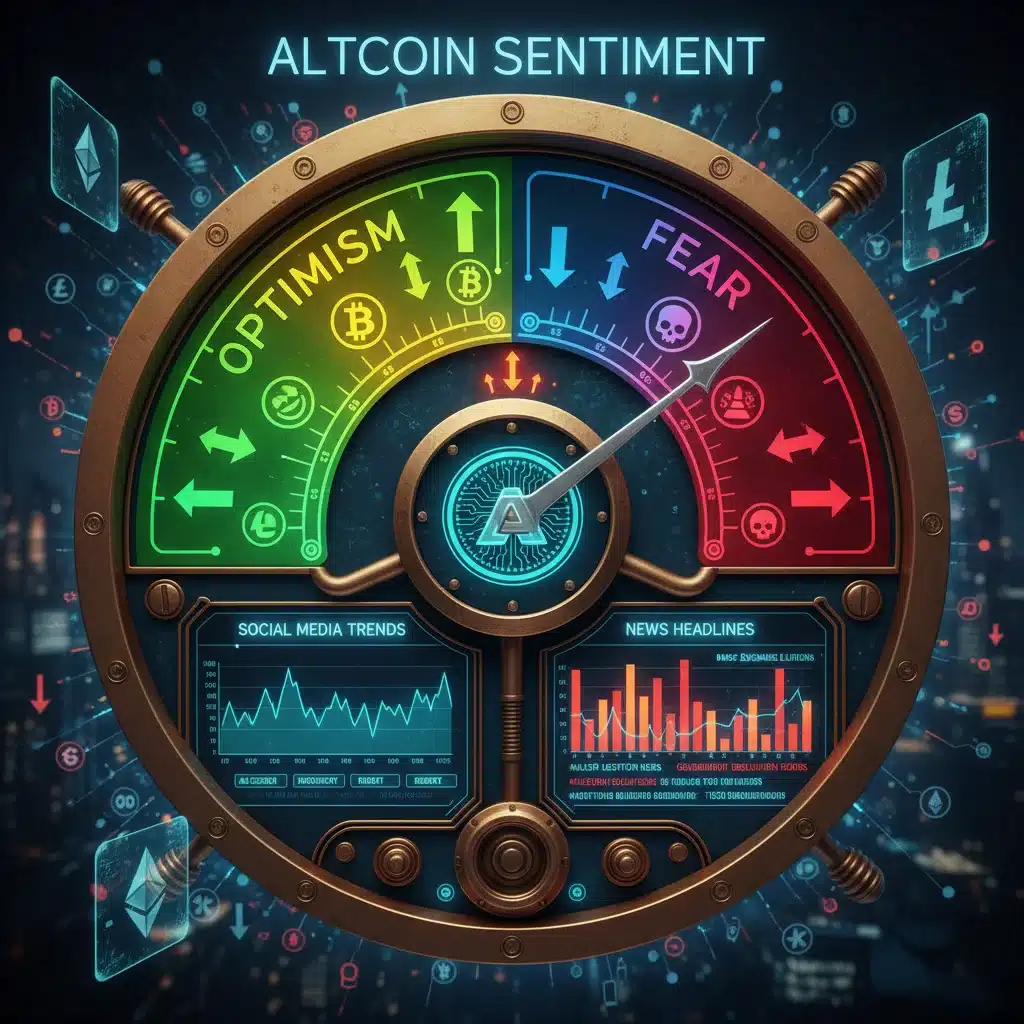
Market sentiment, often described as the overall attitude of investors towards a particular market or asset, plays a colossal role in the volatile world of altcoins. In the 2026 Altcoin Market, sentiment can swing rapidly, driven by news, social media trends, influencer opinions, and general market performance. Positive sentiment can fuel parabolic rallies, while negative sentiment can trigger sharp corrections. For U.S. traders, gauging this sentiment effectively is a critical skill.
Several tools and metrics can help assess market sentiment. The Crypto Fear & Greed Index, while primarily focused on Bitcoin, often provides a good proxy for broader crypto market sentiment, including altcoins. Social media analysis, tracking mentions and discussions around specific altcoins on platforms like Twitter (X), Reddit, and Telegram, can offer real-time insights into public perception. Furthermore, examining news cycles for major announcements, partnerships, or technological breakthroughs related to altcoin projects can provide a more qualitative understanding of prevailing sentiment. A surge in positive news or increased community engagement often precedes upward price movements.
Conversely, a sudden influx of negative news, such as regulatory crackdowns, security breaches, or project delays, can quickly turn sentiment bearish. U.S. traders must be vigilant in distinguishing between FUD (Fear, Uncertainty, and Doubt) and legitimate concerns. The ability to filter out noise and focus on substantive developments is crucial. In the context of the 2026 Altcoin Market, where information travels at lightning speed, developing a systematic approach to sentiment analysis will be a significant advantage.
Beyond general sentiment, it’s also important to consider sentiment specific to different altcoin categories. For instance, sentiment around DeFi tokens might differ significantly from sentiment surrounding gaming or metaverse tokens. Diversifying sentiment analysis across various sectors within the 2026 Altcoin Market can provide a more nuanced and accurate picture of potential investment opportunities and risks.
Indicator 2: The Evolving Regulatory Landscape in the US
Perhaps no other factor holds as much sway over the U.S. crypto market as regulation. For the 2026 Altcoin Market, the clarity (or lack thereof) from U.S. regulatory bodies like the SEC, CFTC, and Treasury will be a defining characteristic. The classification of altcoins as securities or commodities, the rules governing stablecoins, and the frameworks for decentralized autonomous organizations (DAOs) will all have profound implications for U.S. traders.
Historically, regulatory uncertainty has been a significant hurdle for mainstream adoption and institutional investment in altcoins. However, by 2026, we could see a more defined regulatory framework emerging. Potential scenarios include:
- Increased Clarity: Clear guidelines on asset classification, potentially leading to more regulated products like altcoin ETFs and clearer tax obligations. This would likely attract more institutional capital and retail participation, positively impacting the 2026 Altcoin Market.
- Stricter Enforcement: Continued or intensified enforcement actions against unregistered securities offerings, illicit activities, and non-compliant exchanges. This could lead to delistings of certain altcoins on U.S. platforms and create headwinds for projects operating in gray areas.
- Innovation-Friendly Legislation: The possibility of legislation designed to foster innovation while protecting investors, striking a balance that could allow various altcoin sectors, such as DeFi, to flourish under a more predictable legal umbrella.
U.S. traders must closely monitor legislative developments, court rulings, and regulatory statements. Subscribing to official government updates, following reputable crypto legal analysts, and understanding the implications of proposed bills are crucial steps. A favorable regulatory environment could de-risk many altcoin investments, while an overly restrictive one could force U.S. traders to seek opportunities in less regulated offshore markets, albeit with increased risk. The impact of these regulatory shifts on the accessibility and liquidity of specific altcoins within the U.S. will be a key determinant of their performance in the 2026 Altcoin Market.
Furthermore, state-level regulations in the U.S. also play a role, with some states adopting more progressive stances towards crypto than others. Understanding these regional differences can inform where and how U.S. traders choose to engage with the altcoin market, as well as influencing the operational choices of various blockchain projects.
Indicator 3: Technological Innovation and Adoption
The very essence of altcoins lies in their technological innovation. The 2026 Altcoin Market will be heavily shaped by advancements in blockchain technology, scalability solutions, interoperability, and novel use cases. Projects that deliver tangible solutions to real-world problems, improve efficiency, or offer superior user experiences are likely to gain traction and value.
Key areas of innovation to watch include:
- Scalability Solutions (Layer 2s and Sharding): As blockchain networks become more congested, Layer 2 solutions (e.g., rollups, sidechains) and sharding technologies are vital for increasing transaction throughput and reducing fees. Altcoins that are integral to these solutions or benefit directly from their implementation will be strong contenders.
- Interoperability: The ability for different blockchain networks to communicate and transfer assets seamlessly is crucial for a truly interconnected crypto ecosystem. Projects focused on cross-chain bridges and protocols will likely see increased adoption.
- Decentralized Finance (DeFi) Evolution: DeFi will continue to innovate with new lending protocols, decentralized exchanges (DEXs), insurance products, and synthetic assets. The security, efficiency, and user-friendliness of these platforms will drive the success of their underlying altcoins.
- Web3 and Metaverse Infrastructure: The development of the decentralized internet (Web3) and immersive virtual worlds (metaverse) will create demand for altcoins that power these ecosystems, including identity management, storage solutions, and virtual land ownership.
- Real-World Asset Tokenization: The tokenization of real-world assets (RWAs) such as real estate, fine art, and commodities on the blockchain could open up massive new markets and drive significant value to the altcoins facilitating these processes.
For U.S. traders, evaluating the technological fundamentals of an altcoin is paramount. This involves understanding its whitepaper, assessing the development team’s expertise, scrutinizing the project’s roadmap, and analyzing community engagement. Active development, successful mainnet launches, and significant partnerships are strong indicators of a project’s long-term viability. Furthermore, real-world adoption – how many users are actively using the protocol or application – is a critical metric that often gets overlooked. Projects with growing user bases and increasing transaction volumes are demonstrating true utility, a powerful driver in the 2026 Altcoin Market.
The competitive landscape among altcoins is fierce. Projects that fail to innovate or adapt to changing market demands risk being left behind. Therefore, continuous research into technological advancements and the specific value proposition of each altcoin is non-negotiable for informed decision-making.

Indicator 4: Macroeconomic Factors and Their Global Impact
While often seen as a separate asset class, cryptocurrencies, including altcoins, are not entirely decoupled from traditional financial markets. Macroeconomic factors, both domestic and global, can significantly influence the 2026 Altcoin Market. For U.S. traders, understanding these broader economic trends is essential for strategic asset allocation.
Key macroeconomic factors to consider include:
- Inflation and Interest Rates: High inflation often leads central banks, like the U.S. Federal Reserve, to raise interest rates. Higher interest rates can make traditional assets like bonds more attractive, potentially drawing capital away from riskier assets like altcoins. Conversely, periods of low interest rates and high liquidity can fuel speculative investments in the crypto space.
- Global Economic Growth/Recession: A robust global economy generally fosters a risk-on environment, where investors are more willing to allocate capital to higher-risk, higher-reward assets like altcoins. A global recession, however, typically leads to a risk-off sentiment, with investors flocking to safer assets, causing outflows from the crypto market.
- Geopolitical Events: International conflicts, trade wars, and political instability can create significant market volatility. While sometimes seen as a hedge against traditional financial systems, crypto markets can also be negatively impacted by widespread economic uncertainty.
- U.S. Dollar Strength: A strong U.S. dollar can make dollar-denominated assets (including many altcoins) more expensive for international investors, potentially dampening global demand. Conversely, a weakening dollar could make altcoins more attractive.
- Government Debt and Fiscal Policy: The level of government spending, national debt, and fiscal policies can impact overall economic stability and investor confidence, which in turn can trickle down to the crypto markets.
For U.S. traders, it’s crucial to monitor economic reports from key institutions like the Federal Reserve, the Bureau of Labor Statistics, and international bodies like the IMF. Understanding how these reports might influence investor behavior in traditional markets can provide valuable clues about potential shifts in the 2026 Altcoin Market. For example, if the U.S. economy appears to be heading into a recession, even technologically sound altcoin projects might face downward pressure due to broader market fear.
The narrative of Bitcoin as digital gold and altcoins as high-growth tech stocks often places them at different ends of the risk spectrum. During periods of economic uncertainty, capital tends to flow into perceived safe havens, and altcoins, being generally more volatile, might experience more significant corrections. Conversely, in periods of economic expansion and high liquidity, altcoins can outperform due to their higher growth potential. Being attuned to these macroeconomic currents is a sophisticated but indispensable aspect of navigating the 2026 Altcoin Market effectively.
Integrating the Indicators for a Robust Strategy in the 2026 Altcoin Market
Successfully navigating the 2026 Altcoin Market for U.S. traders isn’t about isolating these four indicators; it’s about synthesizing them into a cohesive investment strategy. Imagine a scenario where market sentiment is overwhelmingly positive, technological innovation is booming, but regulatory uncertainty looms, and macroeconomic headwinds are gathering. A nuanced approach would be to proceed with caution, perhaps focusing on projects with strong regulatory compliance or those that are less susceptible to economic downturns due to their unique utility.
Consider the interplay:
- Positive Sentiment + Strong Innovation + Favorable Regulation + Economic Expansion: This would be the ideal bull market scenario, suggesting aggressive but well-researched investment in promising altcoins.
- Negative Sentiment + Regulatory Crackdown + Economic Recession: This indicates a bear market, calling for defensive strategies, potentially accumulating fundamentally strong altcoins at discounted prices or reducing exposure.
- Mixed Signals: This is the most common scenario, requiring careful analysis, diversification, and potentially a more conservative approach to position sizing.
For U.S. traders, continuous education and adaptability are key. The crypto space evolves at an incredible pace, and what holds true today might be different tomorrow. Staying informed about new projects, shifts in regulatory rhetoric, and global economic data is a full-time commitment for serious investors. Moreover, understanding your own risk tolerance and investment horizons is paramount. Altcoins, by their nature, are high-risk, high-reward assets. A well-diversified portfolio that includes a mix of established altcoins and carefully vetted emerging projects, balanced against more stable assets, can help mitigate risk.
Practical Steps for U.S. Traders in the 2026 Altcoin Market
To put these indicators into practice, U.S. traders can adopt several practical steps:
- Stay Informed: Regularly consume news from reputable crypto media outlets, financial news, and official government sources regarding regulatory updates. Participate in relevant online communities and forums to gauge sentiment, but always cross-reference information.
- Conduct Due Diligence: Before investing in any altcoin, thoroughly research its whitepaper, team, technology, use case, tokenomics, and community. Look for projects with clear utility and a strong development roadmap.
- Monitor On-Chain Data: Tools that analyze blockchain data (e.g., active addresses, transaction volume, developer activity) can provide objective insights into a project’s health and adoption, complementing sentiment analysis.
- Understand Regulatory Nuances: Be aware of which exchanges are compliant with U.S. regulations and which altcoins are available to U.S. investors. Understand potential tax implications for different types of crypto transactions.
- Diversify Your Portfolio: Avoid putting all your capital into a single altcoin. Diversify across different altcoin categories (DeFi, NFTs, Layer 1s, gaming, etc.) to spread risk and capture opportunities across various sectors of the 2026 Altcoin Market.
- Manage Risk: Implement risk management strategies such as setting stop-loss orders, taking profits at predetermined levels, and only investing capital you can afford to lose.
- Long-Term vs. Short-Term Strategy: Decide whether you are a long-term investor or a short-term trader. Your strategy for utilizing these indicators will vary based on your investment horizon. Long-term investors might prioritize fundamental technological innovation and adoption, while short-term traders might focus more on sentiment and technical analysis.
Conclusion: Navigating the Dynamics of the 2026 Altcoin Market
The 2026 Altcoin Market presents a landscape filled with both immense potential and significant challenges for U.S. traders. By diligently monitoring and analyzing market sentiment, staying abreast of the evolving regulatory landscape, scrutinizing technological innovation, and understanding broader macroeconomic trends, investors can significantly enhance their decision-making capabilities. The crypto market is inherently dynamic, demanding continuous learning and adaptation. Those who can effectively synthesize these four key indicators will be best positioned to identify promising opportunities, mitigate risks, and ultimately thrive in the exciting and unpredictable world of altcoins in 2026 and beyond. Success in this environment will not be accidental but a direct result of informed, strategic, and disciplined engagement with the market’s underlying forces.
As the digital asset space matures, the distinction between speculative assets and utility-driven technologies will become increasingly clear. U.S. traders who focus on projects with strong fundamentals, real-world use cases, and robust communities, all while navigating the external pressures of regulation and macroeconomics, will be the ones who unlock the true value potential of the 2026 Altcoin Market. Prepare, analyze, and trade wisely.