Emerging Altcoin Narratives 2026: Position Your Portfolio for 40% Upside
The cryptocurrency market is a dynamic and ever-evolving landscape, characterized by cycles of innovation, adoption, and profound shifts in investor sentiment. As we look towards 2026, identifying the emerging altcoin narratives is not just about staying informed; it’s about strategically positioning your portfolio for significant growth. The next bull run, anticipated by many, could see certain sectors explode, offering astute investors a potential 40% upside or even more. This comprehensive guide will dissect the most compelling narratives, provide actionable insights, and help you navigate the complexities of the altcoin market.
Understanding these narratives is crucial because they often precede major capital inflows. When a particular technology or use case gains traction, it tends to attract developers, users, and, critically, investment. These narratives are not merely fads; they represent fundamental shifts in how blockchain technology is being applied to solve real-world problems and create new economic paradigms. Ignoring them means missing out on the next wave of innovation and potentially substantial financial gains.
Our focus here is not on short-term speculation but on identifying long-term trends that are likely to mature and gain widespread adoption by 2026. This requires a blend of technological foresight, market analysis, and an understanding of macroeconomic factors. So, let’s dive into the core themes that are set to define the next chapter of the altcoin market and how you can position your portfolio to capitalize on these emerging altcoin narratives.
The Macro Landscape: Setting the Stage for Altcoin Growth
Before we delve into specific narratives, it’s important to understand the broader economic and technological context. The global financial system is undergoing significant changes, with inflation concerns, interest rate adjustments, and geopolitical tensions all playing a role. Against this backdrop, cryptocurrencies continue to offer an alternative, decentralized financial system that is gaining increasing mainstream acceptance. Institutional adoption, regulatory clarity (or lack thereof), and technological advancements are all contributing to a more mature, albeit still volatile, market.
By 2026, we anticipate a more defined regulatory environment in many jurisdictions, which could unlock further institutional capital. This influx of capital, combined with a potential easing of macroeconomic headwinds, could create fertile ground for a robust bull market. Historically, altcoins tend to outperform Bitcoin during these periods of heightened market enthusiasm, especially those aligned with strong, developing narratives. Therefore, understanding these broader trends is the first step in positioning your portfolio effectively for emerging altcoin narratives.
Furthermore, the continuous development of blockchain infrastructure, scalability solutions, and user-friendly interfaces is lowering the barrier to entry for both developers and end-users. This expansion of the ecosystem is critical for the growth and sustainability of new altcoin projects. As more people and businesses interact with decentralized applications (dApps), the demand for the underlying altcoins that power these applications will naturally increase.
Narrative 1: Artificial Intelligence (AI) Meets Blockchain
The convergence of Artificial Intelligence and blockchain technology represents one of the most potent emerging altcoin narratives. AI is revolutionizing industries, and when combined with the decentralization, security, and transparency of blockchain, it creates powerful new paradigms. Projects in this space are exploring decentralized AI marketplaces, AI-powered decentralized autonomous organizations (DAOs), and using blockchain to ensure the provenance and integrity of AI models and data.
Decentralized AI Marketplaces
Imagine a marketplace where AI models and datasets can be bought, sold, and utilized without intermediaries, ensuring fair compensation for creators and transparent access for users. Blockchain provides the perfect infrastructure for this, enabling secure transactions, immutable records of usage, and verifiable ownership. Projects focusing on this area aim to democratize access to AI capabilities, fostering innovation and reducing the dominance of large tech corporations.
AI-Powered DAOs and Autonomous Agents
The concept of DAOs, governed by code and community, can be significantly enhanced by AI. AI can help DAOs make more informed decisions, automate complex processes, and even manage treasuries more efficiently. Furthermore, autonomous AI agents, powered by blockchain, could perform tasks, execute smart contracts, and interact with other protocols independently, ushering in a new era of decentralized automation. This synergy is a key component of emerging altcoin narratives.
Verifiable AI and Data Integrity
One of the challenges with AI is the potential for bias and manipulation. Blockchain can provide a solution by creating immutable records of AI model training data, algorithms, and decision-making processes. This ensures transparency and verifiability, building trust in AI systems. Projects that focus on auditing AI models on-chain or ensuring data integrity are poised for significant growth as the demand for ethical and transparent AI increases.
Investing in this narrative means looking for projects that are genuinely integrating AI and blockchain in novel and impactful ways, rather than merely co-opting buzzwords. Assess the technical teams, partnerships, and the real-world problems they aim to solve. The potential for a 40% upside in this sector is considerable, given the rapid advancements in both fields.
Narrative 2: Decentralized Physical Infrastructure Networks (DePIN)
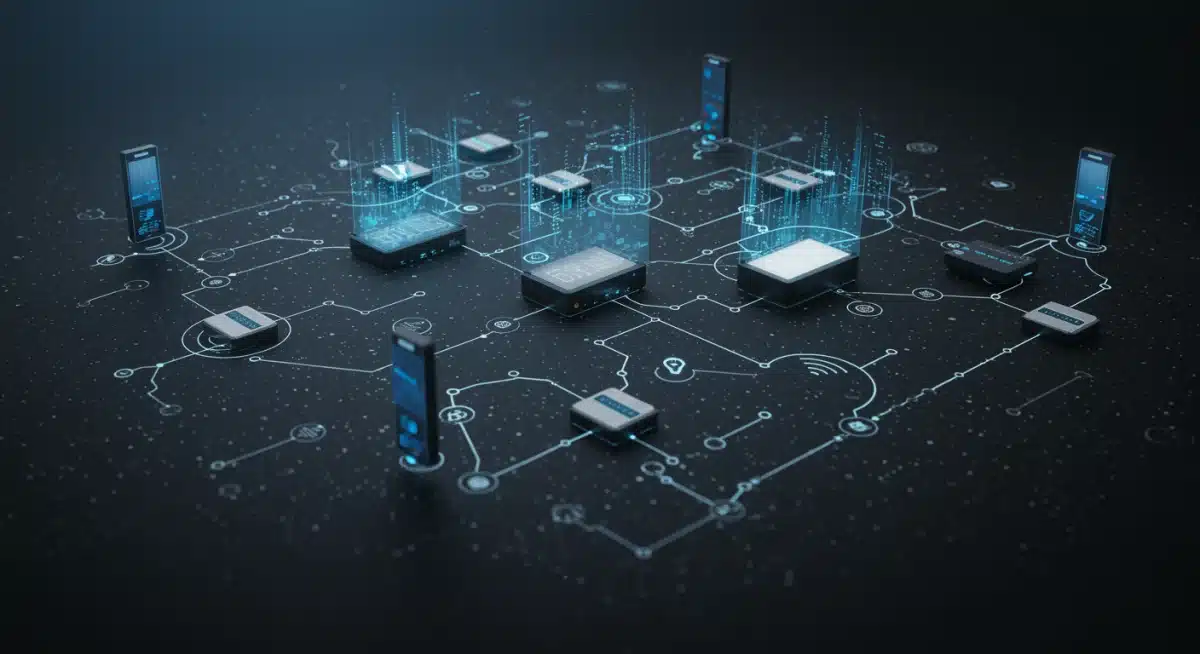
DePIN is another groundbreaking emerging altcoin narrative that leverages blockchain to incentivize the creation and maintenance of real-world physical infrastructure. This includes everything from wireless networks and energy grids to sensor networks and storage solutions. By decentralizing these networks, DePIN projects aim to create more resilient, efficient, and accessible infrastructure, often at a lower cost than traditional centralized models.
Decentralized Wireless Networks
Projects like Helium have already demonstrated the power of DePIN by incentivizing individuals to deploy wireless hotspots, creating a decentralized network that rivals traditional telecom providers. This model can be extended to other forms of connectivity, offering a more equitable and censorship-resistant internet infrastructure.
Energy and Sensor Networks
DePIN can play a crucial role in building decentralized energy grids, enabling peer-to-peer energy trading and incentivizing renewable energy generation. Similarly, decentralized sensor networks can collect and verify real-world data for various applications, from environmental monitoring to supply chain tracking, all secured and transparent on the blockchain.
Decentralized Storage and Computing
While Filecoin and Arweave have pioneered decentralized storage, the DePIN narrative expands this to other forms of physical infrastructure, including decentralized computing power. By allowing individuals and businesses to contribute their unused resources, DePIN creates a global, distributed network of physical assets, offering unprecedented scalability and resilience.
The appeal of DePIN lies in its tangible real-world utility. These projects are not just about digital assets; they are about building the foundational layers of a decentralized future. As the global demand for infrastructure continues to grow, DePIN projects are well-positioned to capture significant market share, making them a prime candidate for investors seeking exposure to emerging altcoin narratives with strong growth potential.
Narrative 3: Real World Assets (RWA) Tokenization
Tokenization of Real World Assets (RWA) is rapidly gaining momentum as a transformative force in finance, poised to become a dominant emerging altcoin narrative. This involves representing tangible assets like real estate, art, commodities, and even intellectual property as digital tokens on a blockchain. This process unlocks liquidity, reduces friction in transactions, and opens up new investment opportunities for a global audience.
Unlocking Liquidity and Fractional Ownership
One of the primary benefits of RWA tokenization is the ability to fractionalize high-value assets. This means investors can own a small portion of a skyscraper, a rare piece of art, or a gold bar, making previously inaccessible investments available to a wider range of participants. This fractional ownership dramatically increases liquidity, as tokens can be traded 24/7 on decentralized exchanges.
Increased Transparency and Efficiency
Blockchain technology provides an immutable and transparent record of ownership and transactions for RWAs. This eliminates the need for costly intermediaries, reduces settlement times, and enhances trust. Smart contracts can automate various aspects of asset management, from dividend distribution to voting rights, further streamlining processes.
Bridging Traditional Finance and DeFi
RWA tokenization serves as a critical bridge between traditional finance (TradFi) and decentralized finance (DeFi). By bringing real-world assets onto the blockchain, it allows DeFi protocols to utilize these assets as collateral, expand lending opportunities, and create new financial products. This convergence is essential for the mainstream adoption of DeFi and the broader crypto ecosystem.
Projects focused on RWA tokenization are attracting significant attention from both crypto natives and traditional financial institutions. Identifying platforms that offer robust legal frameworks, secure tokenization processes, and strong partnerships will be key. The market for tokenized RWAs is projected to grow exponentially, making this a high-potential area for a 40% upside in your portfolio, especially within the context of emerging altcoin narratives.

Narrative 4: Modular Blockchains and Layer 2 Solutions
The scalability trilemma (decentralization, security, scalability) has long been a challenge for blockchain networks. Modular blockchains and Layer 2 solutions are addressing this head-on, making them a foundational emerging altcoin narrative for future growth. These technologies aim to improve throughput and reduce transaction costs while maintaining the core principles of decentralization and security.
Modular Blockchain Architecture
Instead of a monolithic blockchain handling all functions (execution, consensus, data availability), modular blockchains separate these layers. This allows for specialized chains to optimize for specific tasks, leading to greater efficiency and scalability. Projects building modular infrastructures are creating the building blocks for the next generation of decentralized applications.
Advanced Layer 2 Solutions (Rollups, Validiums, etc.)
Layer 2 solutions, particularly various forms of rollups (optimistic and zero-knowledge), are proving incredibly effective at scaling Ethereum and other base layers. By processing transactions off-chain and then bundling them into a single proof submitted to the mainnet, Layer 2s drastically reduce fees and increase transaction speeds. As more users and applications migrate to Layer 2s, the underlying tokens of these solutions stand to benefit immensely.
Interoperability and Cross-Chain Communication
As the blockchain ecosystem becomes increasingly fragmented with multiple Layer 1s and Layer 2s, interoperability solutions are becoming vital. Projects that enable seamless communication and asset transfer between different chains are solving a critical pain point and will be essential for a truly interconnected decentralized web. These solutions are intrinsically linked to the success of emerging altcoin narratives.
Investing in this narrative means focusing on projects that are delivering tangible scalability solutions and enhancing the overall user experience. Look for strong developer communities, proven technology, and clear adoption pathways. The infrastructure layer of crypto is often overlooked but provides the backbone for all other innovations, making it a high-potential area for long-term gains and achieving a 40% upside.
Narrative 5: Decentralized Social Media and Identity (DeSoc & DeID)
The desire for greater control over personal data and censorship-resistant communication is fueling the rise of decentralized social media (DeSoc) and decentralized identity (DeID) solutions. This represents a powerful emerging altcoin narrative focused on reclaiming digital sovereignty.
Censorship-Resistant Social Platforms
Traditional social media platforms are often criticized for their centralized control, data monetization practices, and censorship policies. DeSoc platforms leverage blockchain to create open, transparent, and censorship-resistant social networks where users own their data and have a direct say in governance. These platforms aim to foster genuine community and free expression.
Self-Sovereign Identity (SSI)
Decentralized Identity (DeID) empowers individuals to control their digital identities without relying on centralized authorities. Self-Sovereign Identity (SSI) allows users to generate and manage their own verifiable credentials, providing privacy-preserving ways to prove aspects of their identity online. This has profound implications for online privacy, security, and the future of digital interactions.
Reputation and Credentialing Systems
Beyond basic identity, blockchain can be used to build decentralized reputation and credentialing systems. Imagine a system where your professional achievements, educational qualifications, or even your online behavior are verifiable on-chain, owned and controlled by you. This can unlock new forms of trust and interaction in both the digital and physical worlds.
The shift towards decentralized social media and identity is a long-term trend driven by growing privacy concerns and a desire for greater digital autonomy. Projects that successfully build user-friendly and truly decentralized alternatives will likely see significant adoption. This narrative, while perhaps slower to mature than some others, holds immense potential for long-term value and could contribute significantly to a 40% upside in well-chosen assets within the emerging altcoin narratives space.
Portfolio Positioning for a 40% Upside: Strategies and Considerations
Now that we’ve explored the key emerging altcoin narratives, let’s discuss how to strategically position your portfolio for a potential 40% upside by 2026. This isn’t financial advice, but rather a framework for informed decision-making.
Diversification Across Narratives
Avoid putting all your eggs in one basket. Allocate your capital across several promising narratives. For example, you might allocate a percentage to AI-blockchain projects, another to DePIN, and another to RWA tokenization. This diversification mitigates risk and increases your chances of catching the next big wave. A balanced approach is key to capturing the overall growth of emerging altcoin narratives.
Focus on Fundamentals and Utility
Look beyond hype. Research the underlying technology, the problem the project solves, the strength of the team, partnerships, and community engagement. Projects with real-world utility and strong fundamentals are more likely to sustain growth over the long term. Speculative plays can offer quick gains, but fundamental value drives sustainable upside.
Market Cap and Liquidity Considerations
While small-cap altcoins can offer explosive growth, they also come with higher risk and lower liquidity. Consider a mix of mid-cap and carefully selected small-cap projects within your chosen narratives. Mid-cap projects often have more established communities and products, offering a balance between growth potential and stability. The potential for a 40% upside often lies in these mid-to-small cap gems.
Risk Management and Position Sizing
Never invest more than you can afford to lose. Implement a robust risk management strategy, including setting stop-loss orders or having a clear exit strategy. Position sizing is critical – allocate smaller percentages to higher-risk, higher-reward plays and larger percentages to more established projects within the emerging altcoin narratives.
Stay Informed and Adaptable
The crypto market moves fast. Continuously research, follow credible sources, and be prepared to adapt your strategy as new information emerges or market conditions change. What’s an emerging narrative today might be mainstream tomorrow, or it might fade away. Flexibility is paramount.
The Road Ahead: Challenges and Opportunities
While the potential for significant returns from emerging altcoin narratives is exciting, it’s important to acknowledge the challenges. Regulatory uncertainty remains a significant hurdle in many regions. Technological risks, such as smart contract vulnerabilities or scalability bottlenecks, are also present. Furthermore, market volatility can be extreme, and investor sentiment can shift rapidly.
However, these challenges also present opportunities. Regulatory clarity, when it arrives, could trigger massive institutional inflows. Continuous technological advancements are solving existing problems and opening up new possibilities. And market corrections, while painful, often provide excellent entry points for long-term investors.
The key is to approach the market with a long-term perspective, focusing on the fundamental value and transformative potential of these emerging altcoin narratives. By doing so, you increase your chances of not just surviving the market’s ups and downs but thriving and potentially achieving that coveted 40% upside by 2026.
Conclusion: Seizing the Future of Finance with Emerging Altcoin Narratives
The cryptocurrency market is on the cusp of another transformative period, with several emerging altcoin narratives poised to redefine industries and create immense value. From the synergy of AI and blockchain to the tangible utility of DePIN, the financial revolution ushered in by RWA tokenization, the foundational scaling of modular blockchains, and the digital sovereignty offered by DeSoc and DeID, the opportunities are vast.
By understanding these narratives, conducting thorough due diligence, and implementing a disciplined investment strategy, you can position your portfolio to potentially achieve a 40% upside by 2026. Remember, success in crypto investing is not about chasing every pump, but about identifying enduring trends and investing in projects that are building the future. The next few years promise to be exhilarating for those who are prepared to navigate the landscape of emerging altcoin narratives with foresight and conviction.
Stay curious, stay informed, and embark on this exciting journey into the future of decentralized technology and finance. The opportunities are there for those willing to seek them out.