Mastering Altcoin Market Cycles: 2026 Profit Strategy for 10% Swings
The cryptocurrency landscape is a whirlwind of innovation, speculation, and unprecedented financial opportunities. While Bitcoin often hogs the spotlight, the true potential for exponential growth often lies within the vast and volatile world of altcoins. However, navigating these waters requires more than just luck; it demands a deep understanding of altcoin market cycles. For those looking to position themselves strategically for 2026, understanding these cyclical patterns and developing a robust strategy to capitalize on even modest 10% price swings can unlock significant profits.
Decoding Altcoin Market Cycles: A 2026 Strategy to Profit from 10% Price Swings
The year 2026 is rapidly approaching, and with it comes the promise of new developments and potential shifts in the cryptocurrency paradigm. Investors who can accurately read and react to altcoin market cycles will be best positioned to thrive. This comprehensive guide will equip you with the knowledge and actionable strategies to not only understand these cycles but to actively profit from them, even by targeting incremental 10% gains that, when compounded, can lead to substantial wealth accumulation.
The Anatomy of Altcoin Market Cycles
Before we dive into specific strategies, it’s crucial to grasp the fundamental nature of altcoin market cycles. Unlike traditional markets, crypto markets often exhibit exaggerated volatility and shorter, more intense cycles. These cycles are driven by a confluence of factors, including technological advancements, regulatory news, macroeconomic trends, social media sentiment, and the ebb and flow of capital between Bitcoin and altcoins.
Phases of an Altcoin Market Cycle
- Accumulation Phase: This is typically the quietest period. After a significant downturn, prices consolidate, and trading volume is low. Smart money investors and early adopters begin to slowly buy, anticipating future growth. Sentiment is generally negative or indifferent.
- Markup Phase (Bull Run): Characterized by increasing prices and rising volume. Initial breakouts attract more investors, leading to a self-reinforcing cycle of buying. This phase can be further broken down into early bull, mid-bull, and late bull, with increasing euphoria.
- Distribution Phase: As prices reach their peak, smart money begins to sell off their holdings, often silently, while retail investors are still buying into the hype. Volume remains high, but price increases become less sustained, and volatility rises.
- Markdown Phase (Bear Market): Prices fall sharply, often accompanied by panic selling and capitulation. Sentiment is overwhelmingly negative, and many investors exit the market. This phase washes out weaker projects and sets the stage for the next accumulation.
Understanding these phases is paramount to developing an effective 2026 altcoin strategy. Each phase presents unique opportunities and risks. Our goal is to identify these transitions and position ourselves accordingly.
Key Drivers Influencing Altcoin Market Cycles
Several factors consistently influence the trajectory of altcoin market cycles. Keeping an eye on these drivers will give you an edge:
- Bitcoin’s Performance: Bitcoin acts as the gravitational center of the crypto universe. Its price movements often dictate the overall market sentiment and liquidity flow, significantly impacting altcoin performance. A strong Bitcoin bull run often precedes an ‘altcoin season’ where capital flows from BTC into altcoins.
- Technological Innovation and Development: Breakthroughs in blockchain technology, new use cases (e.g., DeFi, NFTs, Web3 gaming, layer-2 solutions), and significant project milestones can trigger massive rallies for specific altcoins.
- Regulatory Landscape: Government regulations, or the lack thereof, can profoundly affect investor confidence and market access. Favorable regulations can spur growth, while restrictive ones can lead to downturns.
- Macroeconomic Conditions: Global economic stability, interest rates, inflation, and the performance of traditional markets can influence investor appetite for risk assets like cryptocurrencies.
- Community and Sentiment: Strong community support, active development, and positive media sentiment can fuel price increases. Conversely, FUD (Fear, Uncertainty, Doubt) can lead to rapid price depreciation.
- Liquidity and Trading Volume: Higher liquidity and trading volume generally indicate a healthier market. Sudden spikes or drops can signal impending price movements.
Crafting Your 2026 Altcoin Profit Strategy: Targeting 10% Swings
Our 2026 strategy is not about chasing moonshots (though they can happen). Instead, it focuses on consistently capturing achievable 10% price swings within the broader altcoin market cycles. This approach prioritizes risk management and compounding gains over high-risk, high-reward bets.
1. Fundamental Analysis: The Bedrock of Smart Investing
Even for short-term gains, understanding the fundamentals of an altcoin is crucial. Focus on projects with:
- Strong Use Case: Does the project solve a real problem or offer significant utility?
- Competent Team: Research the experience and track record of the development team.
- Active Development: Check GitHub activity, roadmap progress, and community updates.
- Tokenomics: Understand the supply, distribution, and vesting schedules. Avoid highly inflationary tokens unless there’s a strong counter-narrative.
- Community Engagement: A healthy and engaged community is a good sign.
2. Technical Analysis: Spotting Entry and Exit Points
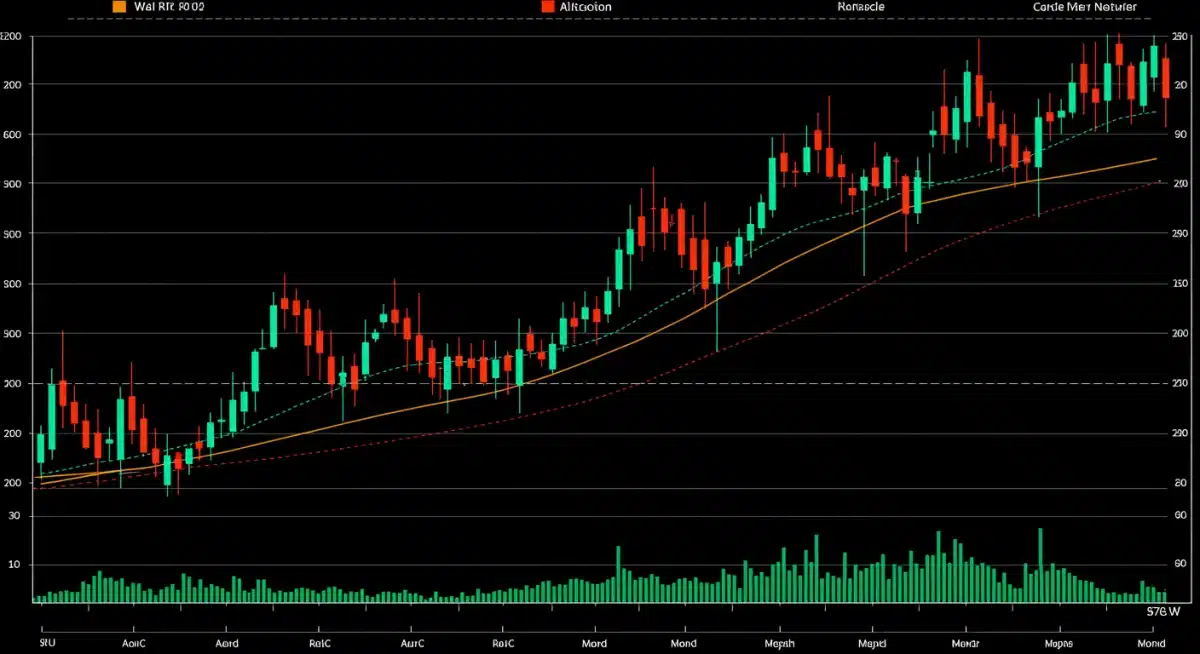
Technical analysis (TA) is your primary tool for identifying those 10% swings within altcoin market cycles. Focus on these key indicators:
- Support and Resistance Levels: Identify historical price levels where buying (support) or selling (resistance) pressure has been strong. Buy near support, sell near resistance.
- Moving Averages (MAs): The 50-day, 100-day, and 200-day MAs can indicate trend direction and dynamic support/resistance. Crossovers (e.g., golden cross, death cross) are significant signals.
- Relative Strength Index (RSI): This momentum oscillator helps identify overbought (above 70) and oversold (below 30) conditions. Look for oversold conditions as potential buying opportunities, especially when combined with other signals.
- MACD (Moving Average Convergence Divergence): Helps identify trend changes and momentum. Crossovers of the MACD line and signal line are key.
- Volume: Always confirm price movements with volume. A strong price move on low volume is less reliable than one on high volume.
- Candlestick Patterns: Learn to recognize patterns like engulfing candles, dojis, hammers, and shooting stars, which can signal reversals or continuations.
3. Cycle Timing: Positioning for Success
The overarching altcoin market cycles provide the context for your trades. Your strategy for 2026 should adapt to the prevailing market phase:
- Accumulation Phase: This is the time for patient buying. Look for fundamentally strong projects that have seen significant corrections. Dollar-cost averaging (DCA) is highly effective here.
- Early Markup Phase: As the market begins to turn, focus on altcoins showing early signs of strength, breaking out of consolidation patterns with increasing volume. This is where you might find your first 10% gains.
- Mid-Late Markup Phase: Be more selective. While many altcoins will be pumping, focus on those with upcoming catalysts (mainnet launches, significant partnerships, exchange listings). Take profits on 10% swings, but also consider holding a core position in your strongest conviction assets.
- Distribution Phase: This is a time for caution. Be quick to take profits and consider reducing exposure. Chasing pumps here is risky.
- Markdown Phase: Primarily focus on capital preservation. This is not the time for aggressive trading. Instead, use this period for research and identifying high-quality projects for the next accumulation phase.
4. Risk Management: Protecting Your Capital
Without proper risk management, even the best strategies fail. Especially when dealing with volatile altcoin market cycles, this is non-negotiable:
- Position Sizing: Never allocate more than a small percentage (e.g., 1-5%) of your total portfolio to a single altcoin trade.
- Stop-Loss Orders: Always use stop-loss orders to limit potential losses. For a 10% profit target, a 3-5% stop-loss is often appropriate to maintain a favorable risk-to-reward ratio.
- Take-Profit Orders: Set clear take-profit targets. If you’re aiming for 10%, stick to it. Don’t get greedy. You can always re-enter later.
- Diversification: Don’t put all your eggs in one basket. Diversify across different altcoins, sectors (DeFi, NFTs, gaming, infrastructure), and even different blockchains.
- Don’t Over-Leverage: Margin trading can amplify gains but also losses exponentially. For beginners, it’s best avoided.
5. Psychological Discipline: The Unsung Hero
The emotional rollercoaster of altcoin market cycles can be intense. Maintaining discipline is key:
- Avoid FOMO (Fear Of Missing Out): Don’t chase pumps. Stick to your strategy and entry criteria.
- Resist FUD (Fear, Uncertainty, Doubt): Don’t panic sell based on negative news or social media hype. Verify information and trust your analysis.
- Stick to Your Plan: Define your entry, exit, and stop-loss points before you trade, and adhere to them.
- Journal Your Trades: Learn from your successes and failures. This helps refine your strategy over time.
- Take Breaks: The crypto market is open 24/7. It’s easy to get burnt out. Step away from the screens.
Advanced Tactics for 2026 Altcoin Cycles
Once you’ve mastered the basics, consider these advanced tactics to further refine your altcoin market cycles strategy for 2026:
A. Inter-Cycle Arbitrage and Rotational Trading
This involves understanding the flow of capital within the crypto ecosystem. In a bull market, money often flows from Bitcoin to Ethereum, then to large-cap altcoins, then mid-caps, and finally to small-cap altcoins and meme coins. By identifying which sector is about to pump, you can rotate your capital to capture these movements. This requires constant monitoring of sector-specific performance and market sentiment.
B. Event-Driven Trading
Many altcoins experience significant price movements around key events:
- Mainnet Launches: Often create significant hype and price appreciation leading up to the event.
- Major Exchange Listings: Can provide a liquidity and exposure boost.
- Partnerships and Integrations: Signal increased adoption and utility.
- Protocol Upgrades and Airdrops: Can incentivize holding and attract new users.
The strategy here is to ‘buy the rumor, sell the news.’ Accumulate before the event, and consider taking profits as the event unfolds or shortly thereafter, as prices often correct post-event.
C. Utilizing On-Chain Data
On-chain analytics provide insights into real-time network activity and investor behavior, offering a deeper understanding of altcoin market cycles:
- Whale Movements: Tracking large transactions can indicate smart money accumulation or distribution.
- Exchange Inflows/Outflows: High inflows to exchanges can signal selling pressure, while outflows suggest accumulation.
- Active Addresses: An increase in active addresses often correlates with growing network adoption and potential price appreciation.
- Developer Activity: Consistent code commits on GitHub are a strong indicator of a healthy, progressing project.
D. Trend Following with Moving Averages
While we’re targeting 10% swings, understanding the larger trend is vital. Using multiple moving averages (e.g., 20-day, 50-day, 200-day) can help confirm trends. When a shorter MA crosses above a longer MA (golden cross), it’s a bullish signal. The opposite (death cross) is bearish. These can guide your overall market exposure and help you avoid swimming against the tide of the broader altcoin market cycles.
Case Study: Identifying a 10% Opportunity within Altcoin Market Cycles
Let’s walk through a hypothetical scenario for 2026:
Imagine it’s Q2 2026. The overall crypto market, guided by Bitcoin, is showing signs of entering an early markup phase after a period of consolidation. You’ve identified Altcoin X, a fundamentally strong project in the decentralized AI sector, which has recently corrected by 30% from its local high. Its development team just announced a major partnership with a tech giant, scheduled for Q3.
- Fundamental Check: Altcoin X has a solid use case, a reputable team, and active development. Its tokenomics are reasonable.
- Technical Analysis: The price of Altcoin X is currently sitting just above a strong historical support level. The RSI is in oversold territory (around 30), and volume has been low but is starting to tick up slightly. The 50-day MA is still below the 200-day MA, but the gap is narrowing, indicating potential for a golden cross in the coming weeks.
- Entry Strategy: You decide to enter with a portion of your capital at the current price, placing a stop-loss order just below the established support level (e.g., 5% below your entry).
- Targeting 10%: You set a take-profit order at 10% above your entry price. This level also aligns with a minor resistance level on the chart.
- Execution: Over the next few days, positive sentiment around the upcoming partnership announcement grows. The price of Altcoin X breaks past the minor resistance, and within a week, hits your 10% take-profit target. You secure your profits.
This example illustrates how combining fundamental analysis, technical indicators, and an awareness of market cycles allows you to capture consistent gains. By repeating this process across multiple altcoins and trades, those 10% swings compound into significant returns.
The Future of Altcoin Market Cycles in 2026
As we look towards 2026, several trends could shape the future of altcoin market cycles:
- Increased Institutional Adoption: More institutional money entering the space could bring greater stability but also more sophisticated trading strategies.
- Regulatory Clarity: Clearer global regulations might reduce uncertainty and attract a broader investor base.
- Technological Maturation: Projects that deliver real-world utility and scale effectively will likely outperform. The focus will shift from speculative hype to tangible value.
- Interoperability: Solutions that allow different blockchains to communicate seamlessly will become increasingly important, potentially driving value to projects facilitating this.
- Decentralized AI and DePIN: These emerging sectors are ripe for innovation and could attract significant capital, creating new mini-cycles within the broader altcoin market.
Staying informed about these macro trends will be crucial for adapting your strategy and identifying the next wave of profitable altcoins.
Conclusion: Your Path to Profit in Altcoin Market Cycles
Navigating altcoin market cycles requires a blend of analytical skill, disciplined execution, and a deep understanding of market dynamics. By focusing on fundamental strength, employing technical analysis for precision entries and exits, respecting cycle timing, and rigorously managing risk, you can build a powerful strategy for 2026.
Remember, the goal isn’t to get rich overnight, but to consistently capture achievable 10% price swings. This compounding approach, combined with patience and continuous learning, is the most sustainable path to significant wealth accumulation in the exciting, yet challenging, world of altcoins. Start building your knowledge base today, refine your strategy, and prepare to seize the opportunities that 2026 will undoubtedly present in the ever-evolving altcoin market.
The future of finance is decentralized, and with the right approach to altcoin market cycles, you can be a part of shaping it, and profiting from it.